2026-06-12 | Global Alliance for Buildings and Construction
Global Alliance for Buildings and Construction

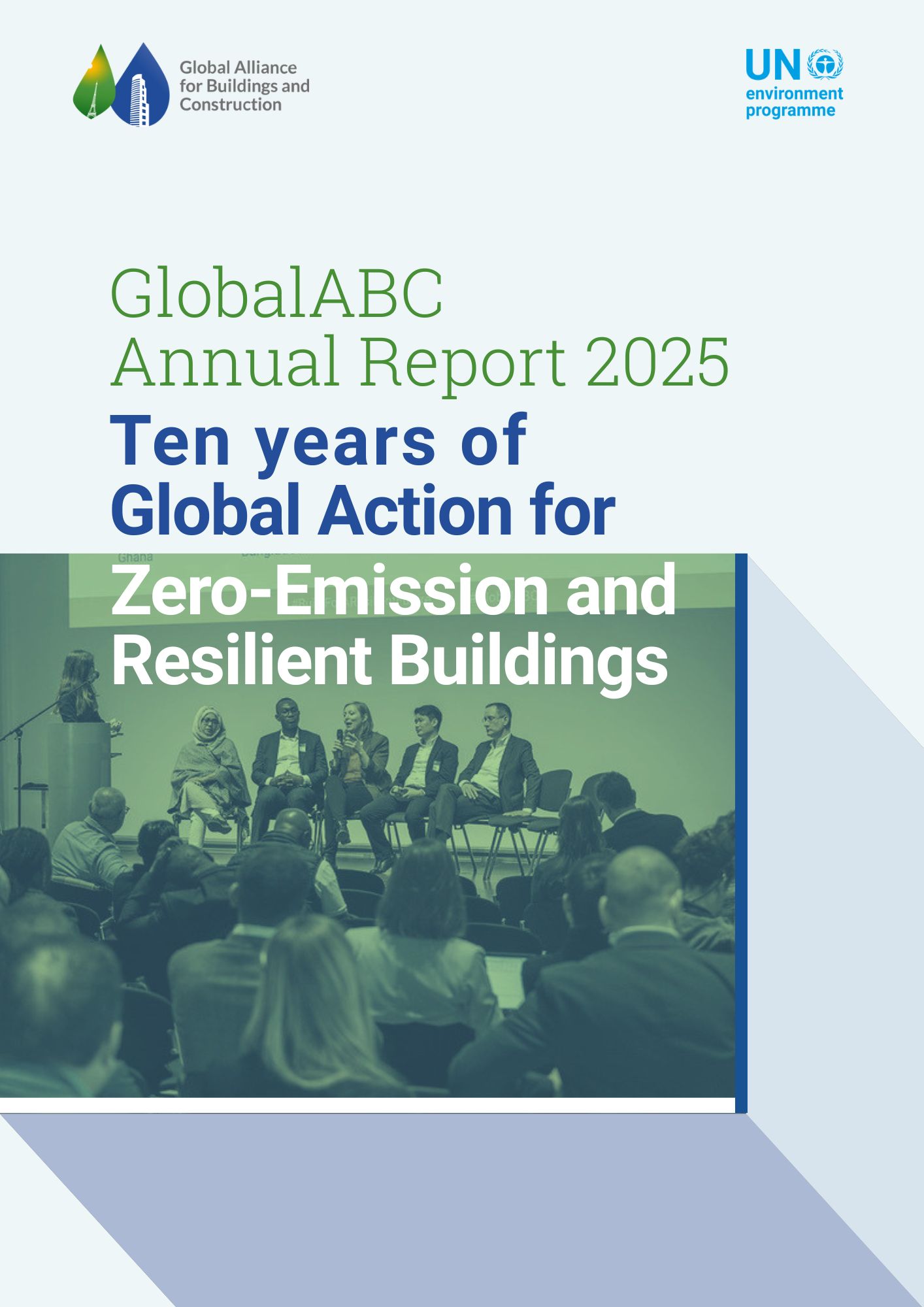
GlobalABC Annual Report 2025: 10 years of Global Action for Zero-Emission and Resilient Buildings


In 2025, GlobalABC focused on strengthening the policy, institutional and technical foundations needed to accelerate the transition to a zero-emission, resilient and affordable built environment. Through its global membership of more than 400 members, including 71 countries, the Intergovernmental Council for Buildings and Climate (ICBC), and its Hubs and Action Groups, the Alliance supported governments and stakeholders to advance climate ambition, strengthen enabling environments, and integrate buildings and construction more effectively into national and international climate processes.

A key priority during the year was supporting countries to incorporate buildings and construction into climate planning and policy frameworks. Technical assistance, guidance and stakeholder engagement contributed to progress on NDC development, climate action roadmaps, implementation planning and sector-specific policy development in countries including Bangladesh, Ghana, Kenya and Senegal. GlobalABC also advanced practical tools, recommendations and frameworks on priority topics such as sustainable materials, climate finance, adaptation, procurement, and near-zero emission and resilient buildings.

A major milestone was the operationalisation of the ICBC as the principal political platform for international cooperation on buildings and construction. Through ministerial and technical engagement, governments advanced common priorities, endorsed and acknowledged GlobalABC tools and recommendations, and strengthened international coordination on sector transformation. Complementing this work, GlobalABC's Hubs and Action Groups developed guidance, recommendations and implementation tools while fostering collaboration between governments, industry, financial institutions, academia and civil society.

The Annual Report presents GlobalABC's activities and achievements in 2025 against its strategic objectives and programme priorities. It covers progress in political engagement and international cooperation, national climate planning and policy development, technical guidance and knowledge products, stakeholder collaboration, and implementation support across the buildings and construction sector, reflecting the Alliance's progress over the reporting period and its continued commitment to transforming the sector.


2025-12-20 | UNEP / GlobalABC
UNEP, Bureau of Energy Efficiency (BEE), BMTPC, MAHAPREIT, IFC, Tata Steel Foundation

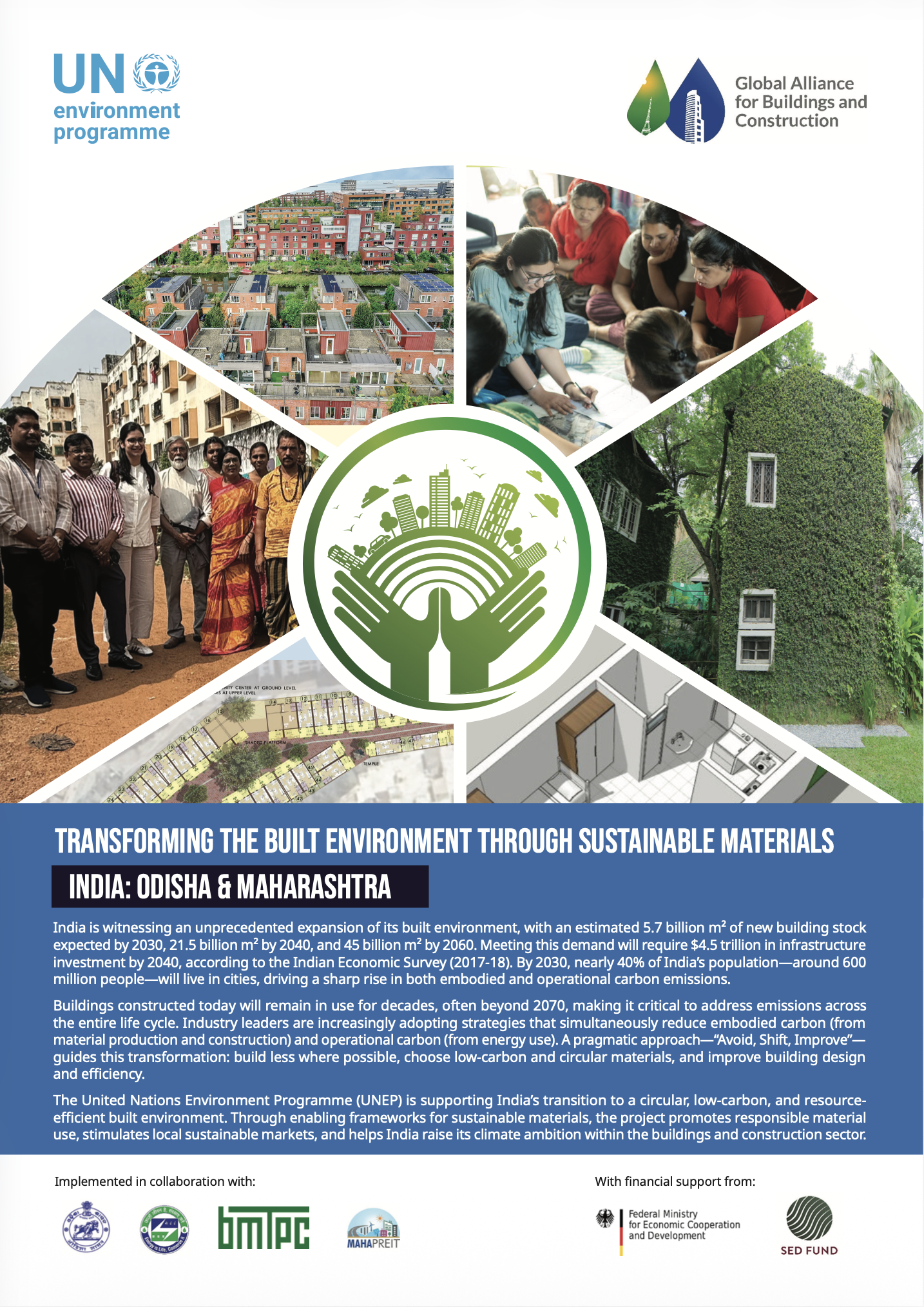
India is witnessing an unprecedented expansion of its built environment, with an estimated 5.7 billion m² of new building stock expected by 2030, and nearly 40% of its population projected to live in cities by 2030. Buildings constructed today will remain in use for decades, making it critical to address emissions across the entire life cycle. The United Nations Environment Programme (UNEP) is supporting India's transition to a circular, low-carbon, and resource-efficient built environment. 

Through enabling frameworks for sustainable materials, the project promotes responsible material use, stimulates local sustainable markets, and helps India raise its climate ambition within the buildings and construction sector, with financial support from the Federal Ministry for Economic Cooperation and Development (Germany) and the SED Fund.


2025-12-20 | UNEP (United Nations Environment Programme) / GlobalABC (Global Alliance for Buildings and Construction)
UNEP, UNOPS, UN-Habitat, Ministry of Housing and Public Works, HBRI, RAJUK, Federal Ministry for Economic Cooperation and Development (Germany)

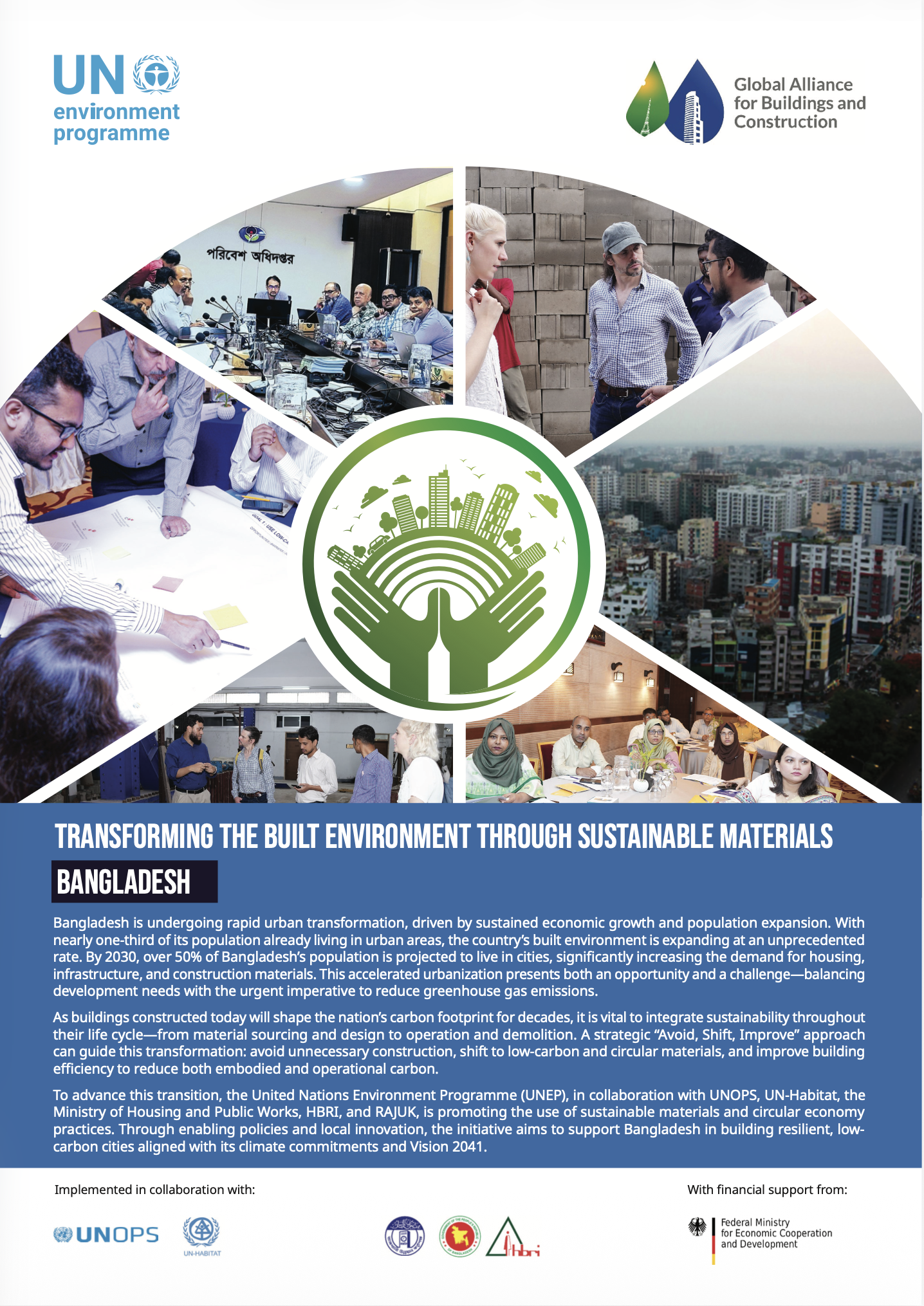
Bangladesh is undergoing rapid urban transformation, driven by sustained economic growth and population expansion. With nearly one-third of its population already living in urban areas, the country's built environment is expanding at an unprecedented rate. By 2030, over 50% of Bangladesh's population is projected to live in cities, significantly increasing the demand for housing, infrastructure, and construction materials. 


To advance this transition, UNEP, in collaboration with UNOPS, UN-Habitat, the Ministry of Housing and Public Works, HBRI, and RAJUK, is promoting the use of sustainable materials and circular economy practices, with financial support from the Federal Ministry for Economic Cooperation and Development (Germany). Through enabling policies and local innovation, the initiative aims to support Bangladesh in building resilient, low-carbon cities aligned with its climate commitments and Vision 2041.


2026-02-26 | Kenya State Department for Public Works, Global Buildings Performance Network, Architectural Association of Kenya
Kenya State Department for Public Works, Global Buildings Performance Network, Architectural Association of Kenya

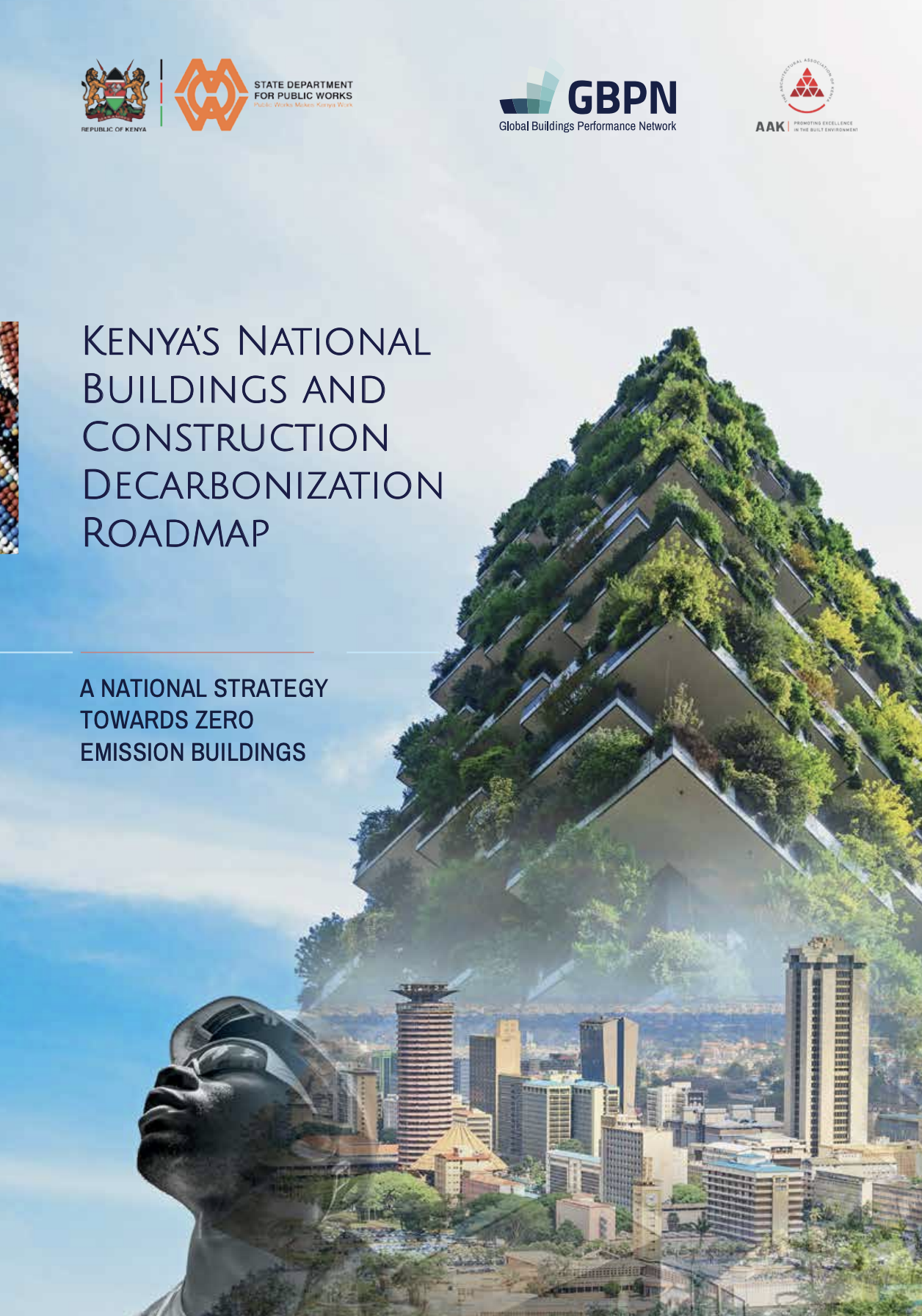
Kenya Buildings & Construction Roadmap provides a shared vision for decarbonising the buildings sector through innovative stakeholder-led bottom up practices, collaboration, partnerships, and accountability. It demonstrates what can be achieved when public and private sectors work together towards a common goal – to create an industry that builds responsibly and sustainably.

The Global Buildings Performance Network are honoured to work alongside Kenya State Department for Public Works, Architectural Association of Kenya, research institutions, and industry partners to accelerate this transformation. By aligning our actions with Kenya’s national goals and focusing on implementable actions and measurable outcomes, we can deliver real change, today and for generations to come.

Learn more here: https://gbpn.org/towards-sustainable-kenya/


2025-11-13 | Solar Impulse Foundation, UNEP/GlobalABC

The Catalogue of Climate Solutions for Buildings is a cornerstone of the Buildings Breakthrough's Priority Action B4, led by the Solar Impulse Foundation launched at COP30 on November 13.

The Catalogue of Climate Solutions for Buildings shows that the transformation of the building sector is not a distant ambition but a reality already underway. Featuring over 90 real-world cases from more than 40 countries across six continents, it demonstrates that deployment is possible today - covering every stage of the building life cycle, from design and construction to operation and end-of-life. It showcases a wide spectrum of technologies, from advanced digital tools and renewable systems to locally adapted, low-tech approaches, alongside the policies, financial mechanisms, and collaborative initiatives that make their implementation possible. Developed by the Solar Impulse Foundation, lead organisation of the UNEP-hosted Buildings Breakthrough initiative, this work is a landmark deliverable for this coalition of over 30 governments and 30 NGOs working to make near-zero emission and resilient buildings the new normal by 2030.


Learn more about the Catalogue of Climate Solutions for Buildings here: https://solarimpulse.com/publications/catalogue-of-climate-solutions-for-buildings

2025-11-03 | UNEP/GlobalABC
UN Environmental Programme

The UN Climate Change Conference (COP30) will take place in Belém, Brazil, from November 10-21.

UNEP has releasing a new COP30 Factsheet Series exploring the most critical adaptation and mitigation themes shaping today’s global climate agenda. The series equips readers with clear, accessible insights into the debates, decisions, and expected outcomes across priority themes.  

Designed to help negotiators, policymakers, journalists, and observers navigate the road to Belém, each factsheet takes stock of where we stand today and—crucially—previews what to expect at the conference. What issues are rising up the agenda? Where is progress being made? What major outcomes could emerge from the negotiations?

This factsheet covers the buildings and construction sector. Additional topics covered in the series include finance, the Baku–Belém Roadmap, mitigation work programme, adaptation loss and damage, technology negotiations, and key sectors such as cooling, forests, transport, and more. 


2025-04-22 | Houde K., Jensen A., Shinn K.
USA

Welcome to the Beginner's Guide to MEP Embodied Carbon, a comprehensive resource developed through cross-industry collaboration between MEP 2040 and the Carbon Leadership Forum. This guide addresses a critical gap in building decarbonization efforts by focusing on MEP systems, which can account for up to 27% of product stage embodied carbon, 52% of overall embodied carbon (excluding operational carbon), and 73% of whole life carbon. Whether you're new to embodied carbon concepts or looking to enhance your existing knowledge, this guide provides practical methodologies, material selection strategies, and actionable steps to measure and reduce the carbon impact of MEP systems. From detailed BIM takeoff techniques to real-world case studies, we've created this resource to empower manufacturers, designers, owners, contractors, and policy makers with the tools needed to move from measurement to meaningful carbon reduction in MEP systems. 

The guide includes: 

  • Detailed MEP BIM takeoff methodologies
  • Material selection guidance for high-impact systems
  • Default embodied carbon values for data-poor categories
  • Category-specific decarbonization strategies
  • Life cycle calculation breakdowns with uncertainty guidelines
  • A real-world case study: University of Illinois' Wymer Hall
  • Actionable steps for all stakeholders


Whether you're integrating MEP systems into your carbon assessments or looking to understand and reduce your systems' impact, this guide provides practical methodologies to move from measurement to meaningful action. We encourage you to download the guide, share it with your networks, and continue your valuable contributions to reducing MEP whole life carbon.

Learn more here: https://www.mep2040.org/guide


2025-07-09
Habitable Future

Informed™ Product Guidance


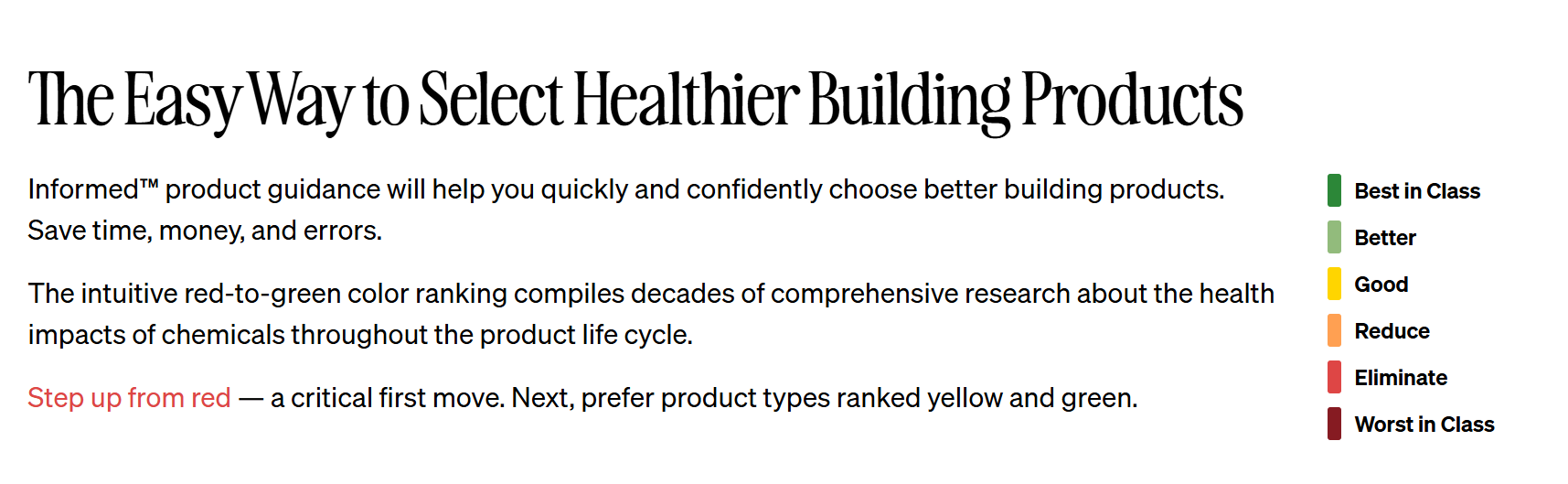
Build your knowledge of healthier products by digging into our research, translated into easy to understand guidance.

The intuitive red-to-green color ranking compiles decades of comprehensive research about the health impacts of chemicals on building occupants, fenceline communities, and workers throughout the product life cycle.

Informed™ is an assessment method used for materials modeling and product screening to guide healthy product selection at all stages of design.

View the guide here.

2025-05-21 | UNEP, Cues Foundation, OFFSETFARM
GlobalABC/UNEP and Cues Foundation

Commissioned by UNEP as host of the Global Alliance for Buildings and Construction (GlobalABC), in collaboration with Cues Foundation and Offsetfarm, and supported by Germany’s Federal Ministry for Economic Cooperation and Development (BMZ), this report highlights the urgent need to address embodied carbon in five key construction materials—cement, aluminium, steel, bricks, and glass.

These materials account for over 20% of global greenhouse gas emissions and 9% of emissions in the buildings and construction sector. With the sector responsible for 37% of global CO₂ emissions and 34% of energy demand, urgent action is needed to reduce its climate impact. Transitioning to low-carbon materials could lower emissions in some building types by 19–46%, yet data gaps remain around the emission profiles and costs of such alternatives.

This report also examines 28 carbon credit methodologies, with a focus on 10 that directly address embodied carbon. 

To meet global net-zero targets, estimated to require $9.2 trillion in annual investments, the report underscores the importance of mobilizing finance—including through carbon markets—to scale up the adoption of low-carbon building materials and close existing methodological gaps.