



COP31 International Sustainable Buildings Competition
The COP31 International Sustainable Buildings Competition, led by UNEP-hosted Global Alliance for Buildings and Construction, in partnership with the COP31 Presidency of Türkiye, brings together governments, industry leaders, and practitioners to showcase and accelerate best practices across the entire building lifecycle. This initiative aligns with the ambitions of the Déclaration de Chaillot, reinforcing global commitments to transform the buildings sector through innovation, collaboration, and measurable impact.
The competition encompasses two complementary initiatives, each recognising excellence across distinct dimensions of sustainable building performance:
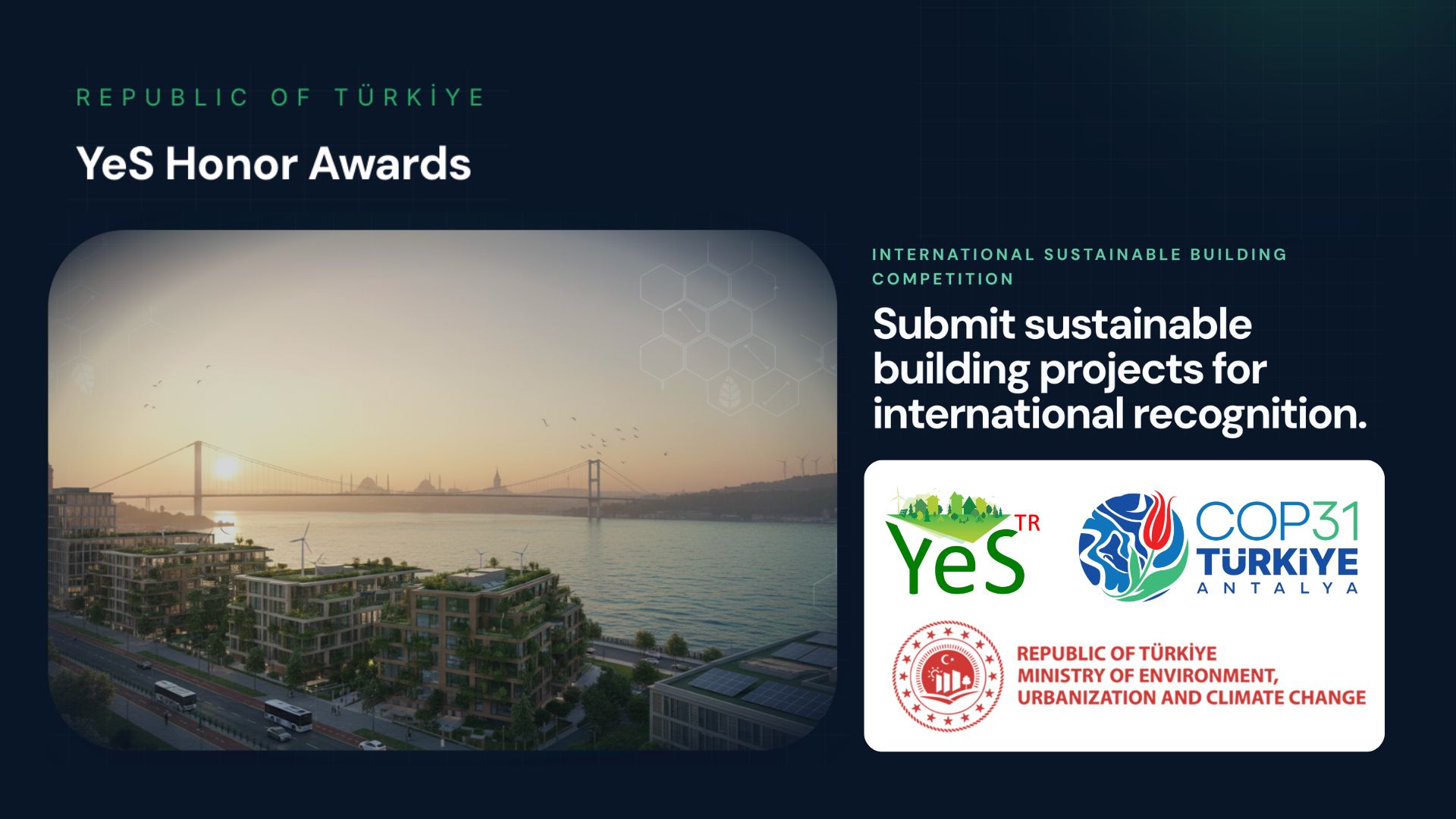
YeS Honor Awards
Designed by Türkiye and supported and coordinated by GlobalABC, the YeS Honor Awards celebrate exemplary green building projects, recognising achievement across sustainable design, indoor quality, material selection, and energy performance. The award ceremony will be held in Antalya during COP31.
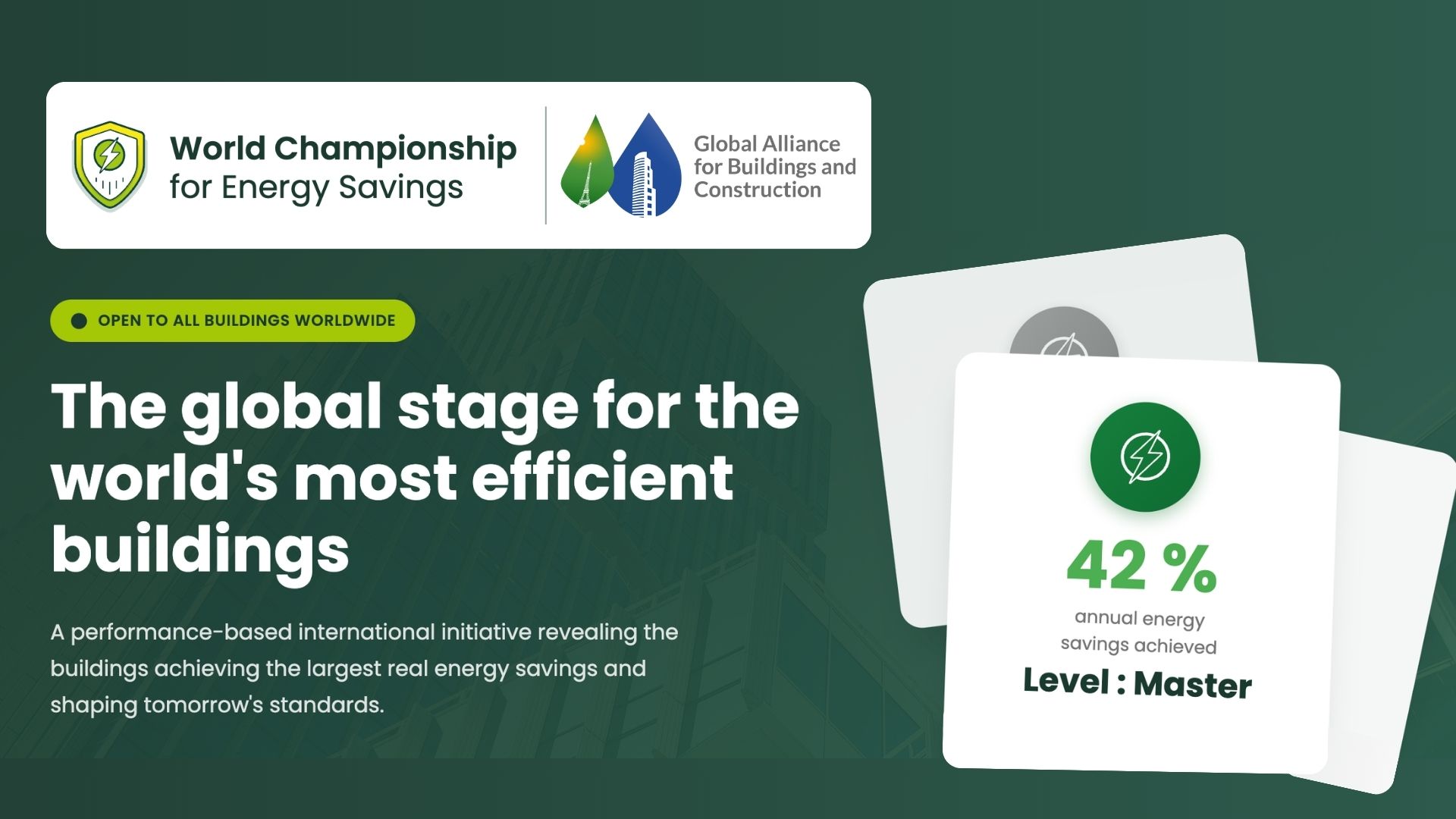
World Championship for Energy Savings (WCES)
Supported by GlobalABC and national governments, the WCES is a global championship that identifies buildings achieving the most significant reductions in energy consumption, using real metered performance data. The best-performing buildings from around the world are recognised at an annual COP ceremony.
Award Categories
The International Sustainable Buildings Competition will include the following award categories:
Under the YeS Honour Awards, applications are open to green buildings from different countries under the following categories:
- Green Building Main Category (Only for Existing Buildings): Projects that comprehensively address the use of environmentally friendly materials, efficient water management, reduction of waste and emissions, and adherence to sustainable design principles.
- Sustainable Design Main Category (Only for New Buildings): Architectural and engineering solutions that emphasize adaptation to microclimates, incorporation of passive design strategies, achievement of carbon-neutral goals, and alignment with ecological systems.
- Facility Management Category (Only for Existing Buildings): Practices focused on monitoring and optimizing resource consumption (water, energy, materials) during building operations, implementing circular waste management, and maintaining sustainable processes to reduce carbon emissions.
- Energy Efficiency Category (For All Buildings): Solutions that enhance energy performance through renewable energy integration, high-performance insulation, HVAC optimization, smart grid applications, reduced primary energy consumption, and lower emissions
The World Championship Energy Savings (WCES)
- The award is comprised of national energy leagues organised to identify champions that will then compete at the global level. Participating buildings submit energy data covering a defined historical period and a monitoring period.
- Performance is assessed based on relative improvement (%) and absolute energy savings. The objective is not to reward design but to recognize operational excellence and real-world impact.
Deadline
Don't miss the opportunity to participate - The submission deadline for the COP31 International Sustainable Buildings Competition is 1 October 2026.
Resources
Find everything you need in one place, from competition guides and eligibility information to logos and social media templates, via the dedicated resource boards:
- COP31 International Sustainable Buildings Competition Resource Board →
- World Championship for Energy Savings Resource Board →


