


Transforming The Built Environment Through Sustainable Materials
Project: Transforming The Built Environment Through Sustainable Materials
Project status: Ongoing
Implementation Partners: UNEP, UNOPS, UN-Habitat
Funding: Federal Ministry for Economic Cooperation and Development (Germany)
Buildings are responsible for 35 per cent of global energy-related carbon dioxide emissions and 32 per cent of global energy demand. Until now, most of the progress in the sector has been made on reducing the “operational carbon” of a building – the emissions created from heating, cooling and lighting. However, solutions for reducing the “embodied” carbon emissions arising from construction, maintenance and demolishing of buildings have lagged far behind.
The United Nations Environment Programme (UNEP) and its partners are supporting countries to accelerate a transition towards circular, low-carbon, and resource-efficient built environment. Through the creation of enabling frameworks for sustainable materials, the project fosters responsible acquisition and use of building materials, stimulates local market development, and supports countries in raising their climate ambition within the buildings and construction sector.
The Challenge
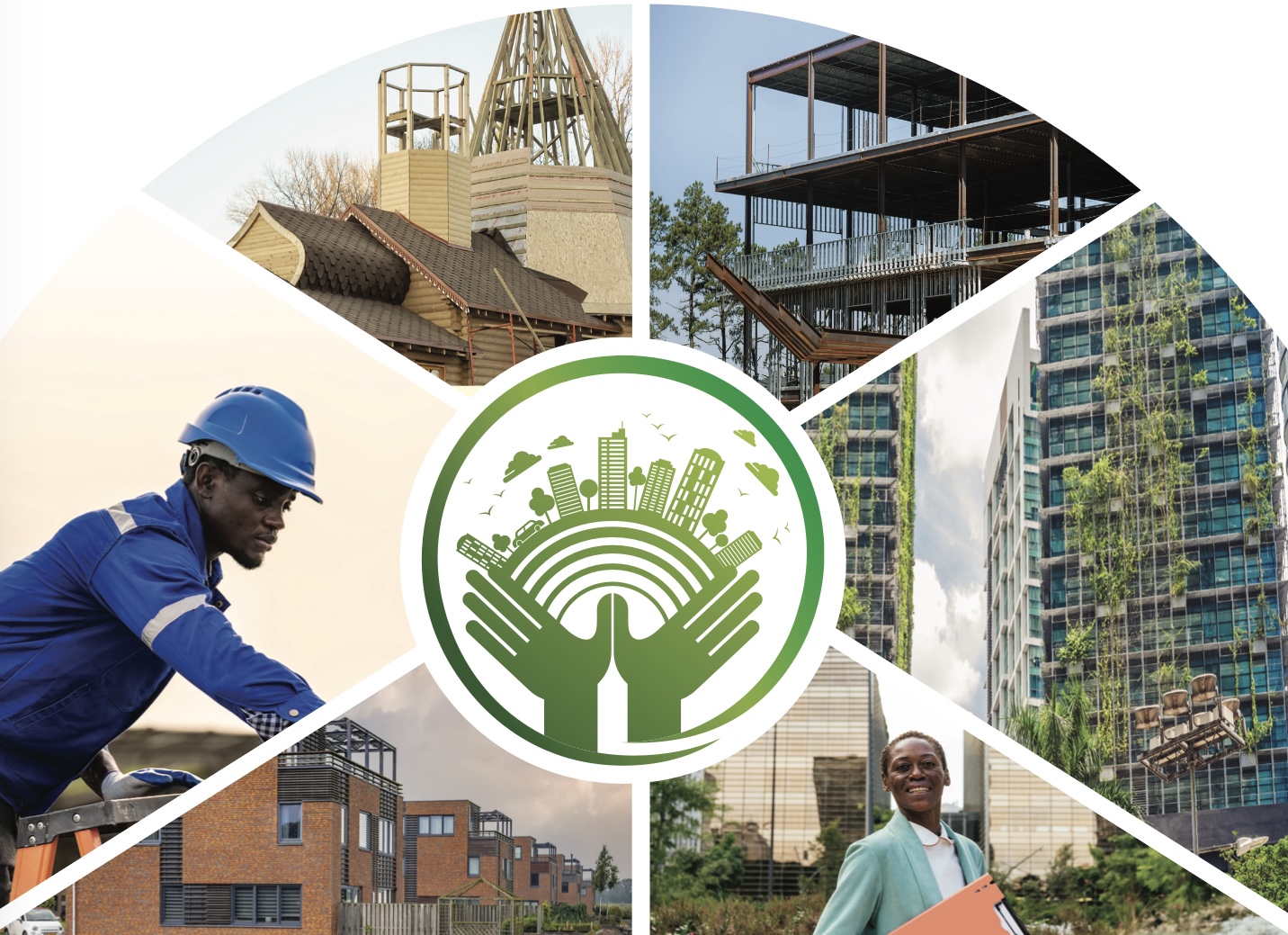
The global building sector stands at a crossroads. As urban populations continue to grow, the demand for new construction materials is soaring—placing immense pressure on natural resources and driving up greenhouse gas emissions.
With global building floor area projected to more than double by 2050, annual embodied emissions—those associated with the extraction, manufacture, and transport of building materials—will rise sharply unless the carbon intensity of construction is significantly reduced. Under a business-as-usual scenario, cumulative embodied emissions from new construction could reach 75 gigatonnes of CO2 between now and 2050.
As heating systems become electrified and power grids decarbonize, embodied emissions are expected to represent an ever-larger share of total building-related emissions. Alongside efforts to cut operational emissions, targeted action to reduce embodied carbon is essential to align the sector with global climate goals.
The Solution
- Institutionalize stakeholder coordination and develop national and sub-national roadmaps and action plans for the decarbonization of the built environment
- Link public procurement with decarbonization practices
- Make carbon visible through improved data access and quality
- Adapt norms and standards to allow for the use of alternative or lower-carbon building materials and construction practices
- Promote the adoption of sustainable management and production of bio-based materials
Support Across Three Main Activity Areas
The project builds capacity, policies, and markets that enable countries to use sustainable materials at scale—supporting circularity, climate action, and economic opportunity.
1. Strengthen policy and regulatory frameworks Integrate resource efficiency and environmental performance requirements for building and construction materials into procurement policies, building codes, and national climate strategies. Support the development of incentives and planning instruments to accelerate market uptake of sustainable materials.
2. Demonstrate innovation and build capacity Showcase the techno-economic viability of low-carbon, resource-efficient materials and circular construction practices through pilot projects. Strengthen the capacity of government institutions, private sector actors, and local practitioners to lead and sustain this market transformation.
3. Generate and share knowledge Produce and disseminate data, lessons, and best practices on mainstreaming low-carbon, resource-efficient materials and on developing sustainable materials markets for the building and construction sector.
Demonstration Projects
Maharastra (India)
Techno-economic feasibility for the use of low-carbon construction materials in the redevelopment of a residential housing in city of Thane, paving the way for more sustainable urban regeneration.
Odisha (India)
Demonstrating the potential of green and inclusive housing by redeveloping 44 homes in the Pragati Vihar transgender community using low-carbon materials, passive cooling, and circular, climate-resilient design—showcasing how sustainability and social inclusion can go hand in hand in India’s housing sector.
Ghana
Working with the Ministry of Works and Housing to develop models for low-carbon, resource-efficient, and climateresilient social housing in rural districts—demonstrating how sustainable construction can enhance both community resilience and quality of life.
Senegal
Developing a pilot facility to produce Typha-base insulation boards in partnership with the Ecole Supérieure Polytechnique de Sénégal—transforming a locally abundant plant into a low-carbon, high-performance building material. Typha, which grows naturally in rivers, provides an eco-friendly alternative to conventional, fossil fuel–derived insulation products.
Bangladesh
Partnering with the Dhaka Urban Development Authority to incorporate low-carbon and sustainable materials in the development of a public space project, showcasing greener approaches to urban design.
Learn more: https://globalabc.org/resources/publications/transforming-built-environment-through-sustainable-materials


