


Buildings and Electrification at the Heart of the COP31 Action Agenda
At the Bonn Climate Change Conference (SB64), the COP31 Presidency of Türkiye announced a set of measurable global targets for 2035 as part of its Action Agenda, including a target with direct relevance to the buildings and construction sector. For GlobalABC and UNEP, the announcement reinforces an argument the sector has been making for years: buildings are not peripheral to the clean energy transition, they are central to it.
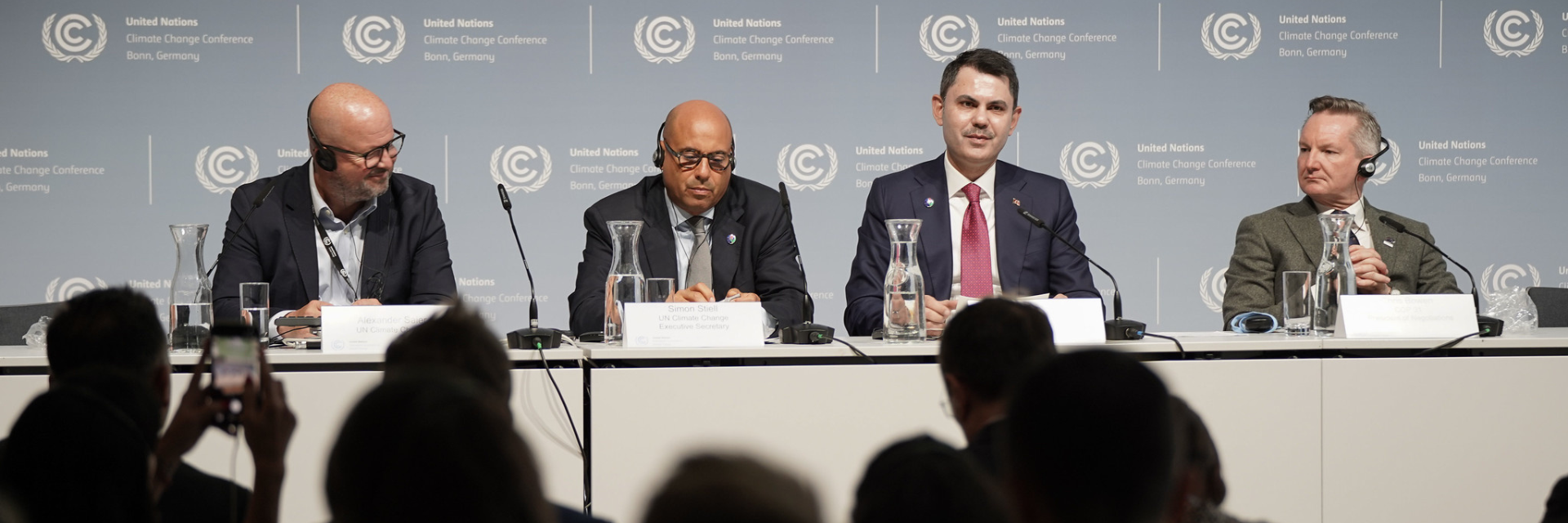
Photo: UN Climate Change | Lucía Vásquez
Bonn 2026: The COP31 Presidency Sets Out Its Ambition
On 9 June 2026, at the session "COP31 Action Agenda: From Dialogue to Delivery," the COP31 Presidency of Türkiye, Minister Murat Kurum, Minister of Environment and Urban Planning, Government of Türkiye set out clear headline targets for 2035:
- A global electrification target to raise the share of final energy demand met by electricity from just over 20% today to 35% by 2035
- Halving growth in global waste by 2035
- A Resilient Cities target to reduce energy consumption intensity in the building sector by at least 25% by 2035
- A target to increase the global circular material use rate to at least 15% by 2035
Full details are available in the COP31 Presidency announcement and the UNFCCC press release.
Global Status Report for Buildings and Construction 2025-2026
Building Fast. Falling Short.
The buildings sector is moving in the wrong direction. The latest Global Status Report for Buildings and Construction 2025-2026, a UNEP and GlobalABC flagship report, shows that buildings' operational emissions reached 9.9 GtCO₂ in 2024, an increase of 6.5 per cent since 2015, and 3.5 GtCO₂ above the level needed to stay on track for net-zero emissions by 2050. To align with a 2050 net-zero pathway, operational emissions would need to decline by 56 per cent from 2024 levels by 2030.
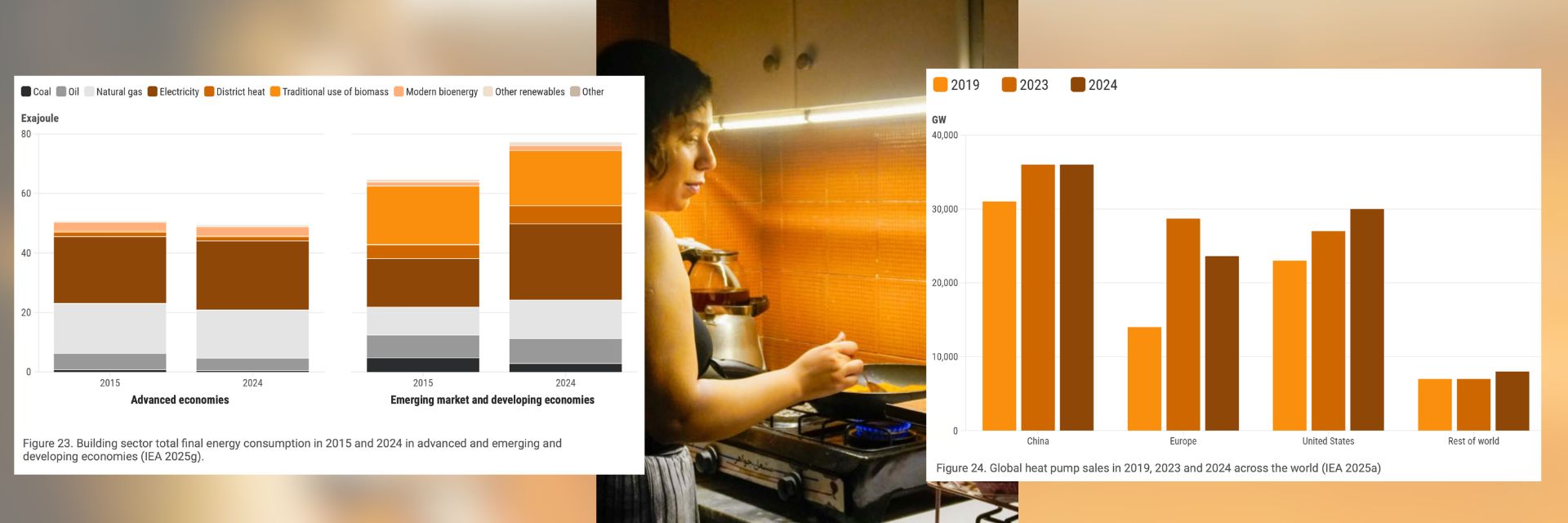
Electrification is one of the most powerful tools available to close this gap. The Global Status Report notes that electric technologies such as heat pumps deliver 3 to 5 times more heat energy than the electricity they consume, far outperforming fossil-fuel alternatives. Yet the transition remains deeply uneven: according to the Global Status Report, electricity accounted for around 33 per cent of buildings' final energy consumption in advanced economies in 2024, compared with just 23 per cent in emerging market and developing economies, where fossil fuel dependence in cooking, heating, and water heating remains entrenched.
Reducing energy intensity and electrifying buildings are not competing priorities. They are complementary ones. More efficient buildings require less energy to electrify. Electrified buildings, powered by renewables, are the foundation of a resilient, low-carbon built environment.
From Energy Consumer to Grid Resource
There is a broader dimension to this conversation that often goes unacknowledged. Hitting the 35% electrification target by 2035 will require not just switching fuel sources, but rethinking how electricity systems are managed, and buildings have a critical role to play there too.
Power demand is growing rapidly across the world, driven by cooling loads, electrification, and digitalisation, particularly in emerging and developing economies. According to the IEA's Global Energy Review 2025, electricity use in buildings accounted for nearly 60 per cent of total growth in global electricity consumption in 2024. The challenge is increasingly not generation capacity, but grid flexibility: the ability of electricity networks to manage peaks and variability as rooftop solar, EV charging, and cooling loads grow simultaneously.
Buildings, when properly equipped and managed, can be part of the solution rather than part of the problem. Grid-interactive buildings use digital controls to coordinate flexible loads (cooling, water heating, appliances) with on-site solar, batteries, and EV charging. Aggregated through Virtual Power Plant (VPP) platforms, they can shift demand to times of high renewable output, reduce peak loads, relieve local congestion, and improve resilience during heatwaves and outages, creating new value streams for customers and grid operators alike.
UNEP is committed to helping countries move from concept to delivery on demand-side flexibility, building on more than a decade of decentralised energy implementation experience with active pilots underway across Latin America, Asia, and Africa, namely Colombia, Brazil, Mexico, India, South Africa, Thailand, and Vietnam. The model exists. What is needed now is the enabling environment (policy frameworks, investment pipelines, and digital infrastructure) to bring it to scale.
From Announcement to Action: How Do We Deliver on the Targets
GlobalABC and UNEP have been working across the full policy pipeline to make this transition possible. The COP31 targets reinforce and give new urgency to that work.
Intergovernmental Council for Buildings and Climate (ICBC) and the Chaillot Declaration
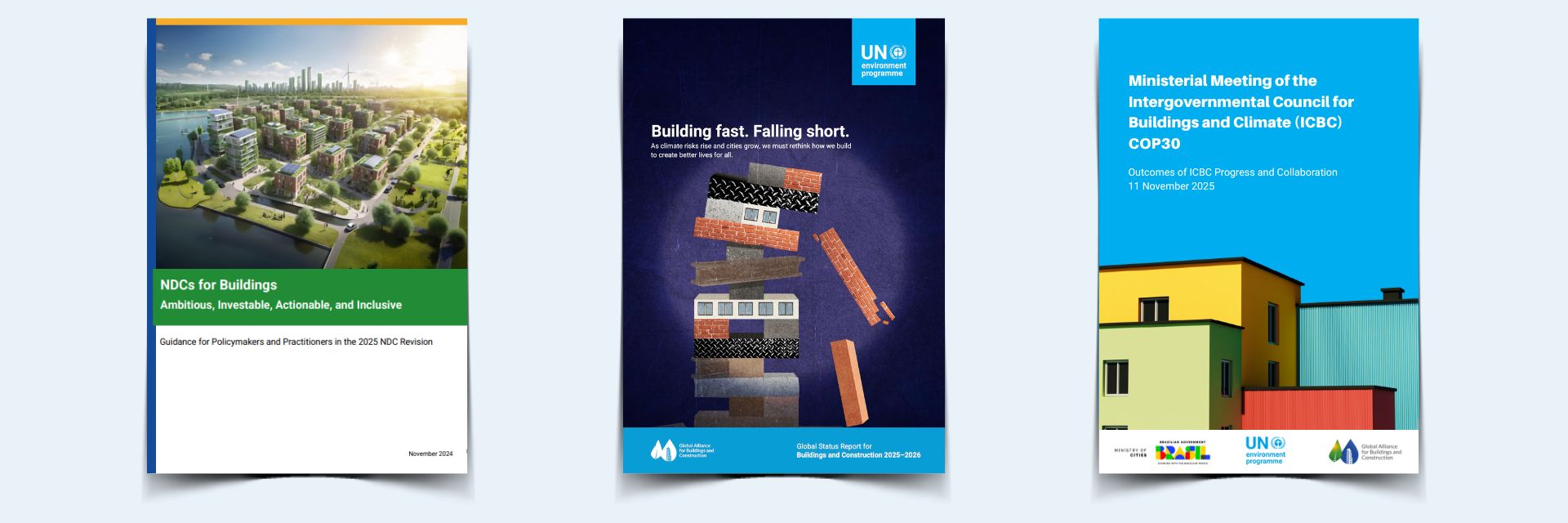
The Intergovernmental Council for Buildings and Climate (ICBC) and the Chaillot Declaration provide the intergovernmental architecture for governments to commit, align, and take action on buildings decarbonisation. As a growing coalition of over 65 national governments members and observers, the ICBC translates high-level political commitment into concrete country-level implementation. The ICBC's momentum is building. At COP30 in Belém, the first Ministerial Meeting of the ICBC marked a landmark moment, launching the Belém Call for Action for Sustainable and Affordable Housing and securing endorsements on sustainable procurement, low-carbon materials, and energy efficiency. Country Dialogues are helping governments identify their own transition priorities and connect with technical and financial partners. And ahead of COP31 in Antalya, the first in-person ICBC technical meeting at the Sustainable Buildings and Construction Summit in Lausanne has been advancing work on a number of new knowledge products and tools that member governments will be invited to endorse later this year.
NDC Support for the Buildings Sector
Nationally determined contributions (NDCs) are the primary mechanism through which countries implement the Paris Agreement. As of January 2026, of the 135 NDC 3.0 submissions received, not one includes an extensive national plan for the buildings and construction sector, as reported in our Global Status Report for Buildings and Construction 2025-2026. GlobalABC's NDC guidance supports governments in developing ambitious, investable buildings targets for NDC 3.0, turning global commitments into the national policy frameworks that drive investment and delivery.
Near-Zero Emission and Resilient Buildings (NZERBs)
Political commitment needs a concrete delivery mechanism. Through the Buildings Breakthrough, GlobalABC has developed a Plan to Accelerate Solutions (PAS) for the buildings sector: a practical, living roadmap that maps existing efforts, identifies gaps, and coordinates action among governments and non-Party stakeholders across five priority areas: standards and certifications, finance and investment, procurement, research and development, and capacity building. The PAS is not a statement of intent. It is an operational framework designed to turn the shared goal of near-zero emission and resilient buildings as the new normal by 2030 into measurable progress on the ground.
Global Status Report for Buildings and Construction
The Global Status Report for Buildings and Construction 2025-2026, published annually by GlobalABC and UNEP, provides a rigorous, data-driven assessment of the sector's progress and gaps against Paris-aligned pathways, covering emissions, energy intensity, investment, building codes, and NDC ambition. It is the evidence base that informs target-setting and keeps governments and industry accountable.
This year's edition goes further than global averages, examining regional disparities in building codes, electrification rates, and emissions trends, because the solutions required in high-growth regions like Africa and Southeast Asia are fundamentally different from those in advanced economies, and policy needs to reflect that.
Housing sits at the heart of the challenge. The housing sector accounts for over 77 per cent of total buildings' floor area and 70 per cent of total buildings' energy demand. Around 1 billion people live in informal settlements globally, many in buildings with no energy codes, no access to efficient appliances, and high exposure to extreme heat. Electrifying and improving the efficiency of the housing stock, particularly in rapidly urbanising economies, is one of the most direct ways to reduce emissions, cut energy costs for households, and build resilience, and one of the most underinvested areas in climate finance.
The Road to Antalya
COP31 will take place in Antalya, Türkiye, in November 2026. GlobalABC will be present, working with governments and building sector actors to ensure buildings and construction remain at the centre of climate implementation. Accounting for 37 per cent of global emissions, and nearly 50 per cent of global material extraction, that is where it must remain.
The targets announced in Bonn are ambitious. Delivering on them will require sustained action: governments strengthening building codes and embedding buildings targets in their NDCs; industry scaling up electrification and efficiency technologies; and the financial sector mobilising investment at the pace the transition demands.
Electrification will not work without buildings. And buildings will not decarbonise without the right policy frameworks, technical roadmaps, and investment pipelines in place. That is the work GlobalABC and UNEP are here to support.
Get involved at COP31
GlobalABC and UNEP will be at COP31 in Antalya, hosting a pavilion and working with governments, industry, and partners to keep buildings and construction at the centre of climate implementation.
Governments and intergovernmental partners interested in engaging through the ICBC or country dialogues can contact Hanane Hafraoui and Divya Yadav Nawale
Private sector and non-governmental organisations interested in partnership and pavilion opportunities at COP31 can contact Maliya Lazli
General enquiries: [email protected]


