


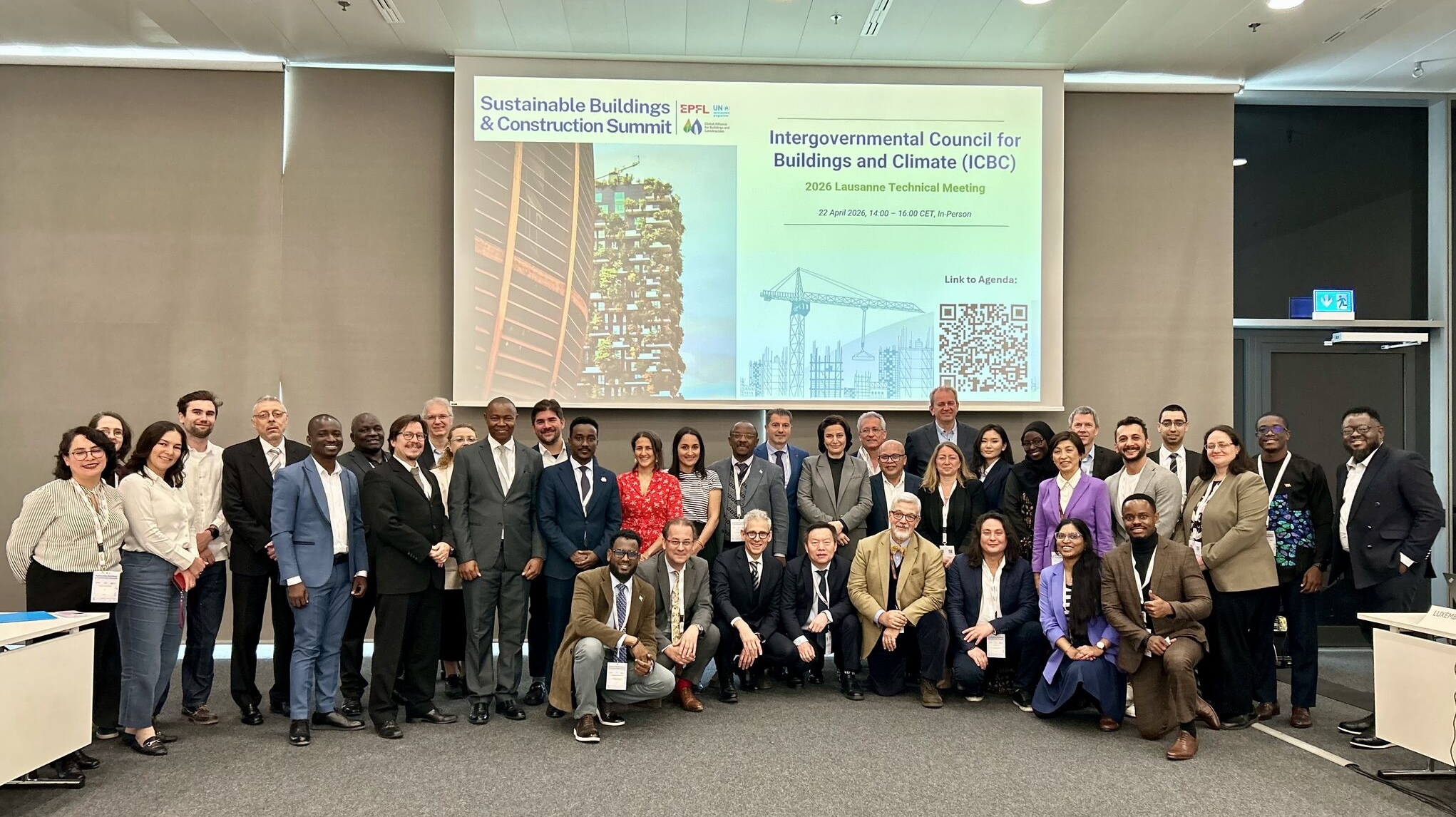
On the sidelines of the Sustainable Buildings and Construction Summit 2026 in Lausanne, the Intergovernmental Council for Buildings and Climate (ICBC) convened its first-ever in-person Technical Meeting, bringing together country-designated Senior Representatives from 25+ countries to advance collective action toward a net-zero and climate-resilient built environment.
Building on political momentum from the ICBC Ministerial held at COP30 in Belém, the meeting provided a dedicated platform for peer exchange and progress review across three key areas: taking stock of implementation progress under the Déclaration de Chaillot; aligning on the operational modalities that will guide ICBC processes going forward; and discussing country needs to inform the design and delivery of the proposed ICBC Country Dialogues.
Representatives from 26 Countries
Representatives from France, Brazil, and Kenya — the ICBC Troika Leadership — were joined by delegations from Armenia, Cambodia, China, Egypt, Fiji, Finland, Germany, Ghana, Italy, Lebanon, Liberia, Luxembourg, Malta, Mongolia, Morocco, the Netherlands, Portugal, Senegal, Somalia, Türkiye, Uganda, Zambia, and the European Commission, all signalling continued ambition to drive climate action in the buildings and construction sector.
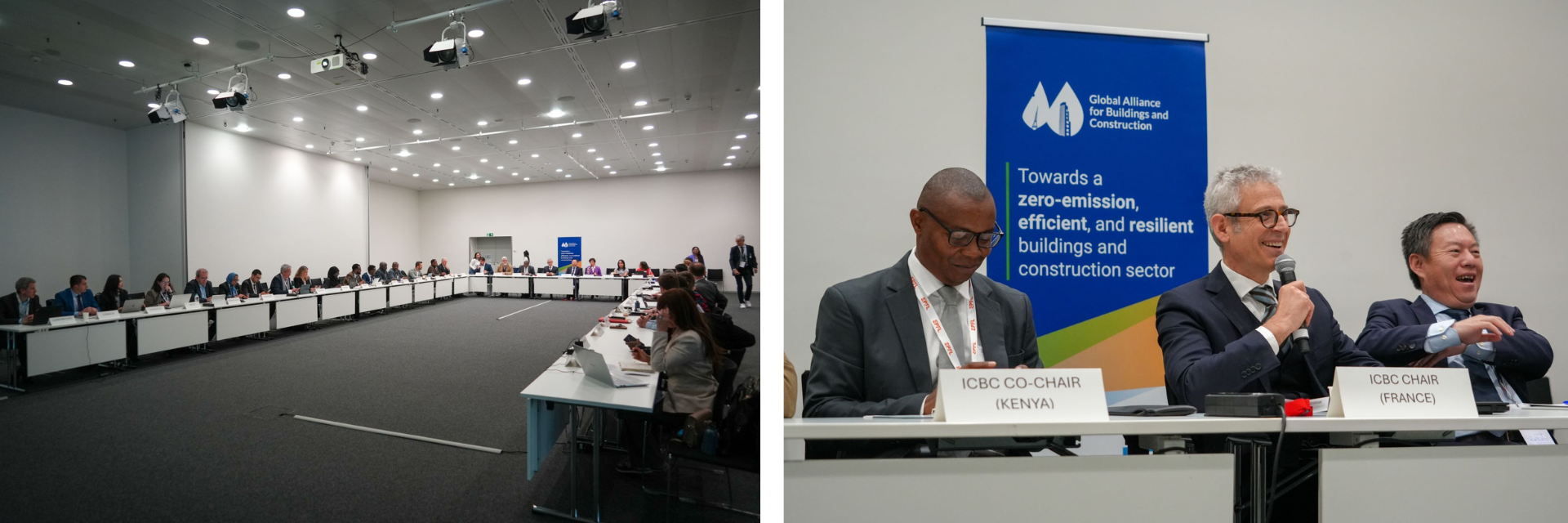
Download high-resolution photos of the first in-person ICBC Technical Meeting
ICBC Breakout Sessions at SBCS26
Alongside the Technical Meeting, three dedicated ICBC workstream sessions advanced key areas of collective work: the launch of the World Championship for Energy Savings platform, with an award ceremony planned for COP31; a panel discussion on creating markets through property-linked finance (PLF) to unlock investment in building retrofits; and a focused discussion on policies for blended cements and supplementary cementitious materials (SCMs) to reduce clinker content and lower greenhouse gas emissions in construction.
More on ICBC
The ICBC currently includes 53 member countries and 16 observers. The Technical Meeting in Lausanne marks a significant step in deepening the Council's operational foundations as it works toward its next major milestone at COP31. As the GlobalABC Secretariat, UNEP facilitates this intergovernmental work — supporting knowledge exchange, enabling peer learning across regions, and helping to ensure that effective approaches can be replicated and adapted by countries at different stages of implementation.
Technical Meeting Resources & Context
- Read Key Documents
- Read the Déclaration de Chaillot: The foundational policy framework that established the ICBC, endorsed by over 60 countries in Paris, March 2024.
- Read the Outcomes of the ICBC Ministerial, demonstrating how countries are tackling climate, housing, and development together as part of the COP30 Action Agenda's Key Objective 12 on Sustainable and Resilient Constructions and Buildings.
- Read and download the full Belém Call for Action The complete text of the ministerial commitment for Sustainable and Affordable Housing with time-bound targets for 2030 and 2035, along with the one-page summary flyer.
- Read UNEP's Press Coverage: Global ministers launch Belém Call for Action to tackle the housing and climate crises
- Access Photos
Download high-resolution photos of the first In-person ICBC Technical Meeting
- Learn More About the ICBC
Discover more about the Intergovernmental Council for Buildings and Climate (ICBC)
The ICBC was established through the Déclaration de Chaillot, endorsed by over 60 countries at the Buildings and Climate Global Forum in Paris in March 2024. The Council was officially launched at COP29 in Baku, Azerbaijan, in November 2024, with its secretariat provided by the GlobalABC, hosted by UNEP and operates within the framework set forth in the Declaration.
The ICBC brings together governments to align national building policies with global climate goals, review progress, issue guidance, and promote cooperation and knowledge sharing across countries. The leadership is organized as a "troika," with France as Chair and Brazil and Kenya as Co-Chairs, reflecting its international and inclusive governance structure.
The Intergovernmental Council for Buildings and Climate (ICBC) serves as a high-level political framework fueled by the recommendations, evidence, and insights generated by the Buildings Breakthrough and the GlobalABC Hubs and Action Groups, among other relevant processes and initiatives.
For any questions please contact Divya Nawale at [email protected] and Clement Charnaillat at [email protected].


