


UNEP technical assistance under funding from the BMZ and SED fund enables the Government of Maharashtra to embed sustainability into cluster redevelopment projects affecting thousands of homes.
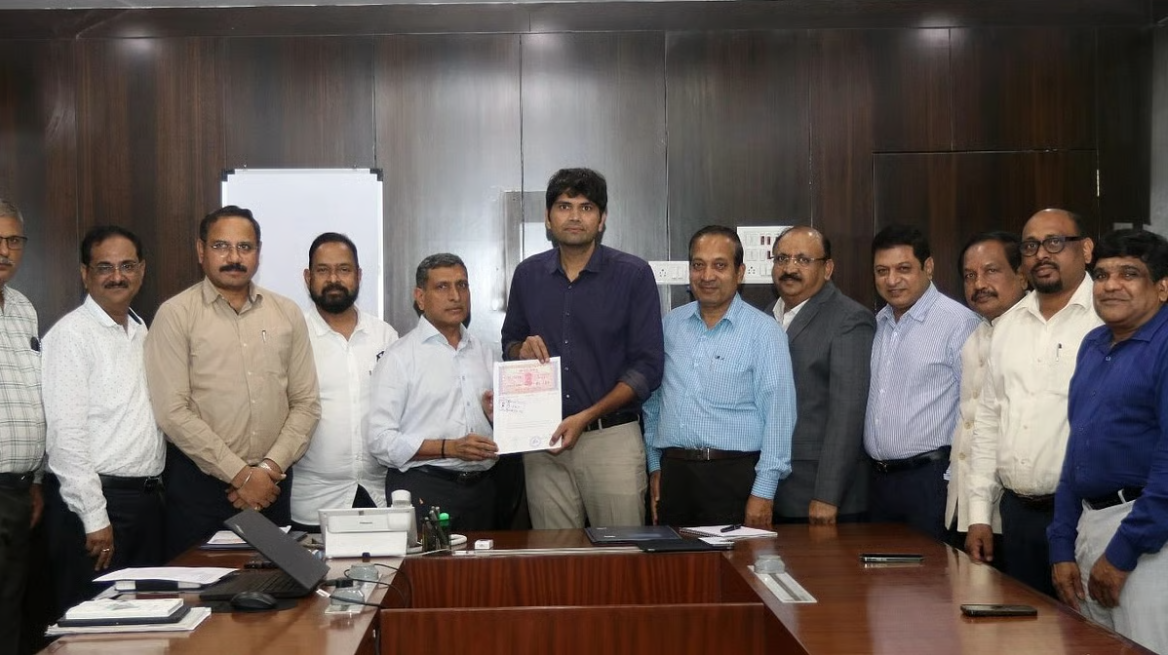
MoU Signing between MAHAPRIET and Thane Municipal Corporation for Cluster Development (25th July 2024)
The Government of Maharashtra is embedding green building ratings and sustainable construction materials into its ambitious cluster redevelopment programme, with technical support from UNEP, the host of the Global Alliance for Buildings and Construction (GlobalABC) secretariat.
The initiative targets large-scale urban transformation projects across Mumbai, Pune, Nagpur, and Thane—including the massive Thane Cluster Redevelopment Project spanning 1,500 hectares, larger than the well-known Dharavi redevelopment. By integrating climate-resilient design and low-carbon materials from the outset, these projects aim to deliver safer, healthier, and more resilient housing for urban communities.
Mainstreaming low-carbon construction at scale
Through funding from Germany's Federal Ministry for Economic Cooperation and Development (BMZ) and the Sustainability, Equity and Diversity (SED fund), UNEP conducted feasibility studies for Mahatma Phule Renewable Energy and Infrastructure Technology Limited (MAHAPREIT) to evaluate green rating systems and locally available sustainable materials suitable for high-rise construction.
The technical assistance focused on reducing both embodied carbon (from materials and construction) and operational carbon (from building use) by at least 30%, while considering the economic realities of high-rise development spanning 21+ storey towers.
From assessment to action
Following a comprehensive analysis of material costs, carbon reduction scenarios, and consultations between government officials, municipal authorities, green rating agencies, and manufacturers, MAHAPREIT's leadership committed to incorporating sustainability requirements into development tenders.
The new tender provisions mandate:
- Indian Green Building Council-Gold certification standards in project construction
- Specific use of low-carbon materials including low carbon cement, autoclaved aerated concrete blocks (AAC), ground granulated blast furnace slag (GGBS), fly-ash bricks, recycled aggregates, low VOC paints, and energy-efficient systems.
- Adoption of research-backed sustainable building materials from the Central Building Research Institute (CBRI), Building Material and Technology Promotion Council (BMTPC) and such other research institutes' initiatives
- Preferential scoring for bidders proposing certified green initiatives
Expected impact
Buildings constructed under these requirements are projected to achieve 18-24% embodied carbon reductions and 10-15% operational carbon reductions—translating to lower energy costs for residents and reduced environmental impact throughout the building lifecycle.
Beyond emissions, these standards ensure buildings are designed for resilience against climate impacts including extreme heat and monsoon flooding. They will help to enhance thermal comfort and indoor air quality while reducing energy consumption—critical benefits especially for informal settlement residents who often face the greatest climate vulnerabilities.
The policy framework applies to cluster projects in Kopri, Kisannagar, Hazuri, and other areas being developed by MAHAPREIT across Maharashtra's growing urban centres, representing a significant step towards mainstreaming sustainable construction in India's housing sector.
This work demonstrates how national governments can leverage urban renewal programmes as vehicles for decarbonising the buildings sector at scale, aligning with the Buildings Breakthrough commitment to make near-zero emission, resilient buildings the new normal by 2030.
Background: Maharashtra's Cluster Redevelopment Policy
Maharashtra's urban renewal efforts are primarily guided by the Maharashtra State Housing Policy, 2025, and large-scale cluster redevelopment policies aimed at transforming dilapidated areas across major cities. A significant policy shift in late 2024/2025 moved from fragmented, plot-by-plot redevelopment to integrated cluster redevelopment covering a minimum of 50 contiguous acres.
The Slum Rehabilitation Authority (SRA) serves as the nodal agency, with implementation through public-private partnerships via state organisations including MAHAPREIT, CIDCO, TCDAICL, and MHADA.
This initiative is part of UNEP's project “transforming the built environment through sustainable building materials”, supported by Germany (BMZ) and the SED fund and contributes to implementing the vision and mission of the GlobalABC.


