2015-01-01

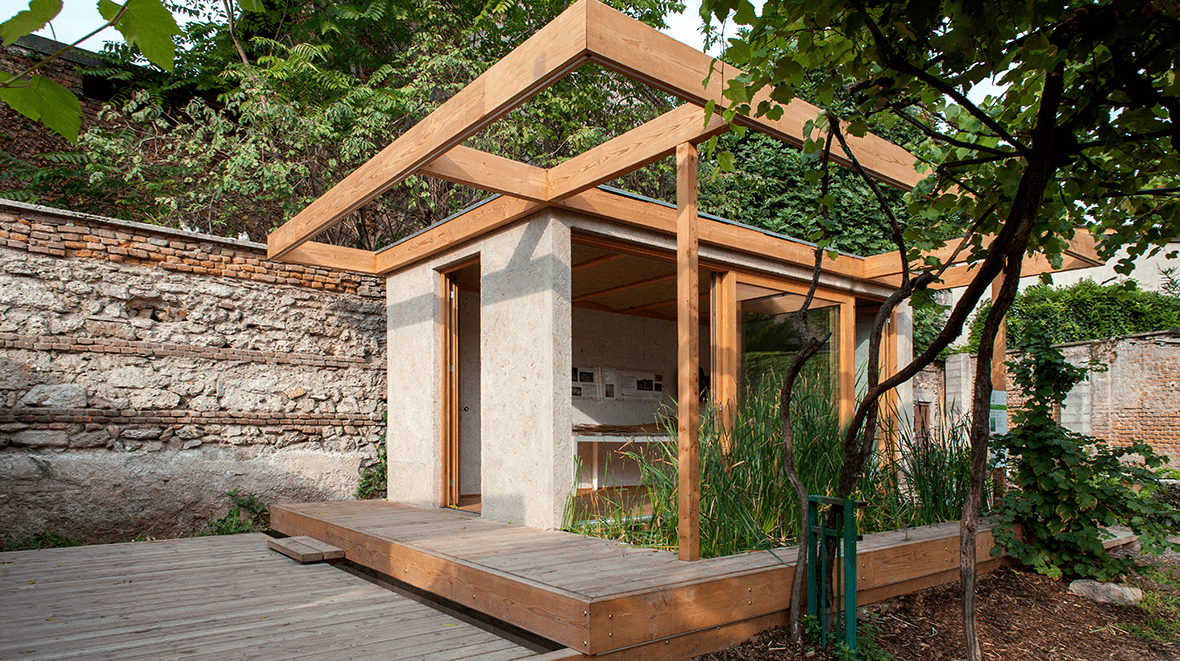
TYPHABOARD is made from typha (cattail), a plant that grows quickly and easily in all kinds of marshes throughout the world.The material provides both structural and insulation properties. It can be used in timber frame structures, or 100% typha strutures. It can also be used as insulation materials when retrofitting existing buildings.

2022-12-10

EIT Climate-KIC has teamed up with a cohort of partners to develop a handbook to help cities reduce embodied carbon in construction.

Globally, buildings account for 39 per cent of carbon emissions, with the share of embodied carbon (arising from manufacturing, transportation, installation, maintenance, and disposal of building materials) becoming more dominant as energy efficiency increases and energy sources become less carbon intensive. Therefore, dramatically reducing this source of emissions in the construction sector is a priority.

2022-12-10

The risks of not curbing global warming are clear. The good news is that the built environment can play a massive role in drawing down emissions. But decarbonizing the built environment needs to advance now: New buildings and renovations of every type need to be built and operated to zero carbon emission standards. This is a collective endeavor. It will take every building in every community. The entire built environment sector, like the entire world of nations, is in this together.  

2022-12-10

The urgency around climate change is pressing us to rethink our approach to delivering and using energy in buildings and how this relates to greenhouse gas (GHG) emissions.  This guide provides key information about building decarbonization, aimed at the non-technical audience. 

2022-12-09

The MIT Concrete Sustainability Hub (CSHub) is a dedicated interdisciplinary team of researchers from several departments across MIT working on concrete and infrastructure science, engineering, and economics since 2009. The MIT CSHub brings together leaders from academia, industry, and government to develop breakthroughs using a holistic approach that will achieve durable and sustainable homes, buildings, and infrastructure in ever more demanding environments. Resources in the CSHub are largely focused upon the USA context, but are internationally applicable. 

2022-01-01

HBN's Product Guidance uses a red-to-green ranking system to compare different types of products based on their hazardous content. It is informed by our comprehensive research into the hazards associated with building products that may impact building occupants as well as fenceline communities and workers throughout the product's life cycle.

2022-12-09

Urban cooling is a recent subject and the knowledge produced by research and the first experiments give various results, sometimes difficult to decipher for operational actors.

This guide offers a synthetic, multi-criteria and operational approach to emerging or proven solutions, adapted to different climatic and urban contexts. It is a question of clarifying the decision of the public and private actors, as well on their choices of installation, construction, renovation of the buildings as of installation of the external spaces.


2022-12-09

This practical guide demonstrates how buildings and community spaces can be constructed to increase their resilience to climate change, especially in developing countries where structures are largely self-built. The publication provides an overview of the fundamental types of interventions at the building scale, including the use of nature-based solutions. The guide offers construction solutions to adapt to a range of different risks in various climates.

2022-12-09

The Human Settlements are one of the Thematic Areas of the Climate Action Pathways, which are a vital part of the Marrakech Partnership for Global Climate Action (MPGCA) tools to enhance climate action and ambition towards fully implementing the Paris Agreement. The Pathways aim to provide a roadmap to help Parties and non-Party stakeholders alike to identify actions needed by 2025, 2030 and 2040 as steps to get to the 2050 vision of a 1.5°C resilient world.

2022-01-01

This short online course from the Life Cycle Initiative provides grounding on lifecycle thinking for policy makers. This is delivered via a series of video lessons, reading materials, and quizzes around the application of life cycle thinking in different areas of policy. The areas covered include those relevant to the built environment and urban planning, including transport and waste policy.