2022-12-09

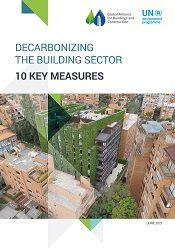
This publication aims to inspire senior officials and decision makers in national, subnational and local governments to decarbonize the building sector, and to show them how to start. It does not present a comprehensive strategy, but rather highlights a set of essential measures and successful examples from intervention areas identified in the GlobalABC Regional Roadmaps – new buildings, existing buildings, building operations, building materials, and resilience.

2022-12-09

Background: Climate change action is time critical. There is an immediate need to focus policy and market actions on emission reductions across the entire life cycle of buildings as these are very quickly using up the remaining carbon budget left before the tipping point of an irreversible climate crisis. This provides a compelling reason for policymakers to address all sources of carbon emissions from the buildings and construction sector, including both embodied and operational carbon – together referred to as “whole-life” carbon (WLC) emissions.

2021-07-05

The SDG 12 Hub is a one-stop-shop for governments, businesses, civil society and the public for tracking progress on the achievement of Goal 12 of the 2030 Agenda for Sustainable Development: ensuring sustainable consumption and production patterns.

The SDG 12 Hub supports the transformation to sustainable consumption and production practices by offering direct access to transparent data, impactful solutions, guidance and official reporting all in one place, and facilitates the sharing of progress, knowledge and solutions for sustainable consumption and production.

2022-12-09

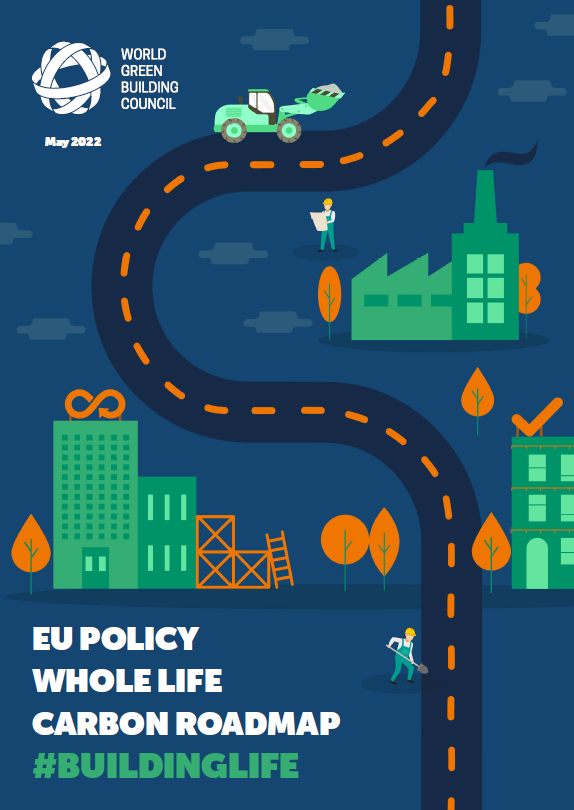
On 24 May 2022, WorldGBC launched the EU Policy Whole Life Carbon Roadmap for buildings as part of the #BuildingLife project.  This Roadmap outlines the key European Union (EU) policy interventions, regulatory measures and tools needed to achieve a decarbonised, circular, resilient and well-designed built environment by 2050. It focuses on measures to address whole life carbon (WLC) at the building level.

Created as part of the #BuildingLife project, this Roadmap provides:

2022-01-01

This short online course from the Life Cycle Initiative provides grounding on lifecycle thinking for policy makers. This is delivered via a series of video lessons, reading materials, and quizzes around the application of life cycle thinking in different areas of policy. The areas covered include those relevant to the built environment and urban planning, including transport and waste policy.

2022-12-09

The current Commission proposal does not go far enough in addressing operational and embodied carbon emissions on building lifecycle global warming potential (lifecycle-GWP), often referred to as Whole Life Carbon (WLC). Deploying WLC measures in the EU Energy Performance of Buildings Directive (EPBD) recast will be a win-win for energy performance and climate action at the building and industry level. Therefore, a stepwise approach and a clear timeline that go beyond 2030 needs to be set out in the EPBD recast.

2022-12-09

This report - Sri Lanka Roadmap for Sustainable Housing and Construction 2020 – 2050 - presents the findings of the Sustainable Building Construction Country Assessment for Sri Lanka (SBC-CA) and a Roadmap for Sustainable Housing and Construction and achieving NDCs in the construction industry in Sri Lanka. It examines the current status, and potential opportunities and challenges for adopting Sustainable Building Construction (SBC) practices and policies.

2022-12-01

The database contains information about 17 jurisdictions of the Organization for Economic Co-operation and Development (OECD) using and promoting life cycle approaches in their public policies. The database results from a political science research project on the environmental state and life cycle analysis.

2022-11-30

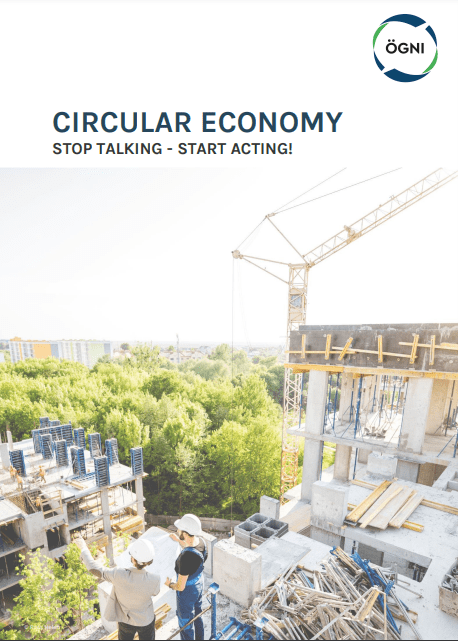
A significant improvement in the ecological situation could be achieved by moving from a linear to a circular economy. The transformation of the economy and society is unavoidable in order to keep climate change and all its associated consequences within an economically, socially and ecologically acceptable framework.

2021-09-01

A comprehensive resource for cities and other government bodies seeking to develop strategies, action plans and policies to tackle embodied carbon. The report identifies and assesses policy types and urban planning approaches to create a sustainable built environment in terms of embodied carbon, with best practices drawn mostly from cities in Europe and North America alongside new policies that have yet to be implemented.