2022-11-30

Canada's national guidelines for whole-building life cycle assessment.  This document provides comprehensive instruction for the practice of life cycle assessment applied to buildings, based on relevant standards and keyed to various intentions. The goal is to harmonize the practice of whole-building life cycle assessment (wbLCA) across different studies and assist in interpretation of and compliance with relevant standards. This resource can support the development of similar guideline policies in North America and internationally.

2022-11-30

Finland is aiming at carbon neutrality by 2035, and developing a set of policies, including legislation for low-carbon construction. These new Finnish standards and assessments aimed at reducing carbon footprints of buildings can inform wider policy development in Europe and internationally.

2022-02-15

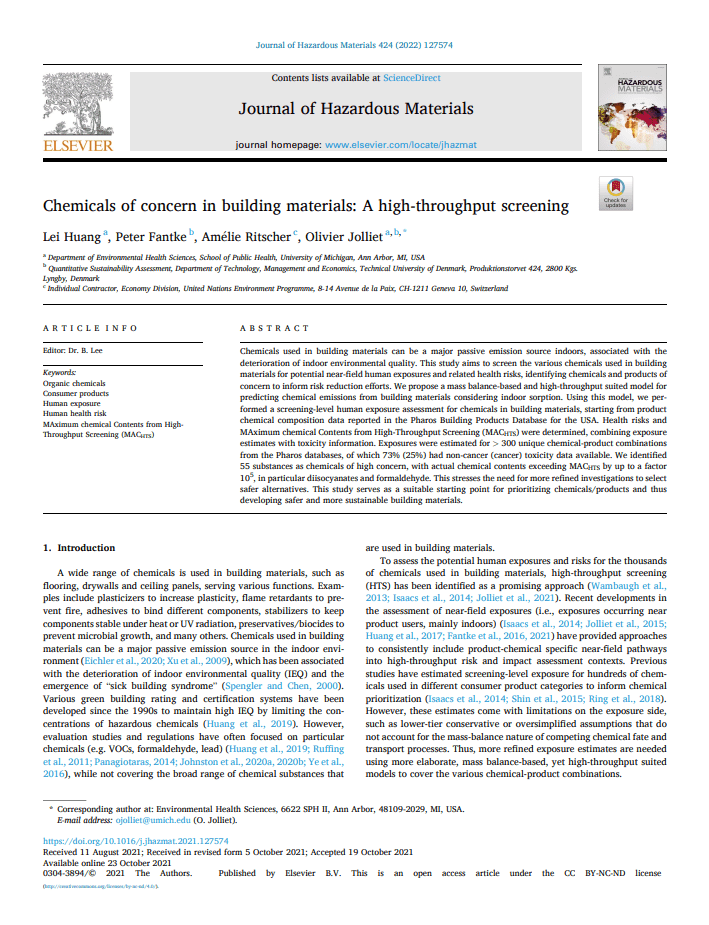
This study aims to screen the various chemicals used in building materials for potential near-field human exposures and related health risks, identifying chemicals and products of concern to inform risk reduction efforts.

2013-06-26

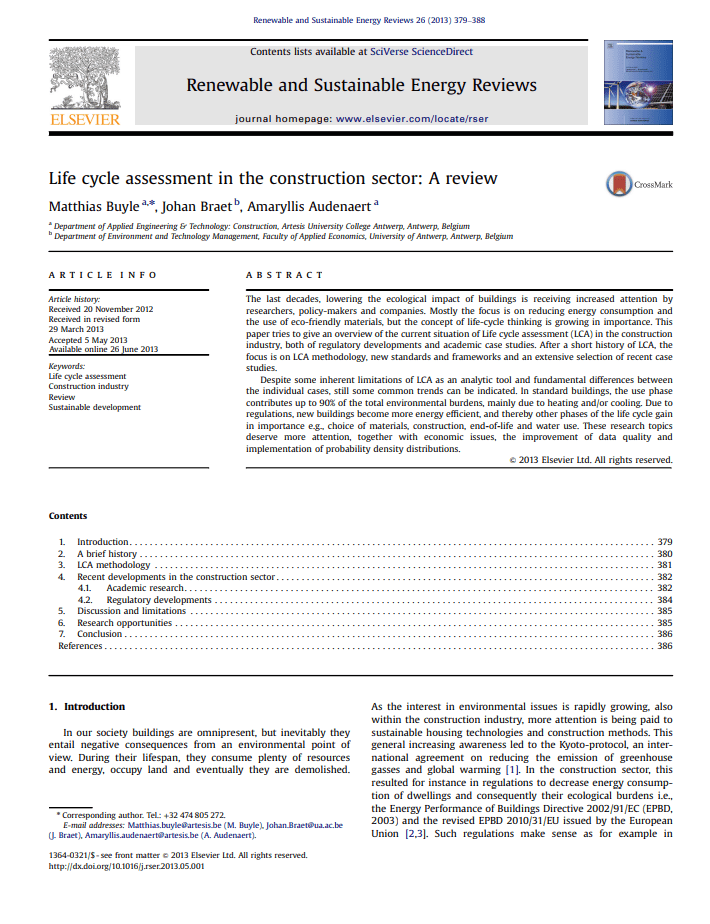
Overview of the current situation of Life cycle assessment (LCA) in the construction industry, both of regulatory developments and academic case studies.

2018-03-13

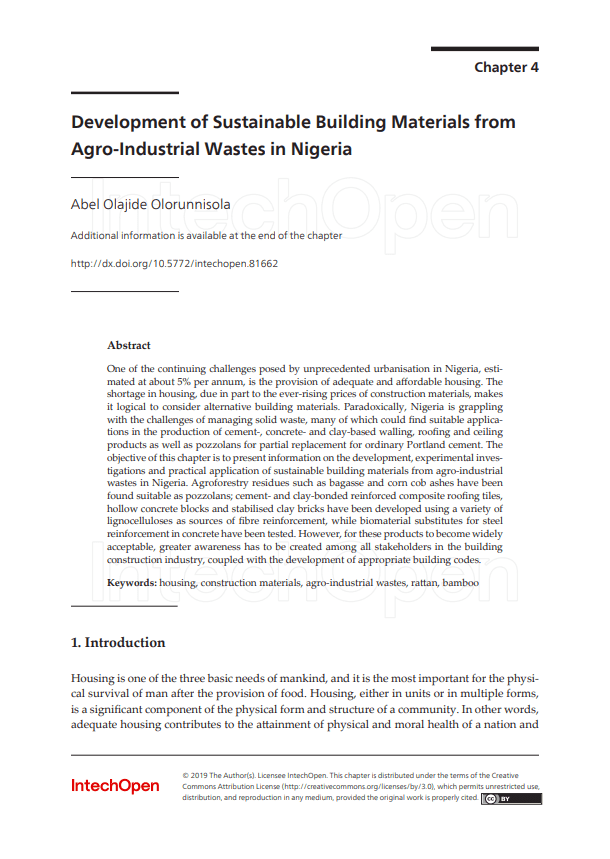
Policy brief presenting information on the development, experimental investigations and practical application of sustainable building materials from agro-industrial wastes in Nigeria, Africa.

2021-01-01

Study examining the basic criteria for the selection of green building materials in the construction industry in Nigeria, Africa, with a view to recommending the basis for wise selection of building materials that have optimal sustainability. The study was conducted through a descriptive survey method where 90 well-structured questionnaires were distributed to professionals in Architecture, Building and Quantity Surveying.

2017-03-01

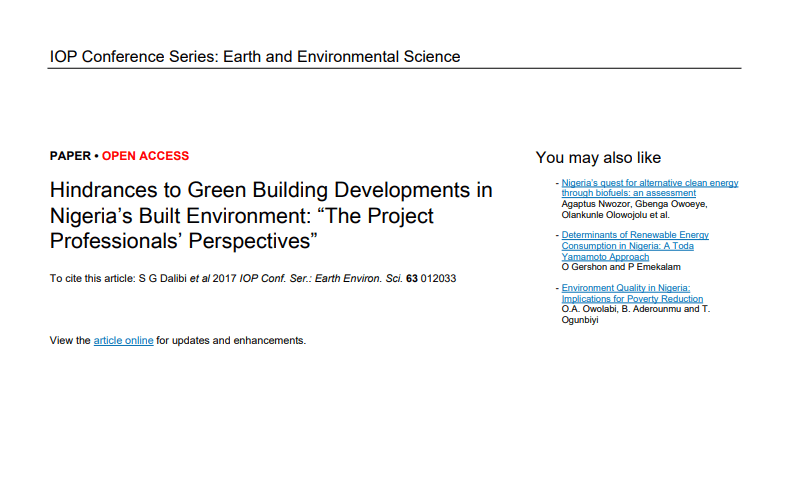
Research paper that aims to identify, examine and assess the factors that are hindering green building developments in Africa based on the project professionals' perceptions. A qualitative review of literature is used to identify the various factors that hinder the adoption of green measures and practices within Nigeria's built environment.

2022-05-01

This paper describes how, when substituted for concrete and steel, mass timber is a carbon-absorbing, energy-efficient, lower-cost, durable and mendable building material that can help deliver affordable urban housing and rural livelihood opportunities. It is suitable for Africa, where trees grow faster than in temperate climates. Africa can mitigate climate change and achieve other developmental benefits using mass timber in its construction sector. Governments and other development actors can support the transition.

2021-09-01

Study into the key aspects of international best practices of green public procurement policies that can be adopted in the USA for successful design and implementation of the Federal Buy Clean initiative. The Buy Clean initiative calls for the prioritisation of American-made, lower-carbon construction materials in federal procurement and federally assisted projects in North America.