2024-03-05

This guidance is primarily aimed at public procurers involved in a range of contracting agreements related to building materials and products. This includes the purchase of building materials for construction works, but may also extend to material extraction, manufacturing, building, retrofit, refurbishment, design, interior fit out, and end-of-life demolition or deconstruction processes. 

2023-09-08

Limiting global warming to 1.5°C requires immediate and drastic reductions in greenhouse gas (GHG) emissions. A significant contributor to anthropogenic global GHG emissions is the production of building materials. Biobased materials offer the potential to reduce such emissions and could be deployed in the short term. Timber construction has received the main attention from policy and industry. However, the implementation of timber construction at the global scale is constrained by the availability of sustainably managed forest supplies.

2023-09-08

Construction projects using emerging bio-based materials have been realized over the past ten to fifteen years within Europe. Bio-based buildings utilize properties of natural materials to regulate internal environments, particularly fluctuations in temperature and relative humidity. Despite individual exemplar projects demonstrating functional performance and long-term operational cost savings, there hasn’t been a proliferation of commercial or domestic bio-based projects.

2023-09-08

Until recently, little attention has been paid to the carbon impacts of the construction and refurbishing of buildings, with the majority of focus on their operational performance. Yet our buildings are constructed using materials, components, and products. These materials have to be extracted from the ground or grown, transported to a facility for processing, transported again to be transformed into a product, and finally transported to a construction site.

2023-08-22

In 2010 the worldwide building sector was responsible for 24% of the total GHG emissions deriving from fossil fuel combustion, second only to the industrial sector; but, if the embodied energy of construction materials is included, the share is far higher and the building sector becomes the prime CHG emitter. Thus,building design and construction have a significant effect on the chances of meeting the 2 °C target (keeping global temperature increase to 2 °C ). 

2023-07-26

Building with natural materials has proven to be a sustainable approach in addressing the needs of affordable and healthy housing and improving living conditions in informal settlements in an era of ecological transition. In view of this, the use of bamboo as a building material is considered a promising practice. However, although many traditional building techniques incorporate the use of bamboo, its application in contemporary informal settlements is disputed.

2023-07-21

Over the past four decades, global plastics production has quadrupled. If this trend were to continue, the GHG emissions from plastics would reach 15% of the global carbon budget by 2050. Strategies to mitigate the life-cycle GHG emissions of plastics, however, have not been evaluated on a global scale.

2023-07-21

Renewable and biodegradable materials derived from biomass are attractive candidates to replace non-biodegradable petrochemical plastics. However, the mechanical performance and wet stability of biomass are generally insufficient for practical applications.

2015-01-01

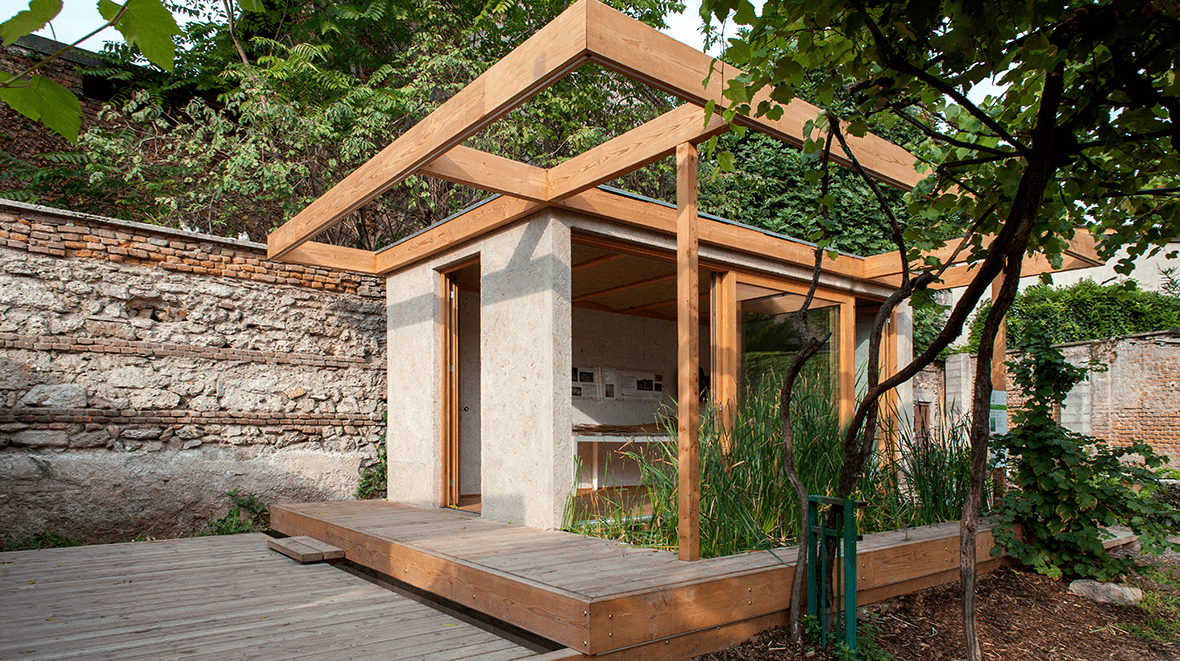
TYPHABOARD is made from typha (cattail), a plant that grows quickly and easily in all kinds of marshes throughout the world.The material provides both structural and insulation properties. It can be used in timber frame structures, or 100% typha strutures. It can also be used as insulation materials when retrofitting existing buildings.

2022-12-10

EIT Climate-KIC has teamed up with a cohort of partners to develop a handbook to help cities reduce embodied carbon in construction.

Globally, buildings account for 39 per cent of carbon emissions, with the share of embodied carbon (arising from manufacturing, transportation, installation, maintenance, and disposal of building materials) becoming more dominant as energy efficiency increases and energy sources become less carbon intensive. Therefore, dramatically reducing this source of emissions in the construction sector is a priority.