2023-08-22

Contractors are uniquely positioned to impact the sustainability of building projects. In preconstruction, contractors impact the design of a building by providing feedback to designers and clients. They influence product and material selection through the submittal process. Finally, contractors control how a project gets built, including the equipment that’s used, how construction waste is managed, and the extent of surrounding site and landscape disturbance.

2023-08-21

Cradle to Cradle Certified® is the leading multi-attribute standard used globally across industries by designers, brands and manufacturers for designing and making products that enable a healthy, equitable and sustainable future. For more than a decade, Cradle to Cradle Certified has been helping companies to innovate and optimize materials and products according to the world’s most advanced science-based measures.

2023-08-21

The Global LCA Data Access network (GLAD) is the largest directory of Life Cycle Assessment (LCA) datasets, from independent LCA database providers, from around the world.

2023-08-21

OpenLCA is an open source and free software for Sustainability and Life Cycle Assessment, with the following features:

2023-08-21


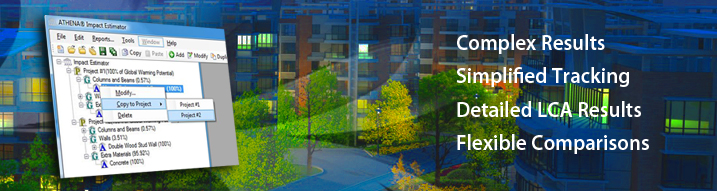
In North America, the Athena Impact Estimator for Buildings is the only free software tool that is designed to evaluate whole buildings and assemblies based on internationally recognized life cycle assessment (LCA) methodology.

2023-07-26

Value-based decision making is already in use in both government and private sector investment policy. A complementary new Flex Standard is now available for FREE download that describes the process of making and implementing value-based decisions in the built environment to drive better social, environmental and economic outcomes.

2023-07-26

Cities have been built on the benefits of density, proximity, and connectivity. However, the recent COVID-19 pandemic, along with continuously evolving communication technologies, has seen an increase in vacancies and underuse of urban buildings, challenging the agglomeration benefits of cities and our understanding of business-as-usual.

2023-07-26

The emerging demand for sustainable development and the need for efficient use of resources across the built environment have stirred research efforts globally. The construction sector is often regarded as one of the major world consumers of resources, so many international establishments are trying to create a sustainable environment through adaptive reuse of existing building stocks, a concept which has been receiving momentous recognition by reason of its richly diversified applicability for circular economy.

2023-07-26

With approximately 70% of the UK’s non-residential building stock constructed before the year 2000, if energy and carbon targets are to be achieved, and the UK’s 2050 net zero targets realised, significant energy efficiency and embodied carbon reductions are needed. As a result, much of the sector will have to undergo some form of retrofit by 2050.

2023-07-26

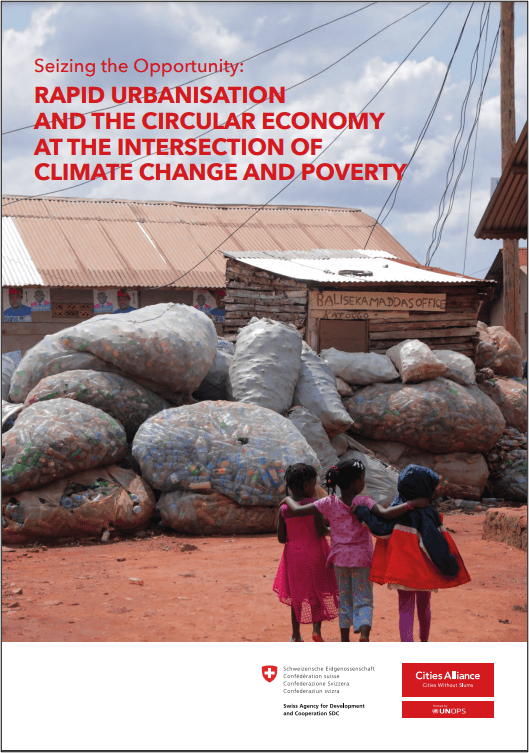
Rapid urbanisation and climate change are two of the major challenges of our time. People living in cities' poorest areas are agents of change both in terms of climate mitigation and adaptation.

This new publication explores the intertwining nature of circular economy, urbanisation and poverty.  It looks at how existing approaches of circularity and the informal economy can be taken up and reinforced to find solutions to these challenges.