2024-03-05

This guidance is primarily aimed at public procurers involved in a range of contracting agreements related to building materials and products. This includes the purchase of building materials for construction works, but may also extend to material extraction, manufacturing, building, retrofit, refurbishment, design, interior fit out, and end-of-life demolition or deconstruction processes. 

2023-09-22

This tool allows architects and designers to analyze and estimate the carbon equivalent of emissions associated with all aspects of the project. The Zero Carbon Tool gives an overall picture of how key decisions made at early stages of design can impact the project's total carbon use.

2023-09-22

Whole life carbon assessment 2nd edition will enable professionals to make prudent decisions to limit the whole life carbon impact of buildings and infrastructure. It facilitates carbon measurement from the production of construction materials to the design, construction and eventual end of life of built assets.

2023-07-21

The construction industry’s inherent fragmentation fuels Construction Supply Chain (CSC) complexity. Logistics form an essential part of the CSC in terms of costs and project management. In turn, transportation accounts for more than half the logistics costs due to construction materials being low-cost/high-volume, and most other logistics processes being business processes and not physical ones.

2023-07-21

Construction logistics offer useful solutions to improve both the productivity and sustainability of the industry. The purpose of this paper is to investigate, in detail, the environmental impact of construction transport and whether the building certification scheme for a construction project has any influence on its transport arrangements. The analysis in this paper is based on a multiple case study of 40 Swedish projects.

2023-07-21

The design and production of the facade system can have a significant effect on the embodied carbon of a building.

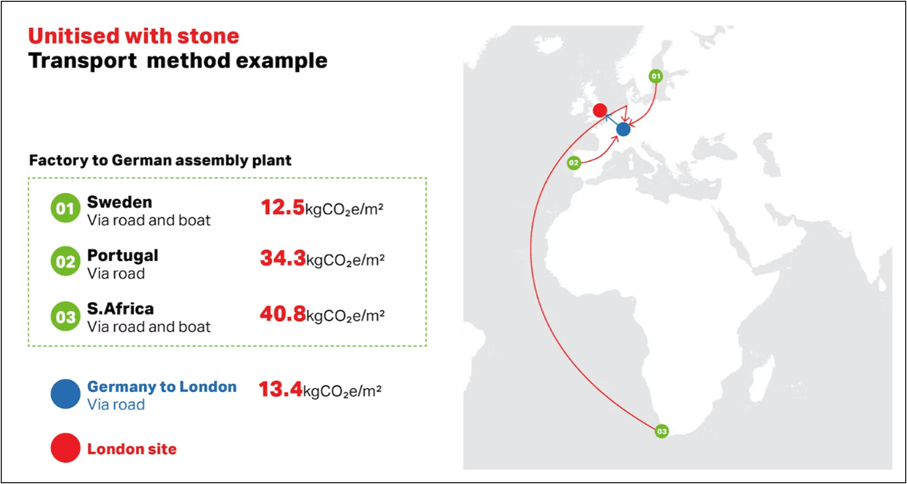
The transportation of facade materials and components to a factory, between factories, and to the building site can also have a big impact. Understanding this impact is important in determining the optimum design and specification for a low-carbon building.

Author: Make Architects

2023-07-21

Gypsum is widely used in the construction sector, and its worldwide consumption has been increasing for several decades. Depending on the lifetime of the used gypsum products, an increase of gypsum in construction and demolition waste follows. Especially against the background of a circular economy, the recycling of waste gypsum is of growing importance. However, the use of recycled gypsum only makes sense if it is environmentally friendly.