2022-12-09

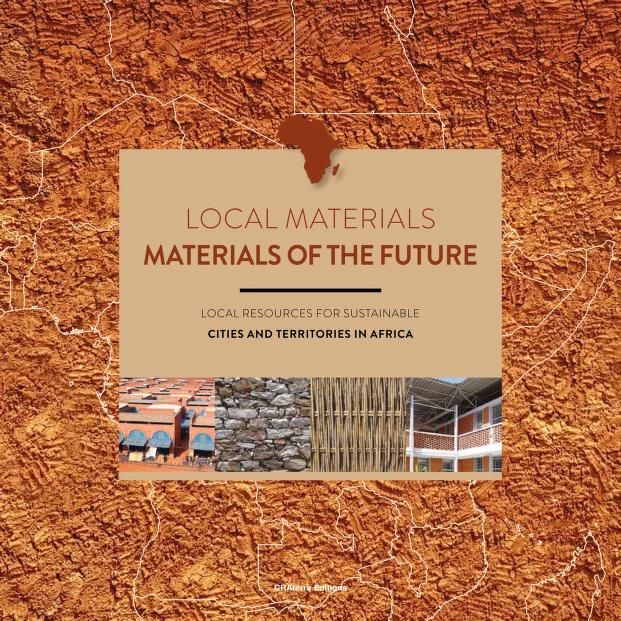
This report aims to promote a sustainable development approach to meet the immense needs in terms of construction in Africa, based on a rational and sustainable use of local materials. To this end, it presents the advantages, challenges and conditions of use of these materials. It presents examples of technical solutions illustrated by a panorama of the potential resources of the territories (bio and geo-sourced). It provides elements of analysis of the impact of local "short circuit" channels and elements of methodology.

2022-12-09

Building construction materials represent 11% of global carbon emissions and 28% of the annual buildings related CO2 emissions, and yet, the demand for construction materials continues to grow, especially in the rapidly urbanizing Global South. Biomaterials offer a key opportunity for decarbonizing the buildings and construction sector, through transitioning from current linear, extractive, and toxic construction practices towards circular, bio-based, renewable materials and construction methods for a sustainable future.

2022-12-09

This report - Sri Lanka Roadmap for Sustainable Housing and Construction 2020 – 2050 - presents the findings of the Sustainable Building Construction Country Assessment for Sri Lanka (SBC-CA) and a Roadmap for Sustainable Housing and Construction and achieving NDCs in the construction industry in Sri Lanka. It examines the current status, and potential opportunities and challenges for adopting Sustainable Building Construction (SBC) practices and policies.

2021-09-01

Policy brief paper analysing the policy, legal and regulatory frameworks governing the cement sector in Nigeria, Africa, and examines the policies required to encourage increased use of bioenergy in cement production.

2021-11-01

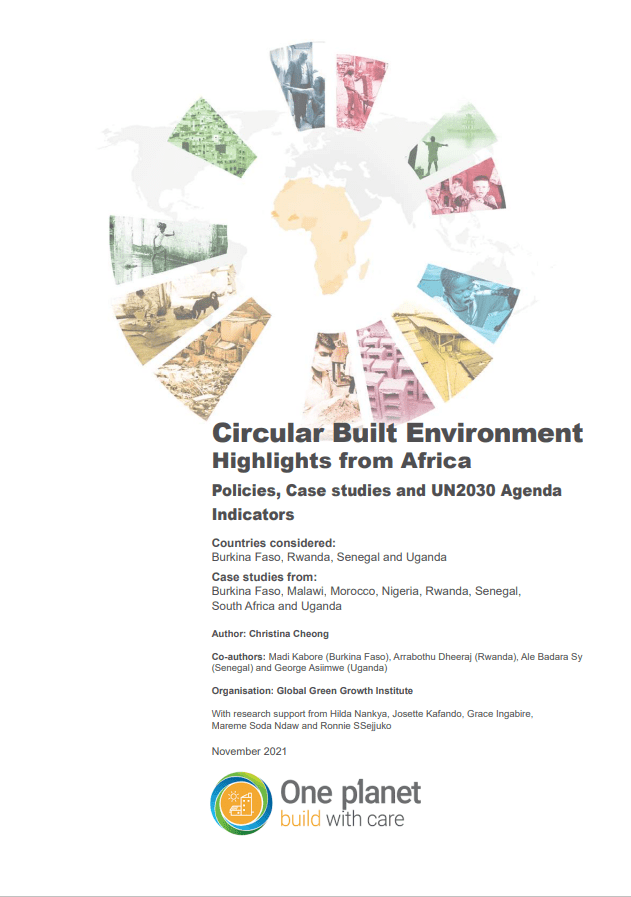
Policy briefing paper focusing on four countries in Africa: Burkina Faso, Rwanda, Senegal and Uganda. Through policy analysis and stakeholder interviews, this report presents the operating context for the building industry in these countries and the concept of circularity through all phases of the building life cycle. Nineteen of these examples are featured as case studies in this report and provide insights to the current initiatives on circularity in buildings. Case studies featured also include projects and practices from Malawi, Morocco, Nigeria and South Africa. 

2018-03-13

Policy brief presenting information on the development, experimental investigations and practical application of sustainable building materials from agro-industrial wastes in Nigeria, Africa.

2021-01-01

Study examining the basic criteria for the selection of green building materials in the construction industry in Nigeria, Africa, with a view to recommending the basis for wise selection of building materials that have optimal sustainability. The study was conducted through a descriptive survey method where 90 well-structured questionnaires were distributed to professionals in Architecture, Building and Quantity Surveying.

2017-03-01

Research paper that aims to identify, examine and assess the factors that are hindering green building developments in Africa based on the project professionals' perceptions. A qualitative review of literature is used to identify the various factors that hinder the adoption of green measures and practices within Nigeria's built environment.

2020-10-11

A collection of insights on the circular economy in Africa. The goal of this collection is to explore the potential of the circular economy in a selection of key economic sectors in African countries and highlight examples of the circular economy in action.

For the built environment, the collection considers aspects such as local materials, traditional building techniques, reusing and reclaiming materials, repurposing buildings, designing for deconstruction, modularity, flexibility, bioclimatic and passive design, and closing the loop.

2022-05-01

This paper describes how, when substituted for concrete and steel, mass timber is a carbon-absorbing, energy-efficient, lower-cost, durable and mendable building material that can help deliver affordable urban housing and rural livelihood opportunities. It is suitable for Africa, where trees grow faster than in temperate climates. Africa can mitigate climate change and achieve other developmental benefits using mass timber in its construction sector. Governments and other development actors can support the transition.