



Last month, sessions at London Climate Action Week were cancelled after the UK Met Office issued a red extreme heat warning. GlobalABC was there, discussing buildings and climate resilience as the impacts unfolded in real time. UN Secretary-General António Guterres framed the moment as a "Tale of Two Crises": a climate crisis nearing tipping points, and an energy crisis driven by fossil fuel dependence. Buildings sit at the intersection of both.
The pattern is global: India's heat season saw temperatures reaching 48.2 degrees in Rajasthan in May and schools closing early across a dozen states, while tens of millions across the eastern United States and parts of Canada have faced heat alerts since.
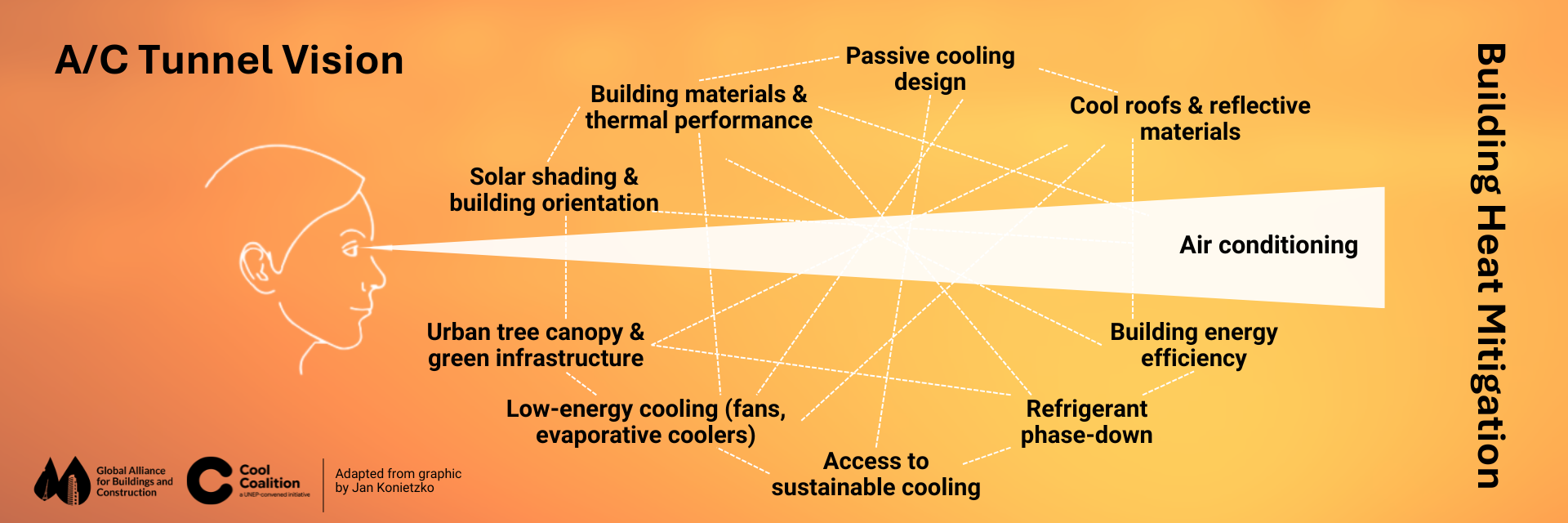
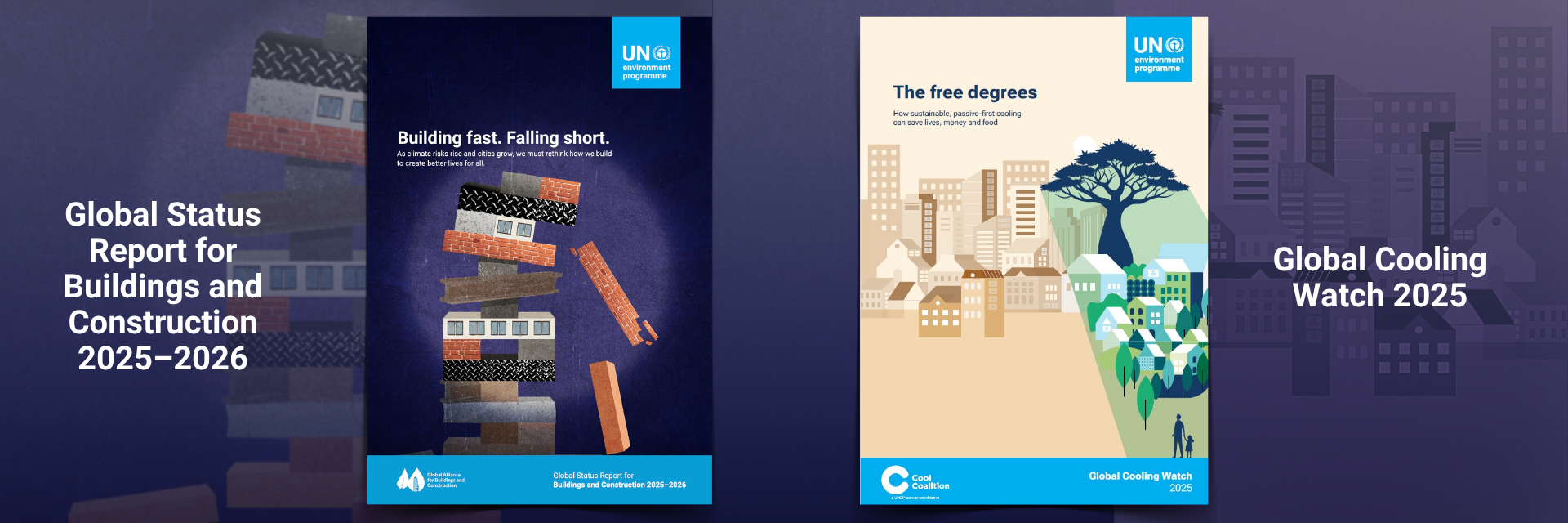
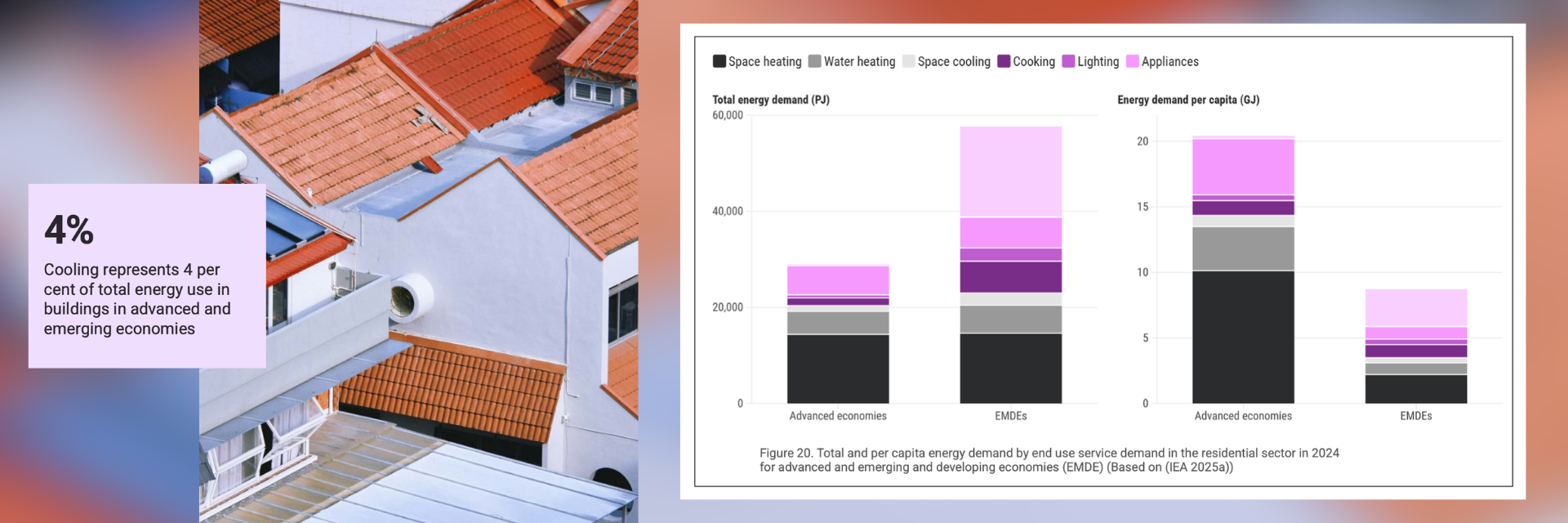
For most people, the response to a heat wave ends at the thermostat. For the professionals and policymakers who plan, build and regulate where we live and work, it cannot. Our latest Global Status Report for Buildings and Construction 2025-2026 finds cooling is only 4 per cent of total building energy use, yet demand has grown 70 per cent since 2015. UNEP's Global Cooling Watch 2025 sets out a clear order of operations for tackling it: minimise cooling loads through passive design, use low energy cooling, maximise equipment efficiency, then phase down high emission refrigerants. Air conditioning belongs at step three of four.
This is also the logic behind Beat the Heat, the Brazil COP30 Presidency and Cool Coalition’s flagship drive, of over 250 cities and 100+ partner organisations, helping cities move from heat awareness to local delivery. It supports heat-risk assessments, action planning, nature-based and passive cooling solutions, sustainable procurement, and building-code adoption, translating the Global Cooling Pledge into practical action.
At London Climate Action Week 2026, Gulnara Roll, Head of the GlobalABC Secretariat, put it plainly: cheap construction is not affordable, since high energy costs get shifted onto the people least able to bear them. Here are 11 ways the buildings sector is already designing that cost out.
1. Passive-first design
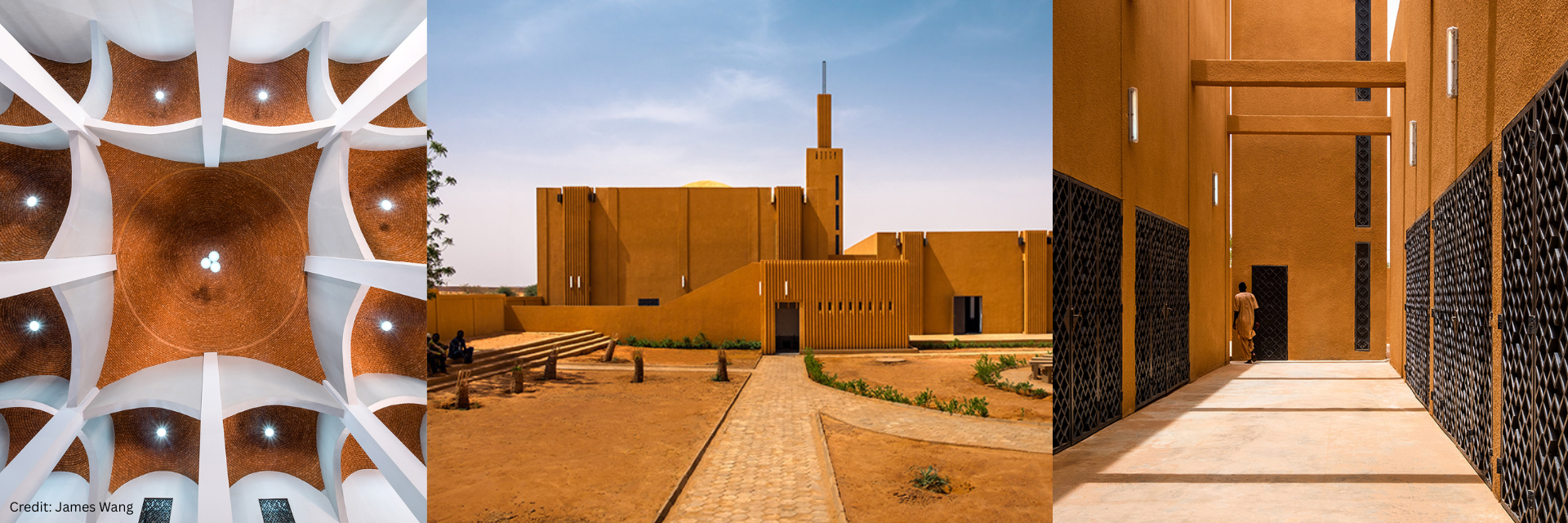
Orientation, thermal mass and shading built into the structure itself reduce the cooling load before any equipment turns on. In Dandaji, Niger, the Hikma Community Centre's mosque, co-designed by architect Mariam Issoufou, 2025 UNEP Champion of the Earth, stays up to 15 degrees cooler than the outside air without any air conditioning, through earthen brick walls, soaring vaulted ceilings that let hot air rise and escape, and a garden that cools the surrounding air as its water evaporates.
This is the mandate of the Cool Coalition and GlobalABC Passive Cooling Hub, which supports governments and industry in applying passive-first design, potentially reducing the growth in cooling demand by 24% in 2050, leading to capital cost savings of up to US$3 trillion, and decreasing emissions by 1.3 billion tons of CO2e.
2. Shading that's required, rather than recommended
External shading and orientation away from direct summer sun are among the cheapest passive measures available, and among the most overlooked in regulation. While 69 countries mandate envelope insulation, only 19 mandate window or facade shading, despite it being critical for blocking solar radiation in hot climates. Pakistan's 2023 Energy Conservation Building Code is a rare example that builds shading into national standards, with envelope improvements shown to yield 18 to 37 per cent energy savings.
3. Materials chosen for how they perform, beyond how they look
Material choice affects heat exposure directly. In Bhubaneswar, Odisha, the UNEP-supported Pragati Vihar redevelopment cut concrete and steel use by 30 per cent, using fly ash and AAC blocks, and reduced indoor temperatures by 2 to 3 degrees. This work feeds into Odisha's Climate Action Roadmap under GlobalABC's methodology and sits within the Cool Coalition's wider India Cooling Programme. This programme supports the India Cooling Action Plan, reaching over 600 million people across more than 20 cities, delivered in part through BeCool, a UNEP–Swiss Agency for Development and Cooperation project active in states including Tamil Nadu, Odisha, and Maharashtra.
4. Roofs and surfaces that reflect heat instead of holding it
Cool roofs directly reduce the urban heat island effect. Increasing rooftop reflectivity has been shown to reduce heat-related mortality during heatwaves by 25 per cent. California's Title 24 building code now mandates cool roofs on new construction, and Kenya's 2024 National Building Code introduced passive cooling and stronger sustainability standards, setting a regional benchmark, listing reflective coatings among its required passive cooling strategies.

5. Green space that cools the neighbourhood
Heat mitigation doesn't stop at the property line. Trees and vegetation cool neighbourhoods directly through shade and evapotranspiration, but the most significant emissions and resilience decisions are made at the planning stage, when land use, density and transport connectivity are decided, where low-density sprawl can lock in heat exposure for generations. As Hélène Chartier of C40 Cities put it at the Sustainable Buildings and Construction Summit 2026 in Lausanne, "the best climate activist is a good urban planner." Nearly 70 per cent of climate-significant public investment is undertaken by subnational governments, according to the OECD, yet they are too often left out of national roadmap processes, the gap GlobalABC's Subnationals Action Group exists to close. Beat the Heat adds a practical city-delivery layer that helps cities identify heat risks, and move from plans to projects supported by guidance such as World Bank, UN-Habitat and UNEP’s Handbook on Urban Heat Management in the Global South.
6. Retrofitting the buildings that already exist
New construction gets most of the attention, but around 80 per cent of today's global building stock will still be standing in 2050. Retrofits currently run at roughly 1 per cent of the stock a year; the Global Status Report finds this needs to triple to stay aligned with a net zero pathway. Deep renovation, upgrading insulation, glazing and systems together rather than piecemeal, is how passive design and efficiency gains actually reach the buildings people are already living and working in, not only the ones not yet built.
7. Heat pumps, where mechanical cooling is genuinely needed
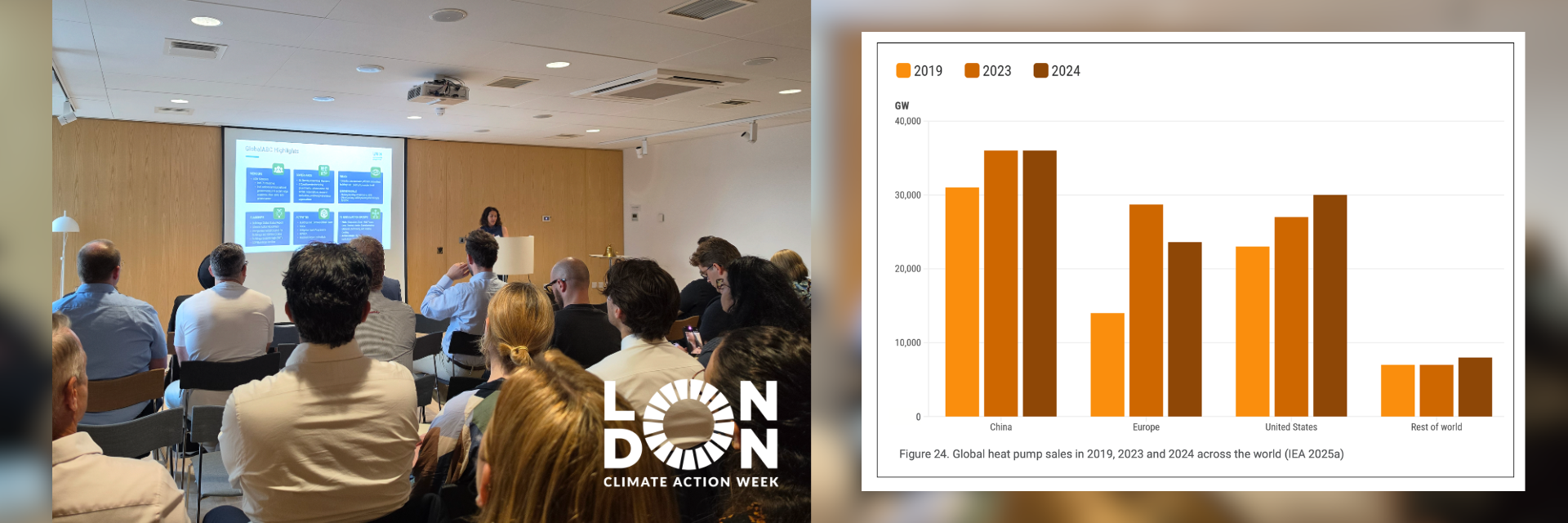
The Global Status Report notes that electric technologies such as heat pumps deliver three to five times more heat energy than the electricity they consume, far outperforming fossil fuel alternatives. In Europe, for example, gas still accounts for around 40 per cent of residential energy demand, mostly for heating, and closing that gap with heat pumps builds out cooling capacity as a byproduct. GlobalABC's Clean Heat Forum, close to 100 governments and organisations working on this specific problem, has developed a Heat Pump Policy Toolkit to support it. The COP31 Presidency's electrification target, raising electricity's share of final energy demand to 35 per cent by 2035, depends on exactly this kind of technology switch.
8. Whole-building energy efficiency, not just better equipment
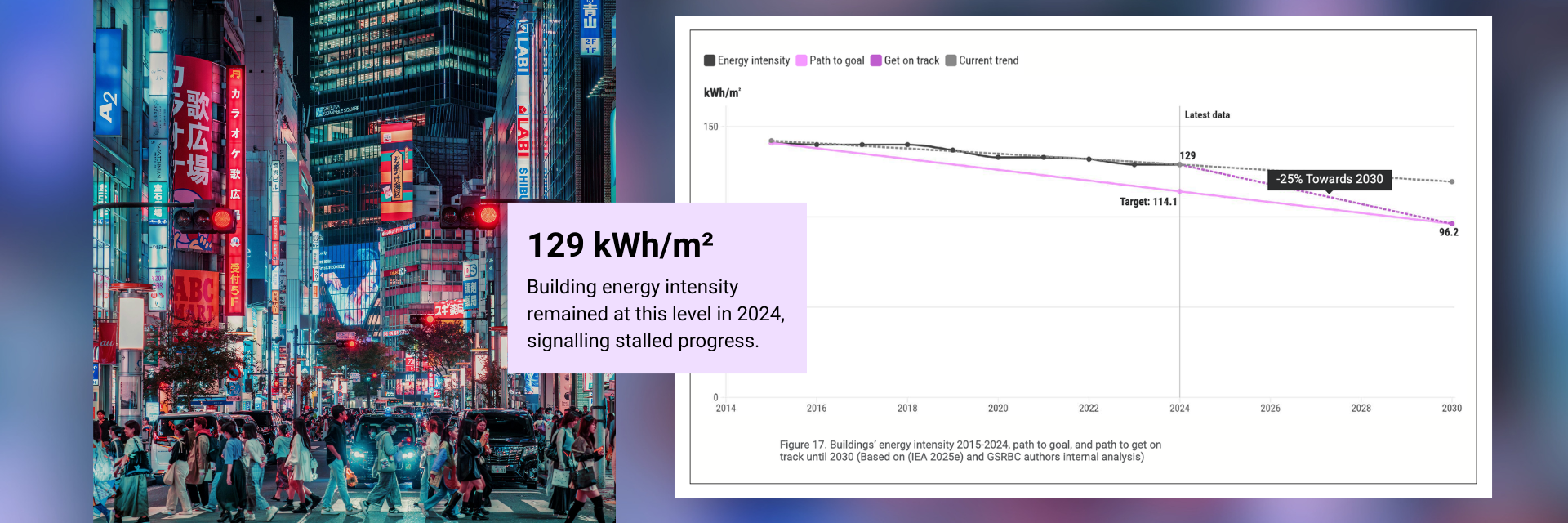
Between 2015 and 2024, global floor area grew 20 per cent while buildings' energy demand grew only 11 per cent, a gap credited to efficiency gains. But progress stalled in 2024, with building energy intensity flat at 129 kWh per square metre short of both the Global Status Report's 2030 net zero pathway and the COP31 Presidency's Resilient Cities target of a 25 per cent cut by 2035. It is achievable: Japan cut residential building energy intensity by 27 per cent between 2000 and 2023 through stricter standards for larger buildings, financial incentives, and more efficient appliances and air conditioners. The curve can bend; it just isn't bending fast enough yet. 75 countries have now signed the Global Cooling Pledge, committing to improve the average efficiency of new air conditioners by at least 50 per cent by 2030. These commitments mark real progress.
9. Refrigerants that don't undo the progress
The final step of the Cooling Watch sequence is a rapid phase-down of high global warming potential HFC refrigerants, replaced with low impact alternatives in line with the Kigali Amendment. Without it, gains from efficiency and passive design are partly offset at the point of disposal or leakage.
10. Codes and roadmaps that make all of this standard
None of the above works at scale on solely a voluntary basis. The Intergovernmental Council for Buildings and Climate (ICBC) and the Chaillot Declaration help governments turn high-level commitments on building decarbonisation into concrete country-level implementation, bringing together more than 65 member and observer governments. Kenya's National Building Code 2024 mandates shading, ventilation, insulation and reflective coatings together shows what that looks like in practice. Our global Climate Roadmap for Buildings and Construction and regional roadmaps in Africa, Asia and Latin America are now cascading to national and subnational levels, reaching 30+ countries and jurisdictions.
11. Making sure the benefits actually reach people
The ten measures above mean little if they don’t reach the people who need them most. The lowest income deciles have less than 20 per cent access to cooling equipment in Southeast Asia, and less than 1 per cent in Sub-Saharan Africa. Indeed, codes, financing and retrofit programmes rarely reach informal or low-income housing first, home to around 1 billion people globally with the highest exposure to extreme heat of anyone.
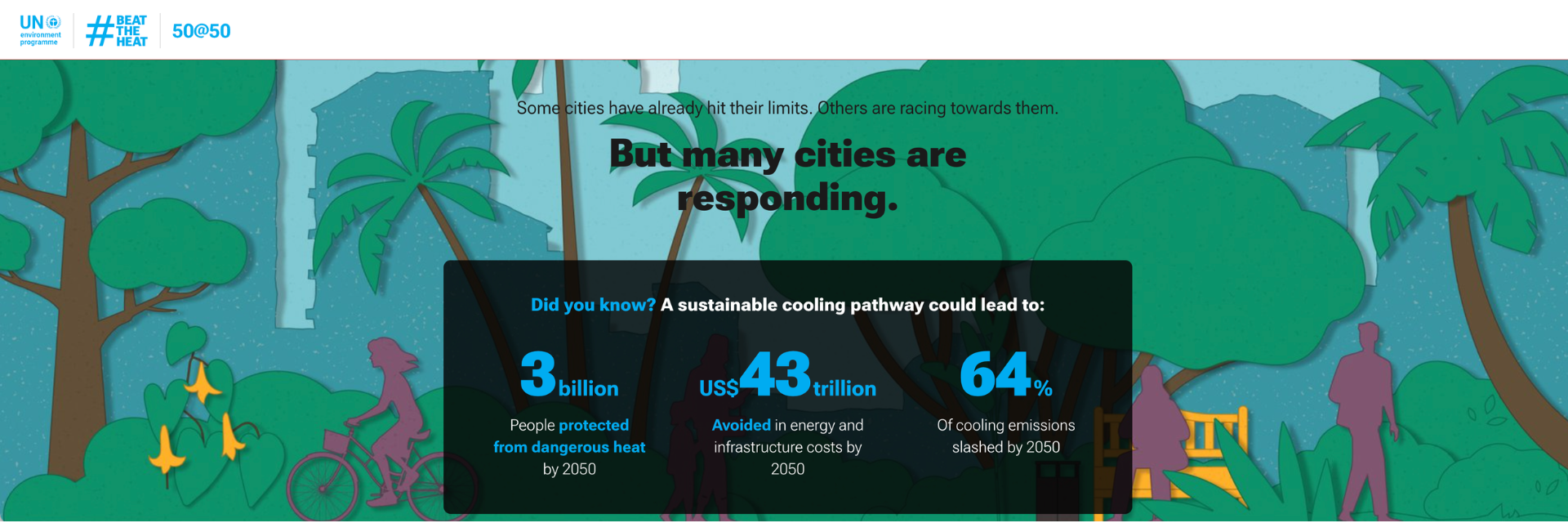
This is the gap the Belém Call for Action for Sustainable and Affordable Housing, launched at the first ICBC Ministerial Meeting at COP30, was designed to close: treating affordability and climate resilience as one objective, not two competing ones. The same COP saw ministers adopt the Belém Communiqué on extreme heat through the Cool Coalition-hosted Intergovernmental Committee on Cooling (IGCC), recognising cooling as essential infrastructure alongside water and energy. That collaboration is visible on the ground: since June 2026, more than 50 cities, from Antalya to Yangzhou, have joined the UNEP and Cool Coalition's 50@50 activation to stress-test heat preparedness, from cooling islands to early warning systems.
Hotter summers are the baseline now. What changes is whether we act together
Nothing here depends on a technology or design idea that doesn't already exist. What stands between where the sector is and where it needs to be is not invention, it’s scale: the finance, political will and collaboration needed to reach everyone, not only those best positioned to move first.
Collaboration, convening and knowledge exchange run through UNEP’s Buildings and Cooling Unit, where GlobalABC brings the buildings-sector architecture through the ICBC,working groups, and the Cool Coalition brings the sustainable cooling and extreme heat implementation architecture through the Global Cooling Pledge and Beat the Heat. Together, they connect building design, cooling demand, urban governance and heat resilience into one agenda, turning political agreement into the codes, roadmaps and technical guidance the sectors can put to use. It is also why GlobalABC and the Cool Coalition co-deliver the Buildings and Cooling Pavilion at COP.
Get involved
- Governments
engage through the ICBC and country dialogues, or use GlobalABC's NDC guidance and Climate Action Roadmap methodology to build these priorities into national policy. Contact Hanane Hafraoui and Divya Yadav Nawale (GlobalABC)
engage through the Cooling Pledge (contact Amr Seleem) and Beat the Heat (contact Elsa Lefèvre) (Cool Coalition)
- Industry and technical partners
contribute through GlobalABC's Working groups, including the Passive Cooling Hub, Materials Hub, Clean Heat Forum and Adaptation Hub, or enter the COP31 International Sustainable Buildings Competition.
Contact Maliya Lazli (GlobalABC) or Chloé Rosset (Cool Coalition) for partnership opportunities.
- Everyone working toward COP31
connect through the Buildings and Cooling Pavilion, co-delivered with the Cool Coalition in Antalya, Türkiye this November. Contact Maliya Lazli (GlobalABC) + Marisofi Giannouli (Cool Coalition)
- General Enquiries
GlobalABC: [email protected], Cool Coalition: [email protected].


