


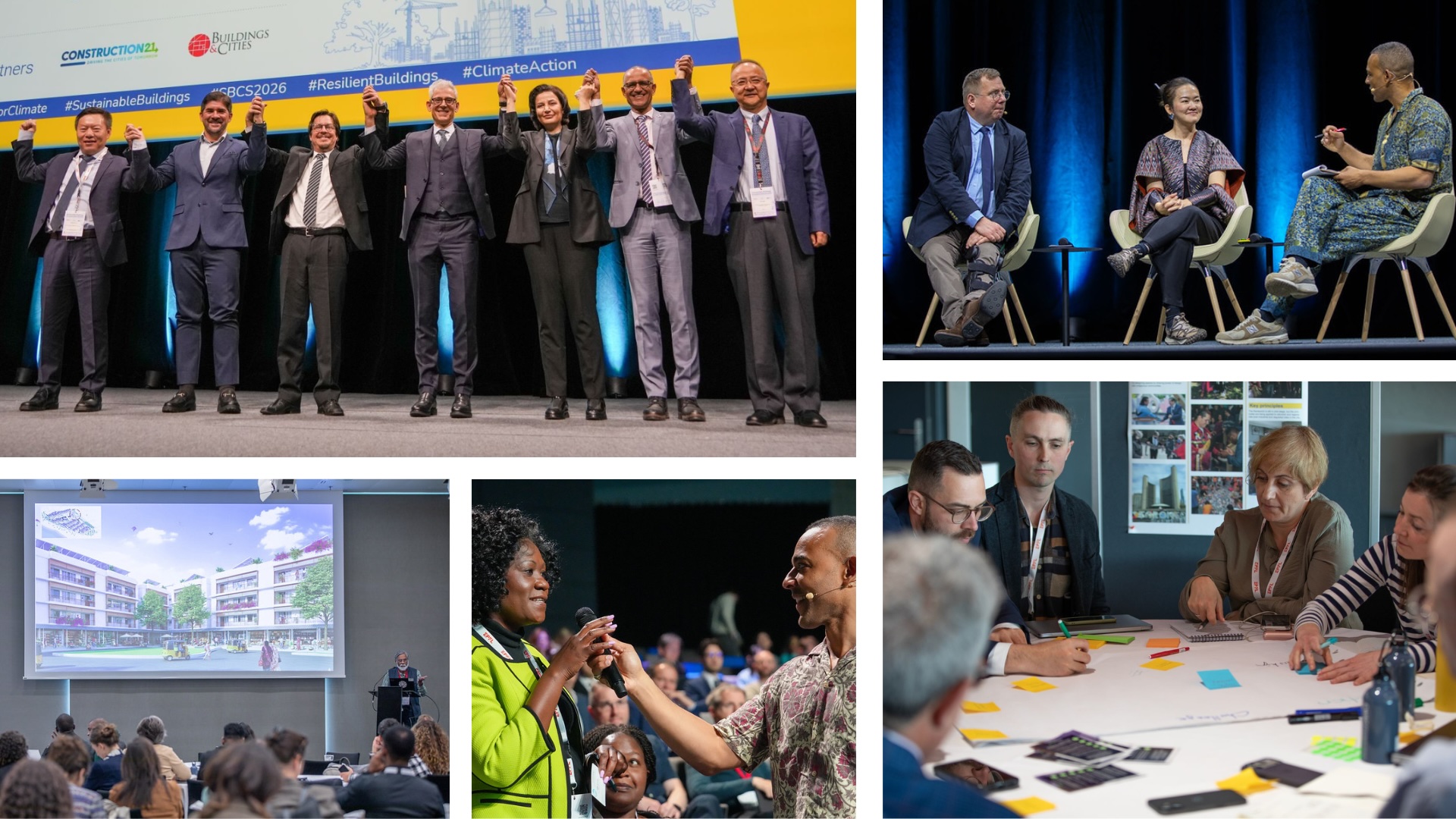
The Sustainable Buildings and Construction Summit 2026 brought together participants from across the globe in Lausanne, Switzerland from 20 to 22 April 2026 — three days of dialogue, workshops, and technical sessions focused on one goal: accelerating the transition to a decarbonised, climate-resilient built environment.
Co-organised by UNEP's Global Alliance for Buildings and Construction (GlobalABC) and EPFL's Centre for Worldwide Sustainable Construction, the summit convened government representatives, industry leaders, academics, and civil society to move beyond diagnosis and into implementation.
SBCS26 in Numbers
- 468 participants from 64 countries
- 3 days of multi-stakeholder collaboration
- 15 cross-disciplinary workshops
- 60+ speakers and panellists across plenary sessions
- 27% of participants from the EMDEs
SBCS26 demonstrated the power of radical collaboration across governments, academia, the private sector, and civil society. Across three days of plenaries, workshops, and side meetings, conversations ranged from embodied carbon and the role of product-level data in enabling credible comparisons, to circular economy approaches, passive cooling strategies, and the growing influence of green finance instruments on upstream product specifications. One thread ran through it all: the transition to a sustainable, resilient, and affordable built environment requires aligning technical expertise, policy frameworks, and financing mechanisms — and that alignment takes exactly the kind of multi-stakeholder exchange that SBCS26 was built for.
Read the Summit Outcomes Report and Browse the full Summit photo gallery here
Day 1: Setting the Stage
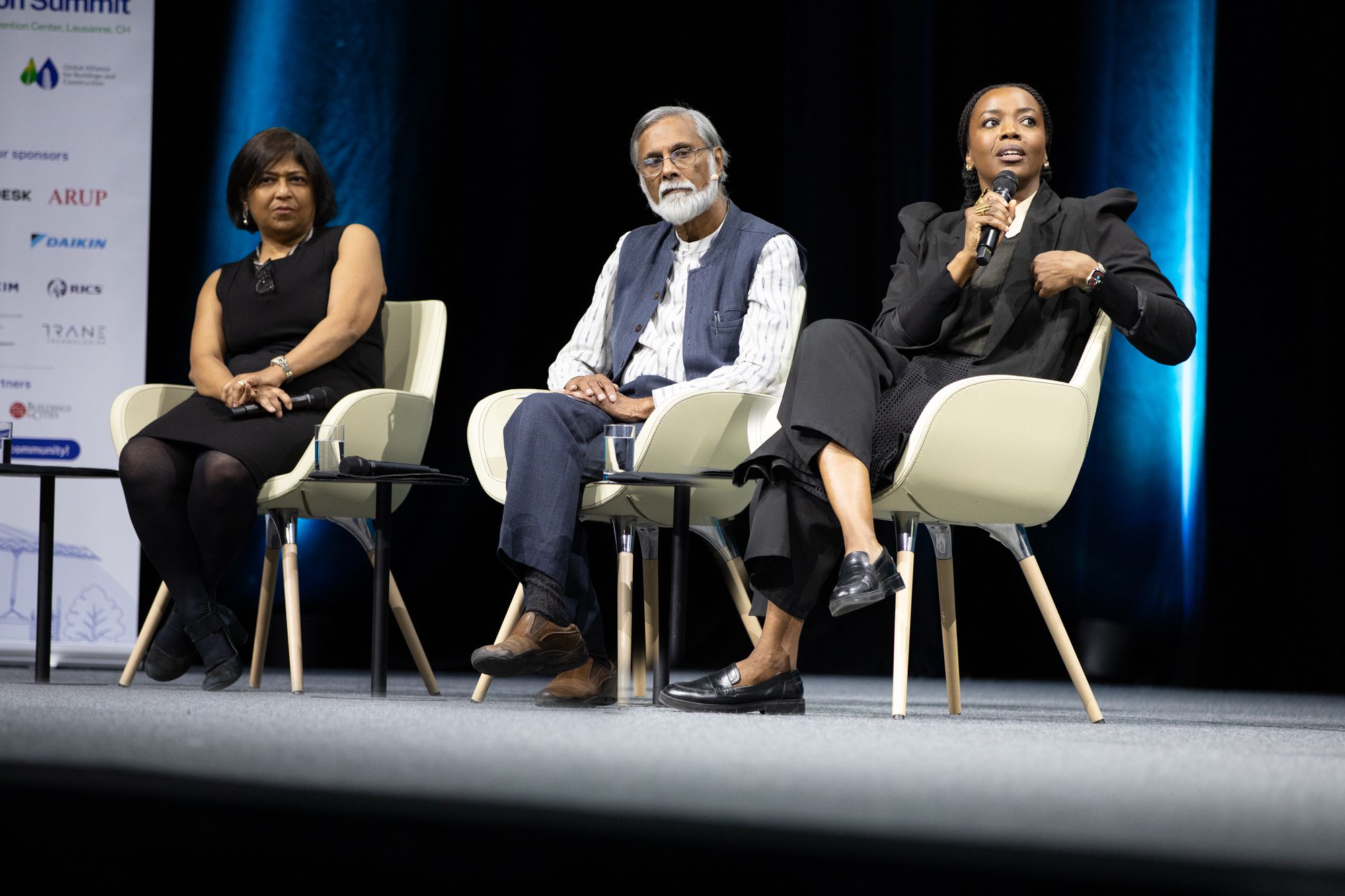
The High-Level Opening brought together senior government representatives from Brazil, China, France, Germany, Switzerland, and Türkiye alongside UNEP and EPFL leadership, framing the built environment as a critical front in global climate action.
Three keynotes set the intellectual tone for the summit. Prof. Dr. Joyeeta Gupta examined planetary boundaries and the ethical dimensions of North-South expectations in development. Ashok Lall brought perspectives on building healthy, inclusive cities in emerging economies. Mariam Issoufou, Founder and Principal Architect of Mariam Issoufou Architects and 2025 UNEP Champion of the Earth, made the case for climate literacy before climate technology, and for community as the primary author of the brief. She closed with a line that resonated across the room: "The most sustainable thing you can build is something that was already, in some sense, there."
Workshops spanned self-built housing, disaster resilience, procurement, carbon accounting, renovation, sustainable urban planning, NDCs and SDGs, chemicals and circularity, and locally led climate finance. The day also marked the launch of CLEAR — the Coalition for Life Cycle Emissions Alignment and Reporting — by RICS, WBCSD, and GBDI, a significant step toward standardised, actionable carbon data for the sector.
Day 2: Interrogating the Solutions
Day 2 moved from framing the challenge to examining the solutions. The 2026 Sustainable Construction Barometer, presented by Saint-Gobain, offered a global snapshot of how sustainable construction is understood, perceived, and implemented, followed by a panel on accelerating the transition to sustainable construction.
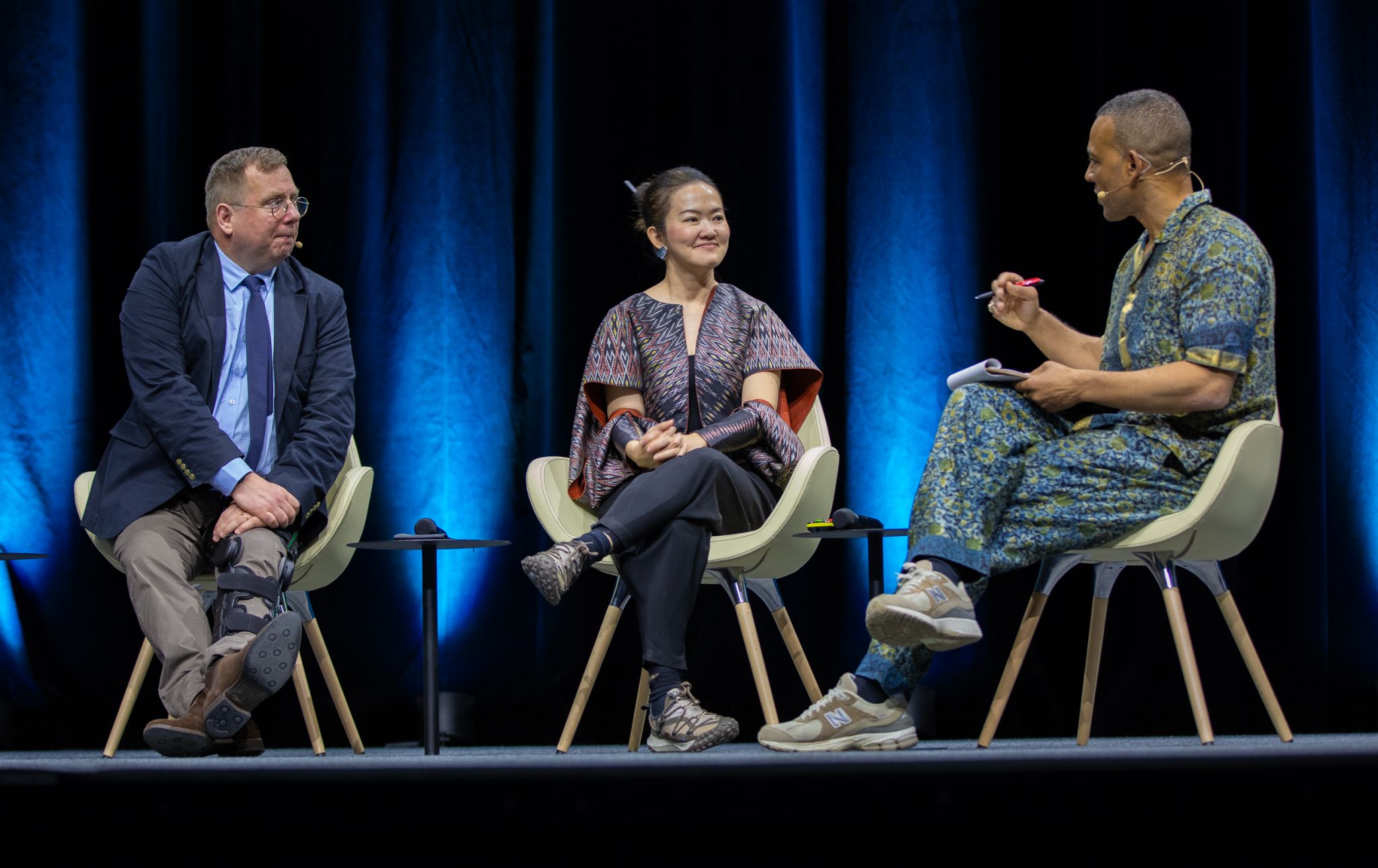
A session on low-carbon construction materials brought together Prof. Karen Scrivener, EPFL, Dr. Michael Ramage, University of Cambridge, and Mr. Hakan Gurdal, Heidelberg Materials. There was consensus that solutions exist — the debate was on which pathways to prioritise, from calcined clay and optimised concrete to natural, modular, and regenerative material systems.
Two keynotes explored urban resilience: Kotchakorn Voraakhom, Landscape Architect and CEO of Porous City Network, showed that urban space can be both a climate solution and a love letter to a city's ancient relationship with water. Dr. Magnus Andersson, Malmö University, examined how urban mapping and remote sensing can turn cities into measurable, actionable systems.
Workshops addressed affordable housing, social sustainability, sustainable infrastructure, data and AI, circularity, demand-side flexibility, gender equity, retrofit finance, and energy savings.
Day 3: Global Perspectives, Local Realities
Day 3 opened with a session on rethinking sustainable design through the lens of circularity, featuring Will Arnold, Institute of Structural Engineers, Pamela Wackett, KPF, and Kinya Seto, LIXIL Corporation. A dedicated session on low-carbon construction and zero-emission ambitions in China, moderated by Hongpeng Lei, Chief of the Mitigation Branch, Climate Change Division, UNEP, brought together perspectives from policy, industry, and academia on one of the most significant built environment transitions underway globally.
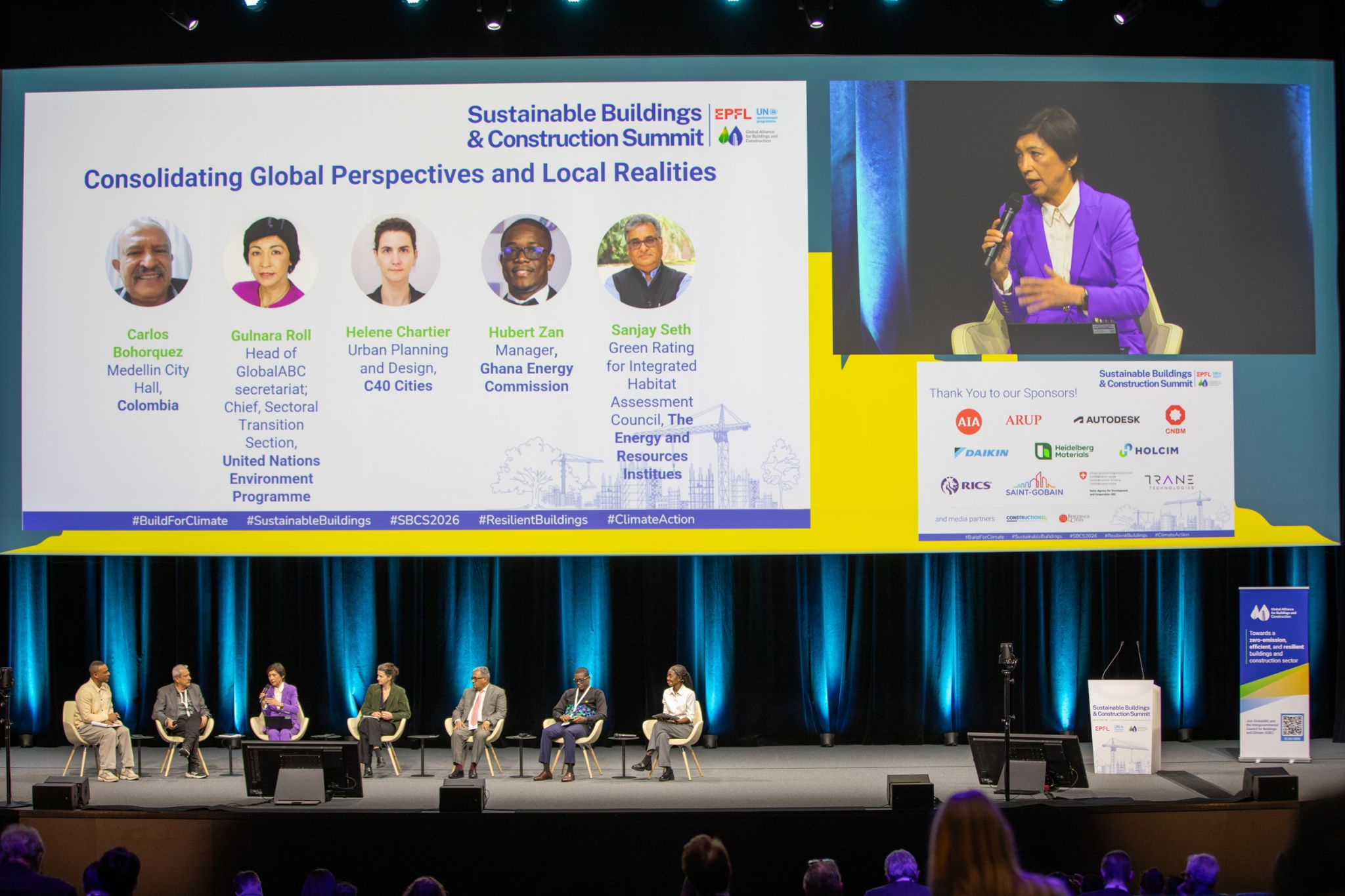
The closing plenary, chaired by Gulnara Roll, Chief of the Sectoral Transition Section, UNEP Climate Change Division Mitigation Branch, underscored that while climate targets are set internationally, delivery happens on the ground — requiring inclusive planning, multi-level governance, and context-specific solutions. Panellists from India, C40 Cities, the City of Medellín, and EPFL examined how integrated strategies for land use, energy, and climate-smart infrastructure can be driven by local actors.
Afternoon sessions expanded into practice: from harmonising carbon data and advancing responsible sourcing, to scaling bio-based materials, passive cooling through the BE COOL initiative, and net-zero strategies in emerging economies.
A Milestone for the ICBC
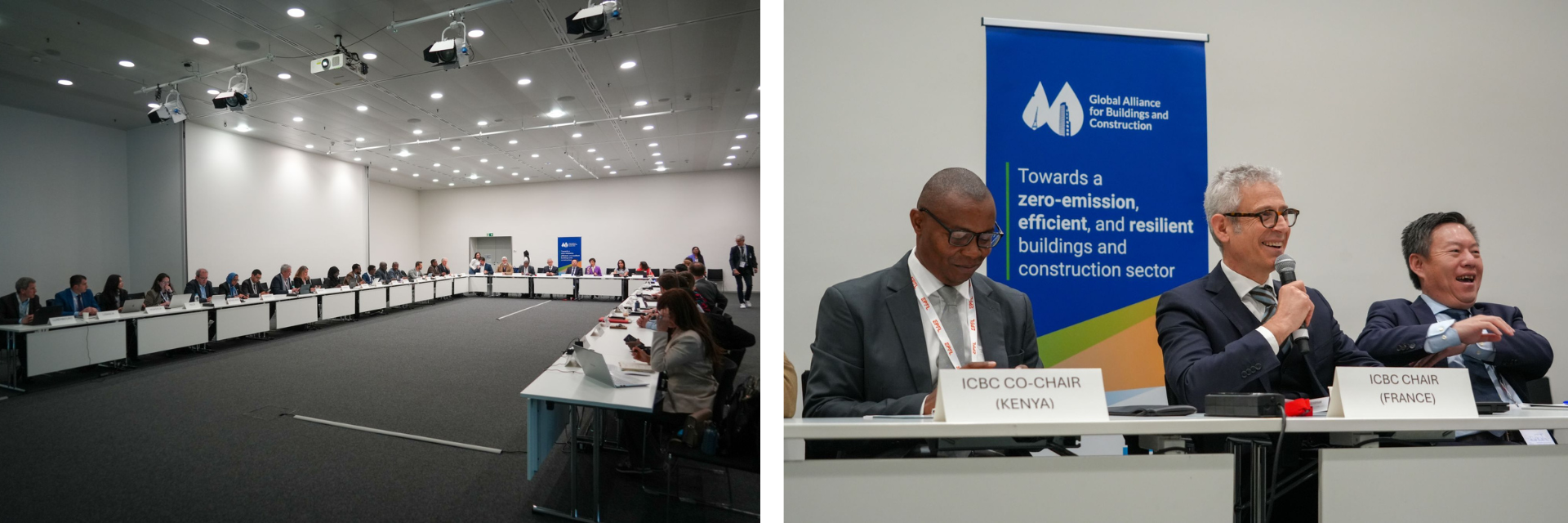
The summit also hosted the first-ever in-person Technical Meeting of the Intergovernmental Council for Buildings and Climate (ICBC), bringing together country-designated Senior Representatives from 30 countries. Building on the momentum of the Ministerial at COP30 in Belém, the meeting provided a dedicated space to exchange experiences, take stock of progress on the Déclaration de Chaillot, and align on the processes that will guide the ICBC's work going forward. Representatives from France, Brazil, Kenya, Germany, Türkiye, China, Somalia, Morocco, and several more countries reaffirmed their commitment to driving action toward a net-zero and climate-resilient future for buildings.
Read more about the first in-person ICBC technical meeting here.
What Comes Next
Read the Summit Outcomes Report and Browes the summit photos available on the GlobalABC Flickr page.
The Compendium of Solutions — a curated collection of resources, tools, and technologies to support decarbonisation and climate adaptation in the built environment — is one of the key outcomes of the summit and will be hosted on the GlobalABC Knowledge Platform, made available to the global community. Didn't get a chance to submit at the summit? There's still time. Submit to the Compendium here
The summit outcomes document will be published in the coming weeks.
The work continues. Stay tuned for GlobalABC at COP31 in Antalya, Türkiye - where we'll keep building on the momentum from Lausanne.
Thank you to our Sponsors and Partners
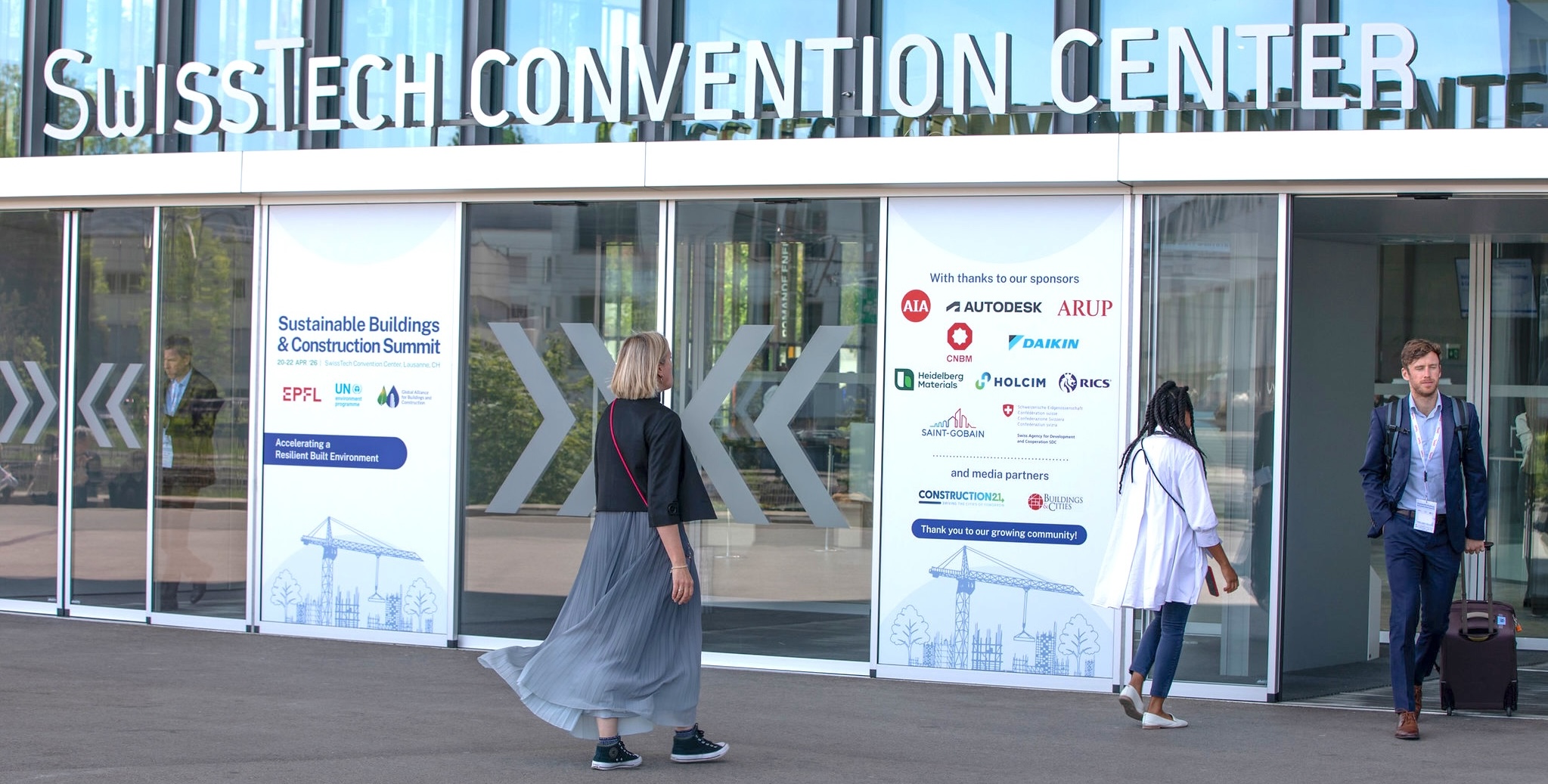
We are grateful to our sponsors for their support in making the Sustainable Buildings and Construction Summit 2026 possible — and for helping make participation accessible to practitioners from around the world, particularly those from emerging markets and developing economies.
Arup | Autodesk | AIA | CNBM - Simona | Daikin Industries | Heidelberg Materials | Holcim | RICS | Saint-Gobain | Swiss Agency for Development and Cooperation (SDC) | Trane Technologies
Thank you also to our media partners, Buildings & Cities and Construction 21, for helping amplify the outcomes of this important gathering.


