2023-07-21

The transition to a carbon neutral EU requires deep energy demand reductions in key sectors of the economy such as buildings and transport, and that the remaining energy consumed is carbon neutral. Such transformations can only be achieved if the conditions are created for all actors and industrial sectors to maximise their multi-faceted contributions to this low-carbon revolution.

2023-07-21

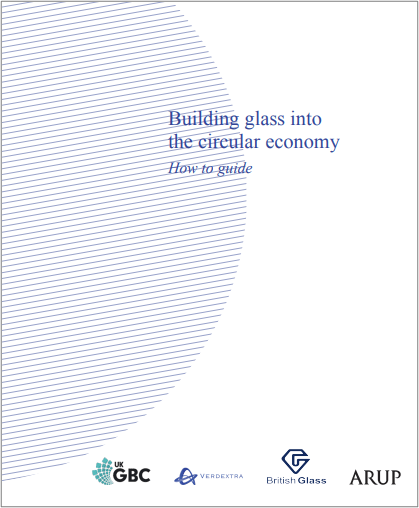
Glass is a highly recyclable material, despite which, end-of-life building glass is almost never recycled into new glass products.

In the UK alone, almost 200,000 tonnes of glass is currently sent to landfill each year. In the EU, the proper recycling of all building glass waste could avoid 925,000 tonnes of landfilled waste every year and save around 1.23 million tonnes of primary raw materials annually.

2023-07-21

The role of plastic materials in construction has become indispensable in the past decades with regard to the global megatrends urbanisation, climate, health, environment and affordable housing. 

2023-05-30

Evaluating demolition versus deconstruction practices - policy lessons from municipalitites around the US.

Faced with housing crises, aging building stock, landfill concerns, and climate impacts to the builtenvironment, municipalities and states are increasingly turning  their attention to deconstruction and building material reuse as an alternative to demolition.

2022-12-12

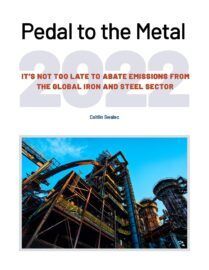
Steel is essential for decarbonizing our energy system. We use it to build solar panels, wind turbines, and transmission towers. At the same time, the global iron and steel industry is currently responsible for 11% of global carbon dioxide emissions and 7–9% of global greenhouse gas emissions. In addition to energy projects, we use steel for buildings, bridges, medical devices, and other important applications. As economies develop and build up infrastructure, global demand for steel will continue increasing.

2022-12-10

This report provides a global assessment of the level of plastic paint leakage worldwide.

It is based on the baseline year 2019 with a global paint demand of 52 Mt, that included 19.5 Mt of plastics and distributed across different sectors: Architectural, Marine, Road Marking, General Industrial, Automotive and Industrial Wood and Others.

2022-12-10

EIT Climate-KIC has teamed up with a cohort of partners to develop a handbook to help cities reduce embodied carbon in construction.

Globally, buildings account for 39 per cent of carbon emissions, with the share of embodied carbon (arising from manufacturing, transportation, installation, maintenance, and disposal of building materials) becoming more dominant as energy efficiency increases and energy sources become less carbon intensive. Therefore, dramatically reducing this source of emissions in the construction sector is a priority.

2022-12-10

Over the last few decades, glass manufacturers have increased their sustainability through innovation, and they are expected to continue to do so through the rollout of new technologies and processes such as carbon capture. The sector also has a key role to play in boosting sustainability in other sectors, whether through lighter glass packaging or glass fiber used for wind turbine blades.

2022-12-10

The WINCER project aims to develop innovative ceramic tiles containing over 70 wt% of recycled materials from urban and industrial wastes. The specific objectives are related to:

2022-12-10

Buildings account for at least 39 percent of energy-related global carbon emissions on an annual basis. At least one-quarter of these emissions result from embodied carbon, or the greenhouse gas (GHG) emissions associated with manufacturing, transportation, installation, maintenance, and disposal of building materials.