2022-12-09

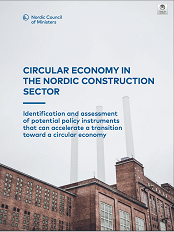
Potential policy instruments that can accelerate a transition toward a circular economy in the Nordic construction sector, including demolition of buildings, are discussed and assessed. Sixteen interviews were carried out with actors representing stakeholders from Denmark, Finland, Norway and Sweden.

2022-12-09

The built environment is responsible for almost 40% of the global energy and process-related CO2 emissions. To meet the Paris Agreement and limit global warming to 1.5°C, we need to reach net-zero emissions across all activities in the building and construction system. The goal is for all new buildings to operate at net-zero emissions by 2030 at the latest, and for all buildings to operate at net zero by 2050.

2022-12-09

Urban cooling is a recent subject and the knowledge produced by research and the first experiments give various results, sometimes difficult to decipher for operational actors.

This guide offers a synthetic, multi-criteria and operational approach to emerging or proven solutions, adapted to different climatic and urban contexts. It is a question of clarifying the decision of the public and private actors, as well on their choices of installation, construction, renovation of the buildings as of installation of the external spaces.


2022-12-09

This practical guide demonstrates how buildings and community spaces can be constructed to increase their resilience to climate change, especially in developing countries where structures are largely self-built. The publication provides an overview of the fundamental types of interventions at the building scale, including the use of nature-based solutions. The guide offers construction solutions to adapt to a range of different risks in various climates.

2022-12-09

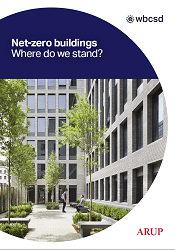
This report looks in detail at the results of six whole life cycle assessment (WLCA) case studies to illustrate some of the challenges, barriers and opportunities relating to the building industry’s carbon footprint. It aims to provide an insight into the industry’s current performance and compare it to possible net-zero trajectories.

Analyzing the whole life carbon emissions of six building projects using the WBCSD Building System Carbon Framework, the report shows that:

2022-12-09

A large part of the construction sector’s emissions come from building products and materials – referred to as embodied carbon. Embodied carbon is increasingly becoming the focus of regulatory bodies, making it a risk factor for developers and investors to price into construction projects.

2022-12-09

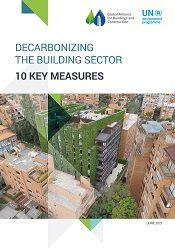
This publication aims to inspire senior officials and decision makers in national, subnational and local governments to decarbonize the building sector, and to show them how to start. It does not present a comprehensive strategy, but rather highlights a set of essential measures and successful examples from intervention areas identified in the GlobalABC Regional Roadmaps – new buildings, existing buildings, building operations, building materials, and resilience.

2022-12-09

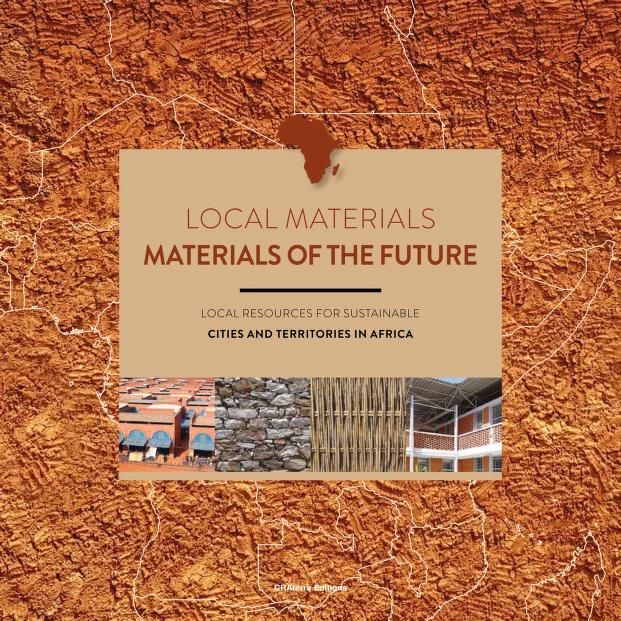
This report aims to promote a sustainable development approach to meet the immense needs in terms of construction in Africa, based on a rational and sustainable use of local materials. To this end, it presents the advantages, challenges and conditions of use of these materials. It presents examples of technical solutions illustrated by a panorama of the potential resources of the territories (bio and geo-sourced). It provides elements of analysis of the impact of local "short circuit" channels and elements of methodology.

2022-12-09

The built environment is a critical sector to tackle if we are to reach the climate mitigation targets set out in the Paris Agreement, as it represents close to 40% of global energy-related GHG emissions (almost 14 Gt per year) and 50% of global resource extraction.  

2022-12-09

10% of emissions from energy come from building materials and construction. We need to rethink how we construct our buildings. From resource-efficient designs with a longer lifetime, circular economy approaches and “urban mining” to increasing the market share of alternative building materials and decarbonising conventional materials like cement and steel, the solutions are there.