2022-12-09

The Human Settlements are one of the Thematic Areas of the Climate Action Pathways, which are a vital part of the Marrakech Partnership for Global Climate Action (MPGCA) tools to enhance climate action and ambition towards fully implementing the Paris Agreement. The Pathways aim to provide a roadmap to help Parties and non-Party stakeholders alike to identify actions needed by 2025, 2030 and 2040 as steps to get to the 2050 vision of a 1.5°C resilient world.

2022-12-09

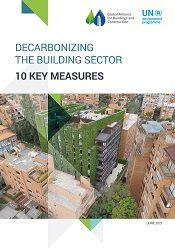
This publication aims to inspire senior officials and decision makers in national, subnational and local governments to decarbonize the building sector, and to show them how to start. It does not present a comprehensive strategy, but rather highlights a set of essential measures and successful examples from intervention areas identified in the GlobalABC Regional Roadmaps – new buildings, existing buildings, building operations, building materials, and resilience.

2022-12-09

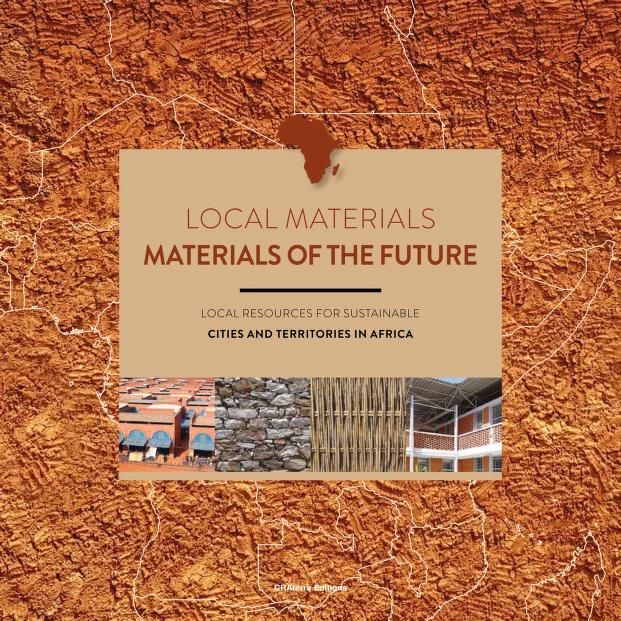
This report aims to promote a sustainable development approach to meet the immense needs in terms of construction in Africa, based on a rational and sustainable use of local materials. To this end, it presents the advantages, challenges and conditions of use of these materials. It presents examples of technical solutions illustrated by a panorama of the potential resources of the territories (bio and geo-sourced). It provides elements of analysis of the impact of local "short circuit" channels and elements of methodology.

2022-12-09

The built environment is a critical sector to tackle if we are to reach the climate mitigation targets set out in the Paris Agreement, as it represents close to 40% of global energy-related GHG emissions (almost 14 Gt per year) and 50% of global resource extraction.  

2022-12-09

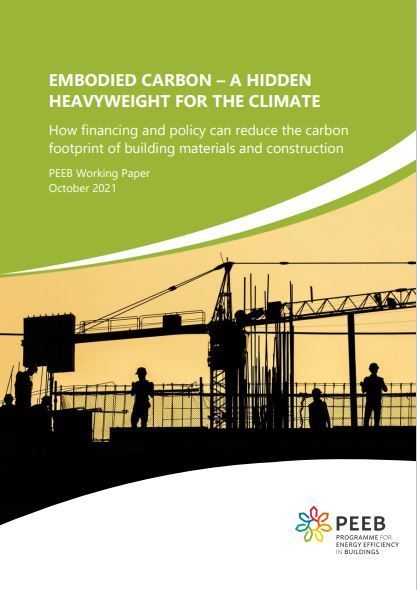
10% of emissions from energy come from building materials and construction. We need to rethink how we construct our buildings. From resource-efficient designs with a longer lifetime, circular economy approaches and “urban mining” to increasing the market share of alternative building materials and decarbonising conventional materials like cement and steel, the solutions are there.

2022-12-09

Background: Climate change action is time critical. There is an immediate need to focus policy and market actions on emission reductions across the entire life cycle of buildings as these are very quickly using up the remaining carbon budget left before the tipping point of an irreversible climate crisis. This provides a compelling reason for policymakers to address all sources of carbon emissions from the buildings and construction sector, including both embodied and operational carbon – together referred to as “whole-life” carbon (WLC) emissions.

2021-07-05

The SDG 12 Hub is a one-stop-shop for governments, businesses, civil society and the public for tracking progress on the achievement of Goal 12 of the 2030 Agenda for Sustainable Development: ensuring sustainable consumption and production patterns.

The SDG 12 Hub supports the transformation to sustainable consumption and production practices by offering direct access to transparent data, impactful solutions, guidance and official reporting all in one place, and facilitates the sharing of progress, knowledge and solutions for sustainable consumption and production.

2022-12-09

This volume on the building and construction sector provides an overview of the different sources of GHG emissions from the building and construction sector, as well as methodologies for quantifying these emissions to feed into the preparation and reporting of national GHG inventories. By better understanding the sources of emissions over the whole life cycle of buildings, it thus provides guidance on the most appropriate and effective mitigation strategies and policies for decarbonizing the building and construction sector based on national circumstances.

2022-12-09

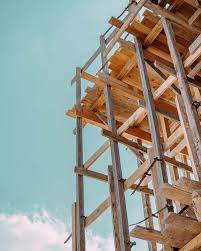
Building construction materials represent 11% of global carbon emissions and 28% of the annual buildings related CO2 emissions, and yet, the demand for construction materials continues to grow, especially in the rapidly urbanizing Global South. Biomaterials offer a key opportunity for decarbonizing the buildings and construction sector, through transitioning from current linear, extractive, and toxic construction practices towards circular, bio-based, renewable materials and construction methods for a sustainable future.

2022-12-09

On 24 May 2022, WorldGBC launched the EU Policy Whole Life Carbon Roadmap for buildings as part of the #BuildingLife project.  This Roadmap outlines the key European Union (EU) policy interventions, regulatory measures and tools needed to achieve a decarbonised, circular, resilient and well-designed built environment by 2050. It focuses on measures to address whole life carbon (WLC) at the building level.

Created as part of the #BuildingLife project, this Roadmap provides: