Photo of BedZED eco village showing colourful wind cowls. Copyright Bioregional.

Building use

Different building types and uses present a range of sustainability challenges and opportunities, with varying governance and decision-making factors involved. 

A range of approaches and policies appropriate to the type and use case can drive sustainability improvements for domestic, commercial and municipal buildings. Additionally, it is estimated that a billion people live in slums or informal settlements.  Consideration of how to improve sustainability of housing, alongside living standards for this group of people forms a significant part of the global challenge in this area. 

Sustainable public procurement is a powerful tool to improve the sustainability of municipal construction, which includes schools, hospitals, government buildings, social housing and the built environment. Expenditure by public authorities on goods, services, and infrastructure accounts on average for 13% of the gross domestic product in OECD countries, and up to 30% in many developing countries. Globally, the public sector accounts for 20-30% of revenues in the construction industry.

d

Photo credit © Unsplash / Ricardo Gomez Angel

Avoid’ strategies in this context should seek to build with less, avoid over-ordering and waste, and improve material circularity. For municipal buildings, there is an opportunity to enable adaptive re-use within a portfolio, or specify deconstruction instead of premature demolition.

Extending building lifetimes can reduce demand for materials and the embodied carbon expended. In the International Energy Agency’s most ambitious decarbonization scenario, extending building lifetimes would contribute to more than 90 per cent of the CO2 emission reductions for both steel and cement by 2060 (IEA 2019). Sustainable public procurement of more circular construction services, or contracts that specify material recovery targets, can reduce costs, as well as providing sustainability benefits for public authorities.  

Public sector procurement can also provide an opportunity to act as an early adopter of using more innovative materials and contribute to market transformation - more and more examples of public buildings deploying a ‘Shift’ strategy towards more sustainable materials are being seen.  And due to their relatively large purchasing power for materials such as concrete and steel in buildings and infrastructure projects, opportunities exist for ‘Improve’ strategies that can reduce the impacts of these materials within public procurement.

Domestic buildings, constructed by private sector companies have a different set of opportunities and challenges to move towards a more sustainable norm.  Where achieving the lowest cost is a driver, the use of sustainable materials may be deprioritised.  A combination of innovation on materials and construction practices, and an enabling environment of policies to reduce costs, can help push the domestic construction market towards increased use of sustainable materials. In some countries, it is vital to support industry to ‘leapfrog’ the use of higher carbon, conventional materials where there are more sustainable options.

Resources addressing the impacts of materials used in informal settlements are available on the Hub - these include case studies and research papers on how this type of community can act to reduce waste and health hazards as part of materials sourced, whilst improving living standards.

Best practices for different building uses need to be demonstrated and evaluated to show what is possible, driving policy and market support for more sustainable material use and design. Resources include planning tools, policy analysis and best practice case studies of buildings and materials, intended to inspire and promote action for the range of different building types and infrastructure projects.

Filters +
View results
2021-01-01

Study examining the basic criteria for the selection of green building materials in the construction industry in Nigeria, Africa, with a view to recommending the basis for wise selection of building materials that have optimal sustainability. The study was conducted through a descriptive survey method where 90 well-structured questionnaires were distributed to professionals in Architecture, Building and Quantity Surveying.

2020-10-11

A collection of insights on the circular economy in Africa. The goal of this collection is to explore the potential of the circular economy in a selection of key economic sectors in African countries and highlight examples of the circular economy in action.

For the built environment, the collection considers aspects such as local materials, traditional building techniques, reusing and reclaiming materials, repurposing buildings, designing for deconstruction, modularity, flexibility, bioclimatic and passive design, and closing the loop.

2020-04-26


Circle City Scan Tool enables local governments to discover and prioritise circular opportunities for their city or region, based on proprietary and publicly available socioeconomic and material flow data, relevant circular case studies, and users’ input as to which sectors, materials, and impact areas are a priority in local agendas. The Circle City Scan Tool covers topics such as circular economy action plans and material flows.

2019-11-10

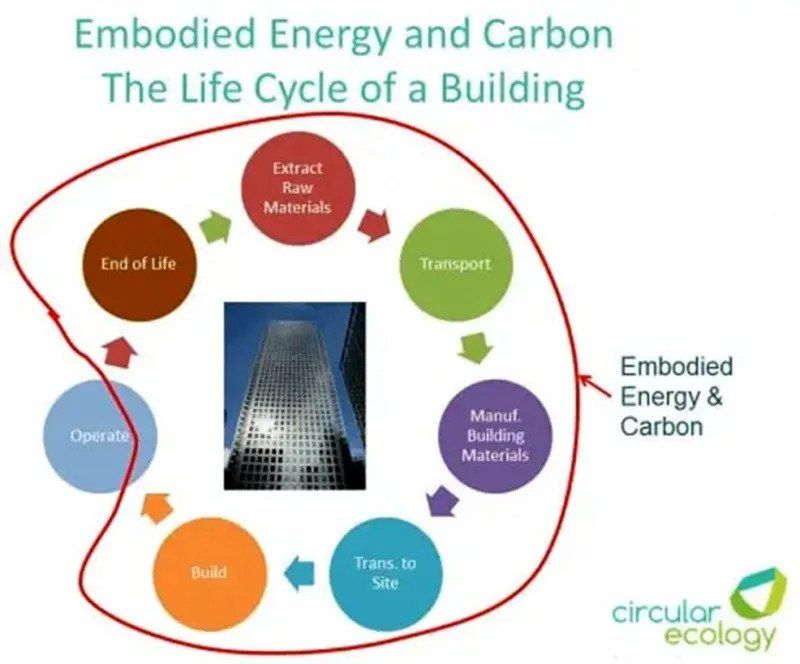
The Inventory of Carbon and Energy (also know as the ICE database) is an embodied carbon database for building materials which is available for free on this page. It contains data for over 200 materials, broken down into over 30 main material categories. The first version was released in 2005 and it has been updated at periodic intervals. 

2019-09-01

The second edition of the EMIRI Technology Roadmap is a reference for policy-makers in Europe and its Member States, the industry as well as the research world. The report sets out research, innovation and competitiveness across the advanced materials industry for the benefit of Clean and Sustainable Energy and Mobility.


2019-01-01

The Construction Material Pyramid from CINARK at the Royal Danish Academy makes it possible to compare, for example, CO2 footprints between different categories of materials or between material types within the same category. It also makes it possible to view different kinds of environmental impacts across the different materials. It thus offers a tangible, interactive calculation tool and at the same time opens up a dialogue about more detailed studies of the materials’ position in the pyramid and later their place in the project design.

2018-03-13

Policy brief presenting information on the development, experimental investigations and practical application of sustainable building materials from agro-industrial wastes in Nigeria, Africa.

2017-03-01

Research paper that aims to identify, examine and assess the factors that are hindering green building developments in Africa based on the project professionals' perceptions. A qualitative review of literature is used to identify the various factors that hinder the adoption of green measures and practices within Nigeria's built environment.

2015-01-01

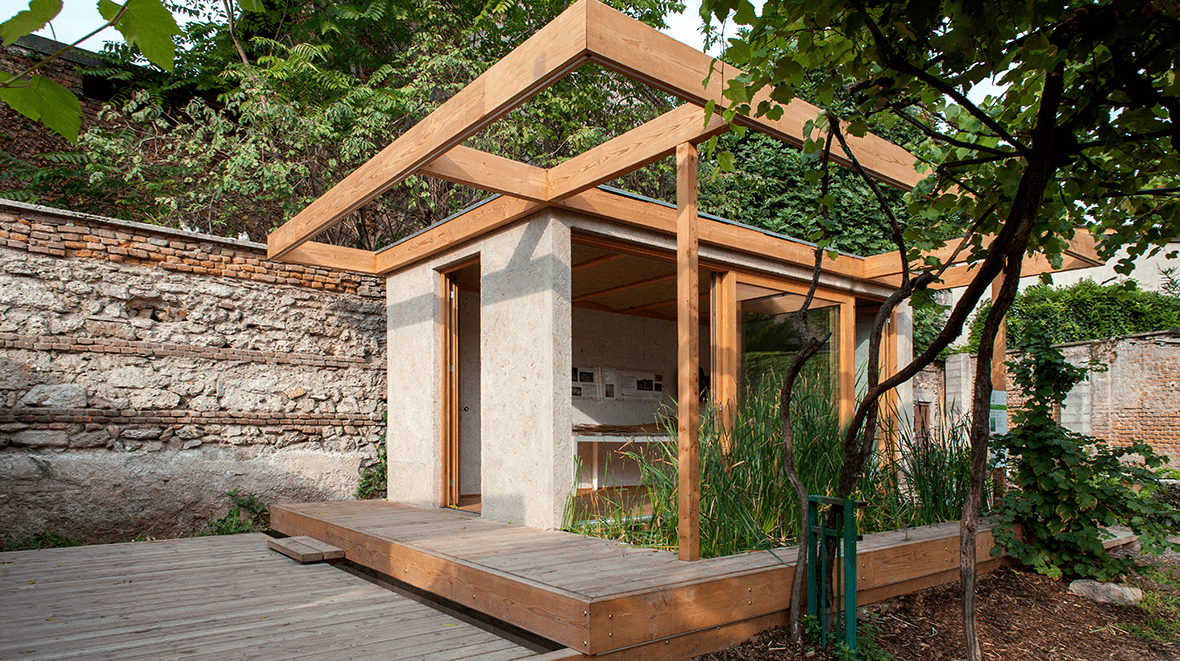
TYPHABOARD is made from typha (cattail), a plant that grows quickly and easily in all kinds of marshes throughout the world.The material provides both structural and insulation properties. It can be used in timber frame structures, or 100% typha strutures. It can also be used as insulation materials when retrofitting existing buildings.

2013-06-26

Overview of the current situation of Life cycle assessment (LCA) in the construction industry, both of regulatory developments and academic case studies.