Photo of BedZED eco village showing colourful wind cowls. Copyright Bioregional.

Building use

Different building types and uses present a range of sustainability challenges and opportunities, with varying governance and decision-making factors involved. 

A range of approaches and policies appropriate to the type and use case can drive sustainability improvements for domestic, commercial and municipal buildings. Additionally, it is estimated that a billion people live in slums or informal settlements.  Consideration of how to improve sustainability of housing, alongside living standards for this group of people forms a significant part of the global challenge in this area. 

Sustainable public procurement is a powerful tool to improve the sustainability of municipal construction, which includes schools, hospitals, government buildings, social housing and the built environment. Expenditure by public authorities on goods, services, and infrastructure accounts on average for 13% of the gross domestic product in OECD countries, and up to 30% in many developing countries. Globally, the public sector accounts for 20-30% of revenues in the construction industry.

d

Photo credit © Unsplash / Ricardo Gomez Angel

Avoid’ strategies in this context should seek to build with less, avoid over-ordering and waste, and improve material circularity. For municipal buildings, there is an opportunity to enable adaptive re-use within a portfolio, or specify deconstruction instead of premature demolition.

Extending building lifetimes can reduce demand for materials and the embodied carbon expended. In the International Energy Agency’s most ambitious decarbonization scenario, extending building lifetimes would contribute to more than 90 per cent of the CO2 emission reductions for both steel and cement by 2060 (IEA 2019). Sustainable public procurement of more circular construction services, or contracts that specify material recovery targets, can reduce costs, as well as providing sustainability benefits for public authorities.  

Public sector procurement can also provide an opportunity to act as an early adopter of using more innovative materials and contribute to market transformation - more and more examples of public buildings deploying a ‘Shift’ strategy towards more sustainable materials are being seen.  And due to their relatively large purchasing power for materials such as concrete and steel in buildings and infrastructure projects, opportunities exist for ‘Improve’ strategies that can reduce the impacts of these materials within public procurement.

Domestic buildings, constructed by private sector companies have a different set of opportunities and challenges to move towards a more sustainable norm.  Where achieving the lowest cost is a driver, the use of sustainable materials may be deprioritised.  A combination of innovation on materials and construction practices, and an enabling environment of policies to reduce costs, can help push the domestic construction market towards increased use of sustainable materials. In some countries, it is vital to support industry to ‘leapfrog’ the use of higher carbon, conventional materials where there are more sustainable options.

Resources addressing the impacts of materials used in informal settlements are available on the Hub - these include case studies and research papers on how this type of community can act to reduce waste and health hazards as part of materials sourced, whilst improving living standards.

Best practices for different building uses need to be demonstrated and evaluated to show what is possible, driving policy and market support for more sustainable material use and design. Resources include planning tools, policy analysis and best practice case studies of buildings and materials, intended to inspire and promote action for the range of different building types and infrastructure projects.

Filters +
View results
2022-12-10

The risks of not curbing global warming are clear. The good news is that the built environment can play a massive role in drawing down emissions. But decarbonizing the built environment needs to advance now: New buildings and renovations of every type need to be built and operated to zero carbon emission standards. This is a collective endeavor. It will take every building in every community. The entire built environment sector, like the entire world of nations, is in this together.  

2022-12-10

The concept of environmental sustainability and its applications in the ceramic industry has been raised due to the environmental issues related to the construction sector. This study evaluated and compared the environmental impacts of ceramic tiles manufactured by the current production technologies. Four different cleaner scenarios are applied based on cradle-to-gate life cycle assessment.

2022-12-10

EIT Climate-KIC has teamed up with a cohort of partners to develop a handbook to help cities reduce embodied carbon in construction.

Globally, buildings account for 39 per cent of carbon emissions, with the share of embodied carbon (arising from manufacturing, transportation, installation, maintenance, and disposal of building materials) becoming more dominant as energy efficiency increases and energy sources become less carbon intensive. Therefore, dramatically reducing this source of emissions in the construction sector is a priority.

2022-12-09

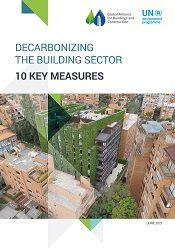
This publication aims to inspire senior officials and decision makers in national, subnational and local governments to decarbonize the building sector, and to show them how to start. It does not present a comprehensive strategy, but rather highlights a set of essential measures and successful examples from intervention areas identified in the GlobalABC Regional Roadmaps – new buildings, existing buildings, building operations, building materials, and resilience.

2022-12-09

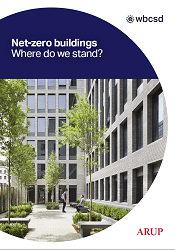
This report looks in detail at the results of six whole life cycle assessment (WLCA) case studies to illustrate some of the challenges, barriers and opportunities relating to the building industry’s carbon footprint. It aims to provide an insight into the industry’s current performance and compare it to possible net-zero trajectories.

Analyzing the whole life carbon emissions of six building projects using the WBCSD Building System Carbon Framework, the report shows that:

2022-12-09

The built environment is responsible for almost 40% of the global energy and process-related CO2 emissions. To meet the Paris Agreement and limit global warming to 1.5°C, we need to reach net-zero emissions across all activities in the building and construction system. The goal is for all new buildings to operate at net-zero emissions by 2030 at the latest, and for all buildings to operate at net zero by 2050.

2022-12-09

The MIT Concrete Sustainability Hub (CSHub) is a dedicated interdisciplinary team of researchers from several departments across MIT working on concrete and infrastructure science, engineering, and economics since 2009. The MIT CSHub brings together leaders from academia, industry, and government to develop breakthroughs using a holistic approach that will achieve durable and sustainable homes, buildings, and infrastructure in ever more demanding environments. Resources in the CSHub are largely focused upon the USA context, but are internationally applicable. 

2022-12-09

The IEA and IRENA Policies and Measures Database provides access to information on past, existing or planned government policies and measures to reduce greenhouse gas emissions, improve energy efficiency and support the development and deployment of renewables and other clean energy technologies.

2022-12-09

The Global Status Report for Buildings and Construction (Buildings-GSR) is a flagship publication of the UNEP-hosted Global Alliance for Buildings and Construction (GlobalABC). The Buildings-GSR provides an annual snapshot of the progress of the buildings and construction sector on a global scale and reviews the status of policies, finance, technologies, and solutions to monitor whether the sector is aligned with the Paris Agreement goals. It also provides stakeholders with evidence to persuade policymakers and the overall buildings and construction community to take action.

2022-12-09

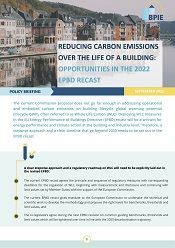
The current Commission proposal does not go far enough in addressing operational and embodied carbon emissions on building lifecycle global warming potential (lifecycle-GWP), often referred to as Whole Life Carbon (WLC). Deploying WLC measures in the EU Energy Performance of Buildings Directive (EPBD) recast will be a win-win for energy performance and climate action at the building and industry level. Therefore, a stepwise approach and a clear timeline that go beyond 2030 needs to be set out in the EPBD recast.