Photo showing palm trees by alevision.co, via Unsplash

Climate

It is vital to ensure that the selection of building materials is appropriate for the climate in which they are used. Material performance can strongly vary, depending on the conditions to which buildings are exposed. For example, some structural materials have more appropriate thermal properties for hot or tropical climates than others, enabling better heat retention or cooling when these properties are needed. Earth based construction is not a new strategy, but one that has fallen out of favour in the last century as preferences for materials such as concrete and steel grew.  Beyond being a more appropriate material choice in some contexts, earth construction can reduce the need for brick firing or production of synthetic binders and additives, reducing fuel and material consumption, as well as reducing health risks from air emissions and chemical use.

However, a material with improved sustainability performance in one region may not provide the same in-use performance in another, and a whole lifecycle thinking approach can help ensure that material choices are optimal. Additionally, sustainability hotspots can vary between regions. For example, there may be increased impacts from extraction in one region that are not experienced elsewhere, and from increased transportation distances. The expertise of installers with a material, ability of the local supply chain to meet demand and ensure quality, and the availability of infrastructure for end-of-life processing all bear consideration when determining if a material is appropriate for a particular climate.

6
Source: United Nations Environment Programme (2023). Building Materials and the Climate: Constructing a New Future. Nairobi

However, in some cases, learnings from material selection and market development can be transferred from one region to another where there are similarities in the climate. The Hub uses the Köppen-Geiger classification, which categorises regions as Tropical, Dry, and Temperate, according to the map below. Resources that apply to a particular climate are organised accordingly.

Map of Köppen-Geiger climate classification

map


Note: Tropical (A - regions Af, Am, Aw), Dry, (B - regions BWh, BWk, BSh, BSk) and Temperate (C - regions Csa, CSb) are used in the Sustainable Building Materials Hub to categorise resources where climate considerations apply.
Source: Beck, H.E., Zimmermann, N. E., McVicar, T. R., Vergopolan, N., Berg, A., & Wood, E. F., CC BY-SA 4.0 <https://creativecommons.org/licenses/by-sa/4.0>, via Wikimedia Commons
Filters +
View results
2022-12-10

Buildings account for at least 39 percent of energy-related global carbon emissions on an annual basis. At least one-quarter of these emissions result from embodied carbon, or the greenhouse gas (GHG) emissions associated with manufacturing, transportation, installation, maintenance, and disposal of building materials.

2022-12-10

From the Healthy Materials Lab, five case studies profiling affordable housing projects utilising healthier materials.

2022-12-10

The WINCER project aims to develop innovative ceramic tiles containing over 70 wt% of recycled materials from urban and industrial wastes. The specific objectives are related to:

2022-12-10

This report provides a global assessment of the level of plastic paint leakage worldwide.

It is based on the baseline year 2019 with a global paint demand of 52 Mt, that included 19.5 Mt of plastics and distributed across different sectors: Architectural, Marine, Road Marking, General Industrial, Automotive and Industrial Wood and Others.

2022-12-10

There is little record or literature concerning bioclimatic building in warm climate zones. One of the main goals of ABC21 project is to cover this information gap – collecting data about operating buildings that are good examples of sustainable solutions and should be replicated. An analysis of the local climate and a description of the main bioclimatic features is presented for each building, with examples shown from Italy, Portugal, Senegal, France, Morocco, Kenya, Sudan and La Reunion.

2022-12-10

The urgency around climate change is pressing us to rethink our approach to delivering and using energy in buildings and how this relates to greenhouse gas (GHG) emissions.  This guide provides key information about building decarbonization, aimed at the non-technical audience. 

2022-12-10

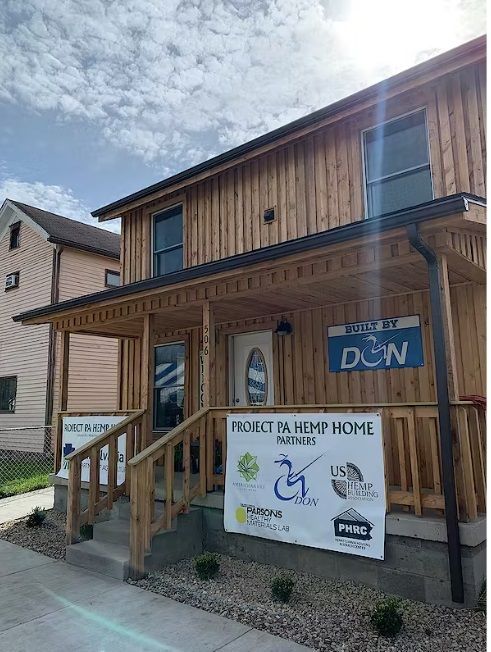
The PA Hemp Home is Pennsylvania’s first total renovation of a residential structure using hemp-based building materials, utilizing breathable spray-applied Hemplime in its walls and HempWood on its floors.  The project, supported by the Pennsylvania Department of Agriculture was an honoree of the 2021 Fast Co.

2022-12-10

Over the last few decades, glass manufacturers have increased their sustainability through innovation, and they are expected to continue to do so through the rollout of new technologies and processes such as carbon capture. The sector also has a key role to play in boosting sustainability in other sectors, whether through lighter glass packaging or glass fiber used for wind turbine blades.

2022-12-10

Join ASBP and members of a new working group for a webinar exploring the benefits and characteristics of natural paints and finishes.

ASBP has recently launched a new Paints and Finishes working group which brings together a number of the major manufacturers and suppliers of natural paints and finishes in the UK. The event will feature short talks from the group’s founder members which include Celtic Sustainables, Clayworks, Cornish Lime, Earthborn Paints, Ecomerchant, Keim Paints and Mike Wye.

2022-12-10

A collection of case studies from the UK Alliance for Sustainable Building Products, featuring examples building materials and practices with high sustainability credentials.  These include: