Photo showing palm trees by alevision.co, via Unsplash

Climate

It is vital to ensure that the selection of building materials is appropriate for the climate in which they are used. Material performance can strongly vary, depending on the conditions to which buildings are exposed. For example, some structural materials have more appropriate thermal properties for hot or tropical climates than others, enabling better heat retention or cooling when these properties are needed. Earth based construction is not a new strategy, but one that has fallen out of favour in the last century as preferences for materials such as concrete and steel grew.  Beyond being a more appropriate material choice in some contexts, earth construction can reduce the need for brick firing or production of synthetic binders and additives, reducing fuel and material consumption, as well as reducing health risks from air emissions and chemical use.

However, a material with improved sustainability performance in one region may not provide the same in-use performance in another, and a whole lifecycle thinking approach can help ensure that material choices are optimal. Additionally, sustainability hotspots can vary between regions. For example, there may be increased impacts from extraction in one region that are not experienced elsewhere, and from increased transportation distances. The expertise of installers with a material, ability of the local supply chain to meet demand and ensure quality, and the availability of infrastructure for end-of-life processing all bear consideration when determining if a material is appropriate for a particular climate.

6
Source: United Nations Environment Programme (2023). Building Materials and the Climate: Constructing a New Future. Nairobi

However, in some cases, learnings from material selection and market development can be transferred from one region to another where there are similarities in the climate. The Hub uses the Köppen-Geiger classification, which categorises regions as Tropical, Dry, and Temperate, according to the map below. Resources that apply to a particular climate are organised accordingly.

Map of Köppen-Geiger climate classification

map


Note: Tropical (A - regions Af, Am, Aw), Dry, (B - regions BWh, BWk, BSh, BSk) and Temperate (C - regions Csa, CSb) are used in the Sustainable Building Materials Hub to categorise resources where climate considerations apply.
Source: Beck, H.E., Zimmermann, N. E., McVicar, T. R., Vergopolan, N., Berg, A., & Wood, E. F., CC BY-SA 4.0 <https://creativecommons.org/licenses/by-sa/4.0>, via Wikimedia Commons
Filters +
View results
2022-12-09

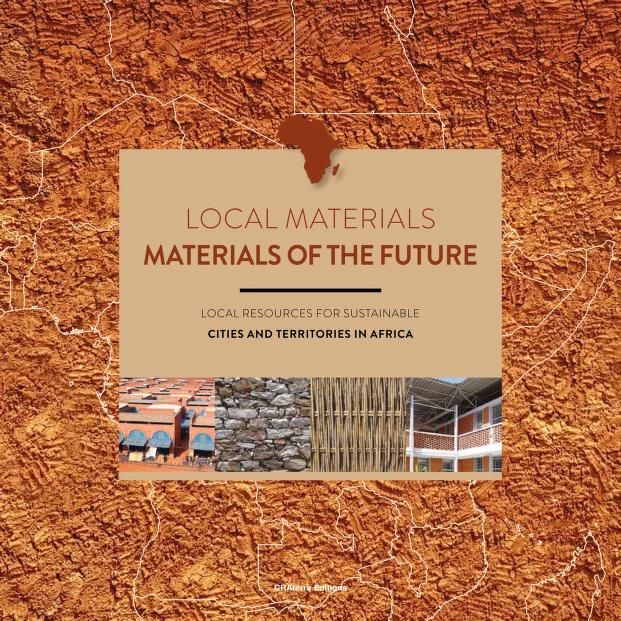
This report aims to promote a sustainable development approach to meet the immense needs in terms of construction in Africa, based on a rational and sustainable use of local materials. To this end, it presents the advantages, challenges and conditions of use of these materials. It presents examples of technical solutions illustrated by a panorama of the potential resources of the territories (bio and geo-sourced). It provides elements of analysis of the impact of local "short circuit" channels and elements of methodology.

2022-12-09

A large part of the construction sector’s emissions come from building products and materials – referred to as embodied carbon. Embodied carbon is increasingly becoming the focus of regulatory bodies, making it a risk factor for developers and investors to price into construction projects.

2022-12-09

Urban cooling is a recent subject and the knowledge produced by research and the first experiments give various results, sometimes difficult to decipher for operational actors.

This guide offers a synthetic, multi-criteria and operational approach to emerging or proven solutions, adapted to different climatic and urban contexts. It is a question of clarifying the decision of the public and private actors, as well on their choices of installation, construction, renovation of the buildings as of installation of the external spaces.


2022-12-09

This report - Sri Lanka Roadmap for Sustainable Housing and Construction 2020 – 2050 - presents the findings of the Sustainable Building Construction Country Assessment for Sri Lanka (SBC-CA) and a Roadmap for Sustainable Housing and Construction and achieving NDCs in the construction industry in Sri Lanka. It examines the current status, and potential opportunities and challenges for adopting Sustainable Building Construction (SBC) practices and policies.

2022-12-09

The Transition Pathway Initiative Global Climate Transition Centre (TPI Centre) is an independent, authoritative source of research and data into the progress being made by the financial and corporate world in making the transition to a low-carbon economy.

2022-12-09

China is the world’s largest producer and consumer of cement. The industry accounts for 13 percent of the country’s total carbon emissions, making it the third largest-emitting industry after power and steel.

2022-12-09

This document was elaborated by the Carbon Neutral Cities Alliance (CNCA) and Culmer Raphael under the project "Dramatically Reducing Embodied Carbon in Europe's Built Environment", which CNCA launched in 2021 with the support of the Laudes Foundation. The purpose of this document is to serve as a communications material that city staff can resort to when raising awareness of the importance of addressing embodied carbon and increasing the uptake of bio-based materials among their city-department peers.

2022-12-09

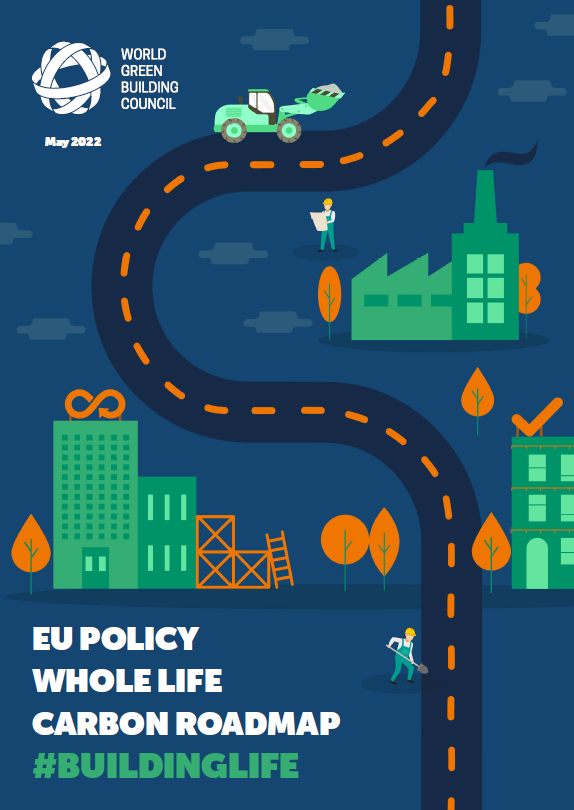
On 24 May 2022, WorldGBC launched the EU Policy Whole Life Carbon Roadmap for buildings as part of the #BuildingLife project.  This Roadmap outlines the key European Union (EU) policy interventions, regulatory measures and tools needed to achieve a decarbonised, circular, resilient and well-designed built environment by 2050. It focuses on measures to address whole life carbon (WLC) at the building level.

Created as part of the #BuildingLife project, this Roadmap provides:

2022-12-09

This volume on the building and construction sector provides an overview of the different sources of GHG emissions from the building and construction sector, as well as methodologies for quantifying these emissions to feed into the preparation and reporting of national GHG inventories. By better understanding the sources of emissions over the whole life cycle of buildings, it thus provides guidance on the most appropriate and effective mitigation strategies and policies for decarbonizing the building and construction sector based on national circumstances.

2022-12-09

10% of emissions from energy come from building materials and construction. We need to rethink how we construct our buildings. From resource-efficient designs with a longer lifetime, circular economy approaches and “urban mining” to increasing the market share of alternative building materials and decarbonising conventional materials like cement and steel, the solutions are there.