2023-09-08

Some Finnish buildings could cut their carbon footprints by as much as 43% – according to research conducted by One Click LCA for the Finnish government – and almost all could make a saving of 28% using easily available decarbonisation strategies.

2023-09-08

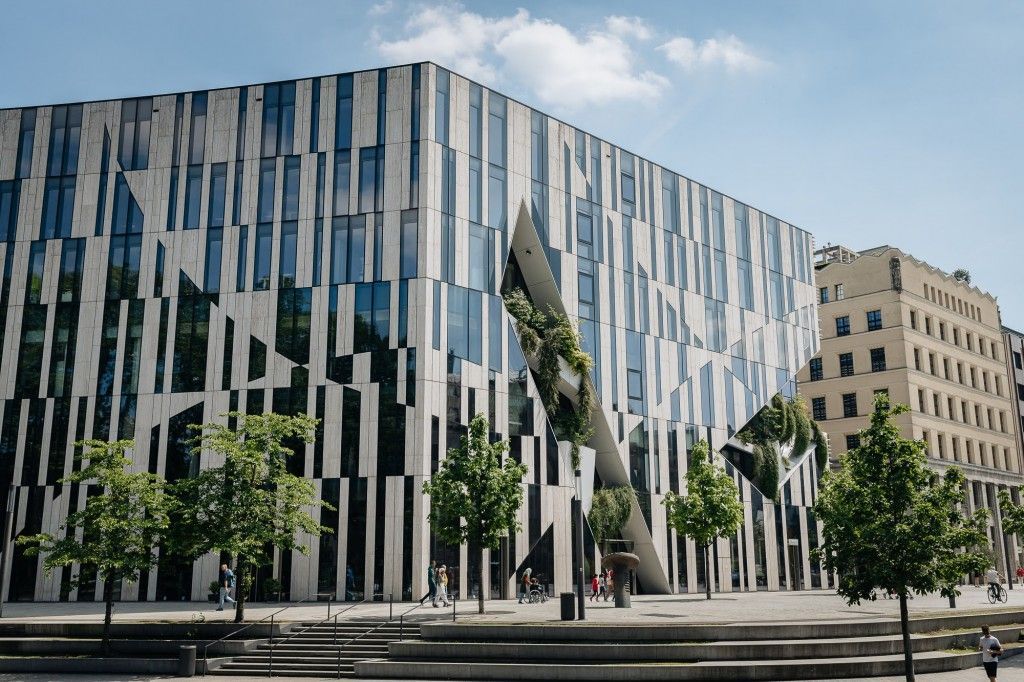
This book intends to clarify the concept of Sustainable Buildings and Construction (SBC) in Africa. It is based on primarily African research and building projects implemented in different parts of the region. The publication is meant to be read by real estate developers, building industry professionals, researchers, planners and policy makers, and users of buildings.

2023-05-30

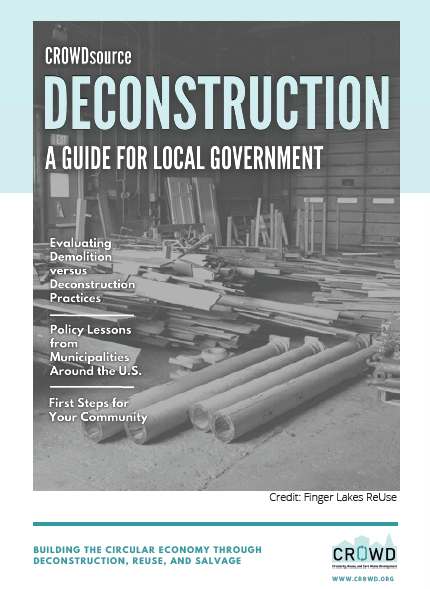
Evaluating demolition versus deconstruction practices - policy lessons from municipalitites around the US.

Faced with housing crises, aging building stock, landfill concerns, and climate impacts to the builtenvironment, municipalities and states are increasingly turning  their attention to deconstruction and building material reuse as an alternative to demolition.

2022-12-10

EIT Climate-KIC has teamed up with a cohort of partners to develop a handbook to help cities reduce embodied carbon in construction.

Globally, buildings account for 39 per cent of carbon emissions, with the share of embodied carbon (arising from manufacturing, transportation, installation, maintenance, and disposal of building materials) becoming more dominant as energy efficiency increases and energy sources become less carbon intensive. Therefore, dramatically reducing this source of emissions in the construction sector is a priority.

2022-12-10

Buildings account for at least 39 percent of energy-related global carbon emissions on an annual basis. At least one-quarter of these emissions result from embodied carbon, or the greenhouse gas (GHG) emissions associated with manufacturing, transportation, installation, maintenance, and disposal of building materials.

2022-12-09

The IEA and IRENA Policies and Measures Database provides access to information on past, existing or planned government policies and measures to reduce greenhouse gas emissions, improve energy efficiency and support the development and deployment of renewables and other clean energy technologies.

2022-10-01

The Clean Construction Policy Explorer on the C40 Knowledge Hub is an interactive dashboard showing how cities around the world are supporting the transition towards a resource-efficient and low- to zero-emissions construction sector. The map is a living document and C40 will keep it up to date as new policies are developed.

2022-12-09

Potential policy instruments that can accelerate a transition toward a circular economy in the Nordic construction sector, including demolition of buildings, are discussed and assessed. Sixteen interviews were carried out with actors representing stakeholders from Denmark, Finland, Norway and Sweden.

2022-12-09

A large part of the construction sector’s emissions come from building products and materials – referred to as embodied carbon. Embodied carbon is increasingly becoming the focus of regulatory bodies, making it a risk factor for developers and investors to price into construction projects.

2022-12-09

The Human Settlements are one of the Thematic Areas of the Climate Action Pathways, which are a vital part of the Marrakech Partnership for Global Climate Action (MPGCA) tools to enhance climate action and ambition towards fully implementing the Paris Agreement. The Pathways aim to provide a roadmap to help Parties and non-Party stakeholders alike to identify actions needed by 2025, 2030 and 2040 as steps to get to the 2050 vision of a 1.5°C resilient world.