Photo of BedZED eco village showing colourful wind cowls. Copyright Bioregional.

Building use

Different building types and uses present a range of sustainability challenges and opportunities, with varying governance and decision-making factors involved. 

A range of approaches and policies appropriate to the type and use case can drive sustainability improvements for domestic, commercial and municipal buildings. Additionally, it is estimated that a billion people live in slums or informal settlements.  Consideration of how to improve sustainability of housing, alongside living standards for this group of people forms a significant part of the global challenge in this area. 

Sustainable public procurement is a powerful tool to improve the sustainability of municipal construction, which includes schools, hospitals, government buildings, social housing and the built environment. Expenditure by public authorities on goods, services, and infrastructure accounts on average for 13% of the gross domestic product in OECD countries, and up to 30% in many developing countries. Globally, the public sector accounts for 20-30% of revenues in the construction industry.

d

Photo credit © Unsplash / Ricardo Gomez Angel

Avoid’ strategies in this context should seek to build with less, avoid over-ordering and waste, and improve material circularity. For municipal buildings, there is an opportunity to enable adaptive re-use within a portfolio, or specify deconstruction instead of premature demolition.

Extending building lifetimes can reduce demand for materials and the embodied carbon expended. In the International Energy Agency’s most ambitious decarbonization scenario, extending building lifetimes would contribute to more than 90 per cent of the CO2 emission reductions for both steel and cement by 2060 (IEA 2019). Sustainable public procurement of more circular construction services, or contracts that specify material recovery targets, can reduce costs, as well as providing sustainability benefits for public authorities.  

Public sector procurement can also provide an opportunity to act as an early adopter of using more innovative materials and contribute to market transformation - more and more examples of public buildings deploying a ‘Shift’ strategy towards more sustainable materials are being seen.  And due to their relatively large purchasing power for materials such as concrete and steel in buildings and infrastructure projects, opportunities exist for ‘Improve’ strategies that can reduce the impacts of these materials within public procurement.

Domestic buildings, constructed by private sector companies have a different set of opportunities and challenges to move towards a more sustainable norm.  Where achieving the lowest cost is a driver, the use of sustainable materials may be deprioritised.  A combination of innovation on materials and construction practices, and an enabling environment of policies to reduce costs, can help push the domestic construction market towards increased use of sustainable materials. In some countries, it is vital to support industry to ‘leapfrog’ the use of higher carbon, conventional materials where there are more sustainable options.

Resources addressing the impacts of materials used in informal settlements are available on the Hub - these include case studies and research papers on how this type of community can act to reduce waste and health hazards as part of materials sourced, whilst improving living standards.

Best practices for different building uses need to be demonstrated and evaluated to show what is possible, driving policy and market support for more sustainable material use and design. Resources include planning tools, policy analysis and best practice case studies of buildings and materials, intended to inspire and promote action for the range of different building types and infrastructure projects.

Filters +
View results
2023-05-30

The Buildings InfoHub provides resources for designers, architects, builders, and other actors in the construction value chain to support actions to reduce the risks and impacts of chemicals in building materials.

Additionally, it provides information and case studies for policymakers, sustainability practitioners, and procurers to support the transition towards more sustainable and chemically safer building materials and products. 

2023-05-30

Using the methodology presented in the Eco-innovation Manual, this supplement on building materials provides sector-specific information and guidance to sustainability consultancy service providers supporting companies in eco-innovation. It should be used alongside the Manual to provide further context at each step and examples of how the methodology, activities and templates can be applied in real life to a company in the building materials sector.

2023-03-01

Almost half of a building’s emissions are hidden, embodied in the processes of extraction, manufacturing, transportation, construction, maintenance, retrofitting, demolition and end-of-life treatment. Reducing the impacts of construction and the emissions associated with it will require a significant shift in business-as-usual construction practices.

2022-12-12

This guide is part of the Training Pack for waste prevention on construction projects. It provides specific, best practice advice to help with the prevention and reduction of waste as well as recycling of materials on construction sites. In the construction industry site waste may be managed by a third party or parties may be responsible for managing their own waste; this guide is aimed at both groups. 

2022-12-12

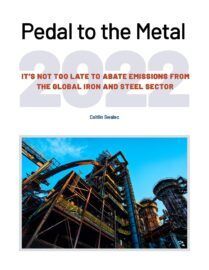
Steel is essential for decarbonizing our energy system. We use it to build solar panels, wind turbines, and transmission towers. At the same time, the global iron and steel industry is currently responsible for 11% of global carbon dioxide emissions and 7–9% of global greenhouse gas emissions. In addition to energy projects, we use steel for buildings, bridges, medical devices, and other important applications. As economies develop and build up infrastructure, global demand for steel will continue increasing.

2022-12-12

More and more builders want to know: what is the carbon footprint of my building materials? And how can I reduce those impacts?

Builders for Climate Action built the BEAM estimator to help you, and made it easy to use and understand.

Input the main dimensions of your building, and you'll find a comprehensive list of all the available materials for all the main assemblies and the carbon footprint for each choice. Choose materials to create a model of an assembly or a whole building.

2022-12-12

SteelZero is a global initiative that brings together leading organisations to speed up the transition to a net zero steel industry.

Steel is the world’s most widely used material – but despite technologies existing for production to be decarbonised, steelmaking is currently one of the biggest emitters of CO2 globally. 

2022-12-12

LC3 is a new type of cement that is based on a blend of limestone and calcined clay. LC3 can reduce CO2 emissions by up to 40%, is made using limestone and low-grade clays which are available in abundant quantities, is cost effective and does not require capital intensive modifications to existing cement plants.

The objective of the LC3-Project is, through research and testing, to make LC3 a standard and mainstream general-use cement in the global cement market.

2022-12-12

From the Global Energy Monitor, The Global Steel Plant Tracker (GSPT) provides information on global crude iron and steel production plants, and includes every plant currently operating with a capacity of five hundred thousand tonnes per year (ttpa) or more of crude iron or steel. The GSPT also includes all plants meeting the five hundred ttpa threshold that have been proposed since 2017 or retired or mothballed since 2020.

2022-12-10

Vernacular architecture is associated with numerous advantages. However, its adoption in the development of sustainable buildings is not appreciated. This paper examines professionals’ views of vernacular building materials and techniques for green building delivery in Ghana.