Photo of BedZED eco village showing colourful wind cowls. Copyright Bioregional.

Building use

Different building types and uses present a range of sustainability challenges and opportunities, with varying governance and decision-making factors involved. 

A range of approaches and policies appropriate to the type and use case can drive sustainability improvements for domestic, commercial and municipal buildings. Additionally, it is estimated that a billion people live in slums or informal settlements.  Consideration of how to improve sustainability of housing, alongside living standards for this group of people forms a significant part of the global challenge in this area. 

Sustainable public procurement is a powerful tool to improve the sustainability of municipal construction, which includes schools, hospitals, government buildings, social housing and the built environment. Expenditure by public authorities on goods, services, and infrastructure accounts on average for 13% of the gross domestic product in OECD countries, and up to 30% in many developing countries. Globally, the public sector accounts for 20-30% of revenues in the construction industry.

d

Photo credit © Unsplash / Ricardo Gomez Angel

Avoid’ strategies in this context should seek to build with less, avoid over-ordering and waste, and improve material circularity. For municipal buildings, there is an opportunity to enable adaptive re-use within a portfolio, or specify deconstruction instead of premature demolition.

Extending building lifetimes can reduce demand for materials and the embodied carbon expended. In the International Energy Agency’s most ambitious decarbonization scenario, extending building lifetimes would contribute to more than 90 per cent of the CO2 emission reductions for both steel and cement by 2060 (IEA 2019). Sustainable public procurement of more circular construction services, or contracts that specify material recovery targets, can reduce costs, as well as providing sustainability benefits for public authorities.  

Public sector procurement can also provide an opportunity to act as an early adopter of using more innovative materials and contribute to market transformation - more and more examples of public buildings deploying a ‘Shift’ strategy towards more sustainable materials are being seen.  And due to their relatively large purchasing power for materials such as concrete and steel in buildings and infrastructure projects, opportunities exist for ‘Improve’ strategies that can reduce the impacts of these materials within public procurement.

Domestic buildings, constructed by private sector companies have a different set of opportunities and challenges to move towards a more sustainable norm.  Where achieving the lowest cost is a driver, the use of sustainable materials may be deprioritised.  A combination of innovation on materials and construction practices, and an enabling environment of policies to reduce costs, can help push the domestic construction market towards increased use of sustainable materials. In some countries, it is vital to support industry to ‘leapfrog’ the use of higher carbon, conventional materials where there are more sustainable options.

Resources addressing the impacts of materials used in informal settlements are available on the Hub - these include case studies and research papers on how this type of community can act to reduce waste and health hazards as part of materials sourced, whilst improving living standards.

Best practices for different building uses need to be demonstrated and evaluated to show what is possible, driving policy and market support for more sustainable material use and design. Resources include planning tools, policy analysis and best practice case studies of buildings and materials, intended to inspire and promote action for the range of different building types and infrastructure projects.

Filters +
View results
2023-07-26

The informal settlements in the Global South, mostly comprising of inadequate building solutions, are growing rapidly, therefore calling for more sustainable construction interventions and upgrading strategies. Within this context, this study considers that appropriate construction strategies are capable of engaging with the local economy, affected by endemic poverty, therefore contributing to the improvement of the settlement's socio-economic and physical conditions at once.

2023-07-26

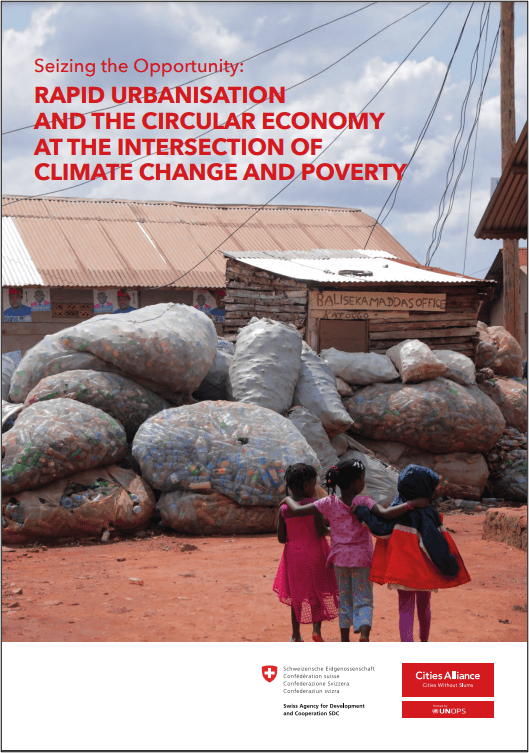
Rapid urbanisation and climate change are two of the major challenges of our time. People living in cities' poorest areas are agents of change both in terms of climate mitigation and adaptation.

This new publication explores the intertwining nature of circular economy, urbanisation and poverty.  It looks at how existing approaches of circularity and the informal economy can be taken up and reinforced to find solutions to these challenges.

2023-07-26

The emerging demand for sustainable development and the need for efficient use of resources across the built environment have stirred research efforts globally. The construction sector is often regarded as one of the major world consumers of resources, so many international establishments are trying to create a sustainable environment through adaptive reuse of existing building stocks, a concept which has been receiving momentous recognition by reason of its richly diversified applicability for circular economy.

2023-07-26

As the need to stem climate change gains in urgency virtually by the day, new environmentally sensitive practices and policies targeted at limiting the global average temperature increase to 1.5°C above pre-industrial levels are essential. This is particularly relevant in the manufacturing of cement – the key ingredient in concrete. The world is in the midst of an infrastructure and building boom as new economies emerge and developed economies expand.

2023-07-26

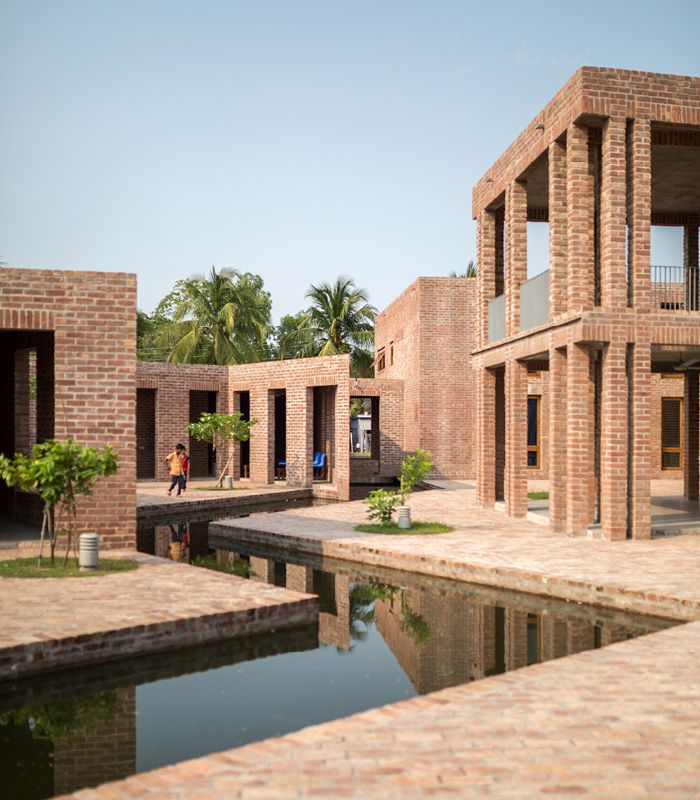
The Friendship Hospital Satkhira, designed by Kasef Chowdhury/URBANA, is built to serve a rural population in the Bangladesh delta. The community hospital of eighty beds was initiated by a donation of land by a local philanthropist.

The construction in bricks built in situ celebrates this ordinary material without having to resort to complex technology leading to increased budgets. Local materials by local craftmanship helps the integration of the building to the native culture and society.

This project won the RIBA International Prize 2021

2023-07-26

Since 2002, the United States Federal Government has outlined its intent to advance sustainable building principles and practices throughout its portfolio established through a number of statutory and executive policies that every Federal agency has integrated and utilized. 

2023-07-26

Building with natural materials has proven to be a sustainable approach in addressing the needs of affordable and healthy housing and improving living conditions in informal settlements in an era of ecological transition. In view of this, the use of bamboo as a building material is considered a promising practice. However, although many traditional building techniques incorporate the use of bamboo, its application in contemporary informal settlements is disputed.

2023-07-26

A pioneering passive house retrofit in Sri Lanka creates an economic catalyst and model for sustainable development.

The Star Innovation Center is a product development facility located outside of Colombo in Katunayake, Sri Lanka. Planned as a global model for the entire garment industry, the project sets a new high bar for sustainability, energy efficiency and worker comfort.

2023-07-26

Cities have been built on the benefits of density, proximity, and connectivity. However, the recent COVID-19 pandemic, along with continuously evolving communication technologies, has seen an increase in vacancies and underuse of urban buildings, challenging the agglomeration benefits of cities and our understanding of business-as-usual.

2023-07-26

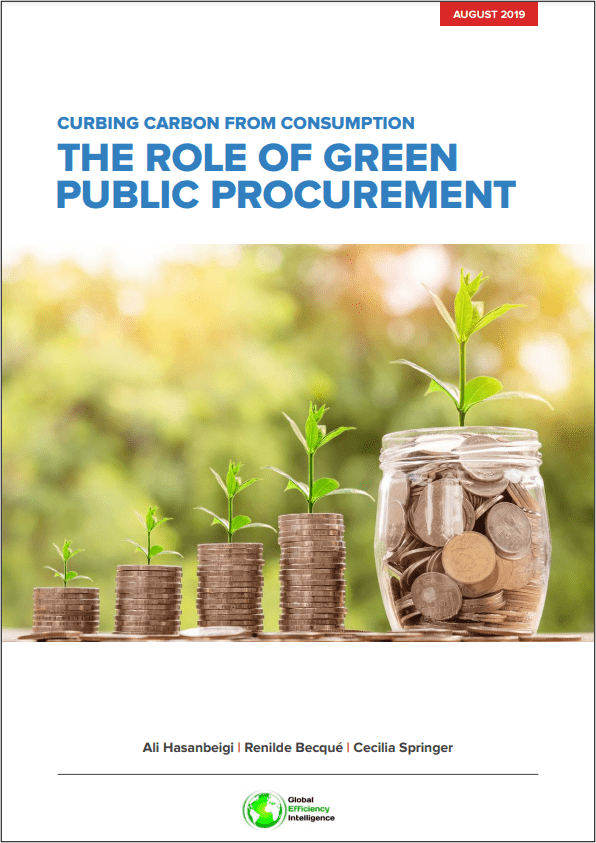
Because public entities exercise large-scale purchasing power in contracts for goods, services, and construction of infrastructure, policies prioritizing environmentally and socially responsible purchasing can drive markets in the direction of sustainability. In fact, public procurement accounts for an average of 12 percent of GDP in OECD countries, and up to 30 percent of GDP in many developing countries.