Photo showing construction cranes. By Ej Yao via Unsplash

Life cycle stage

Life cycle thinking is a crucial part of planning, decision making, and actions to improve the sustainability of construction and building and construction materials. ​​A whole life cycle approach requires consideration of the environmental impact of material choices before the materials are even extracted, and then at each phase of the building lifecycle, from extraction to processing, installation, use and demolition. This means thinking about how the choice of materials affects everything from the functioning of regional ecosystems, to the amount of heating or cooling needed, and how, at the end of their use, these materials can provide a bank of resources to then be re-used. 

This approach is core to tackling the challenges of reducing whole life carbon emissions of buildings, improving material efficiency and the circularity of processes, making building materials chemically safer, and addressing social hotspots in the material life cycle. Failing to consider the whole life cycle in decision making can lead to unintended trade-offs between environmental, social or economic issues that inhibits progress towards sustainable development.

Policymakers play a crucial role to support stakeholders in decarbonizing materials throughout their entire life cycle, from extraction and processing to installation and demolition. Although there are various recommendations for individual stakeholders like manufacturers, architects, owners, and builders to improve the carbon footprints of buildings, these efforts often face challenges due to interdependencies, which means they cannot achieve significant impacts on their own. Instead, stakeholders need simultaneous support to take complementary actions.

5
Source: United Nations Environment Programme (2023). Building Materials and the Climate: Constructing a New Future. Nairobi

For instance, designers, owners, and communities may want to use more recycled materials, but they are hindered by the gap between supply and demand. Closing this gap requires cities to introduce and enforce building codes that promote the use of 'circular' material components, enabling the re-use of materials at the end-of-life. Even incremental improvements across different life cycle phases can synergistically contribute to reducing emissions more effectively than focusing on isolated changes.

Yet, to scale up and have a meaningful impact, all these shifts and improvements require coordinated efforts across producers, designers, builders, and communities, considering the entire life cycle of buildings.

The Hub features a range of research papers, guidance on methodology and case studies that demonstrate taking a whole life cycle approach to improving the sustainability of building materials. Additionally, some resources focus more on a particular life cycle stage, such as recommendations for end-of-life actions to improve circularity. These can be accessed by selecting a particular life cycle stage from the menu.

The Hub also supports the approach of the UNEP Life Cycle Initiative. This is a public-private, multi-stakeholder partnership enabling the global use of credible life cycle knowledge by private and public stakeholders, with building materials being a key focus area for promoting best practice in life cycle thinking.

Filters +
View results
2023-07-26

The informal settlements in the Global South, mostly comprising of inadequate building solutions, are growing rapidly, therefore calling for more sustainable construction interventions and upgrading strategies. Within this context, this study considers that appropriate construction strategies are capable of engaging with the local economy, affected by endemic poverty, therefore contributing to the improvement of the settlement's socio-economic and physical conditions at once.

2023-07-26

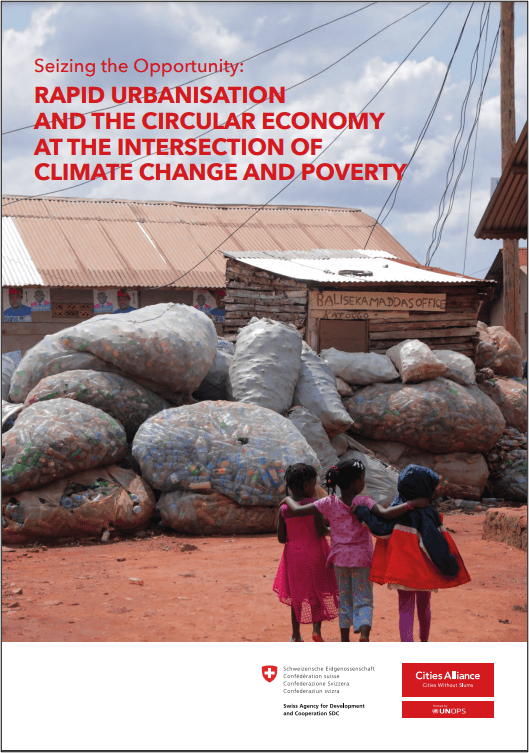
Rapid urbanisation and climate change are two of the major challenges of our time. People living in cities' poorest areas are agents of change both in terms of climate mitigation and adaptation.

This new publication explores the intertwining nature of circular economy, urbanisation and poverty.  It looks at how existing approaches of circularity and the informal economy can be taken up and reinforced to find solutions to these challenges.

2023-07-26

The emerging demand for sustainable development and the need for efficient use of resources across the built environment have stirred research efforts globally. The construction sector is often regarded as one of the major world consumers of resources, so many international establishments are trying to create a sustainable environment through adaptive reuse of existing building stocks, a concept which has been receiving momentous recognition by reason of its richly diversified applicability for circular economy.

2023-07-26

As the need to stem climate change gains in urgency virtually by the day, new environmentally sensitive practices and policies targeted at limiting the global average temperature increase to 1.5°C above pre-industrial levels are essential. This is particularly relevant in the manufacturing of cement – the key ingredient in concrete. The world is in the midst of an infrastructure and building boom as new economies emerge and developed economies expand.

2023-07-26

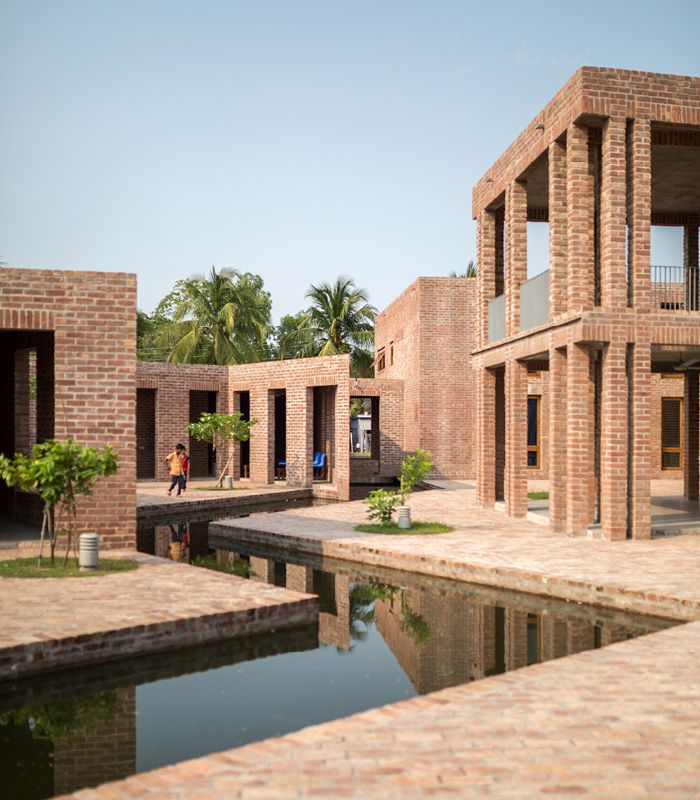
The Friendship Hospital Satkhira, designed by Kasef Chowdhury/URBANA, is built to serve a rural population in the Bangladesh delta. The community hospital of eighty beds was initiated by a donation of land by a local philanthropist.

The construction in bricks built in situ celebrates this ordinary material without having to resort to complex technology leading to increased budgets. Local materials by local craftmanship helps the integration of the building to the native culture and society.

This project won the RIBA International Prize 2021

2023-07-26

Since 2002, the United States Federal Government has outlined its intent to advance sustainable building principles and practices throughout its portfolio established through a number of statutory and executive policies that every Federal agency has integrated and utilized. 

2023-07-26

Building with natural materials has proven to be a sustainable approach in addressing the needs of affordable and healthy housing and improving living conditions in informal settlements in an era of ecological transition. In view of this, the use of bamboo as a building material is considered a promising practice. However, although many traditional building techniques incorporate the use of bamboo, its application in contemporary informal settlements is disputed.

2023-07-26

A pioneering passive house retrofit in Sri Lanka creates an economic catalyst and model for sustainable development.

The Star Innovation Center is a product development facility located outside of Colombo in Katunayake, Sri Lanka. Planned as a global model for the entire garment industry, the project sets a new high bar for sustainability, energy efficiency and worker comfort.

2023-07-26

Cities have been built on the benefits of density, proximity, and connectivity. However, the recent COVID-19 pandemic, along with continuously evolving communication technologies, has seen an increase in vacancies and underuse of urban buildings, challenging the agglomeration benefits of cities and our understanding of business-as-usual.

2023-07-26

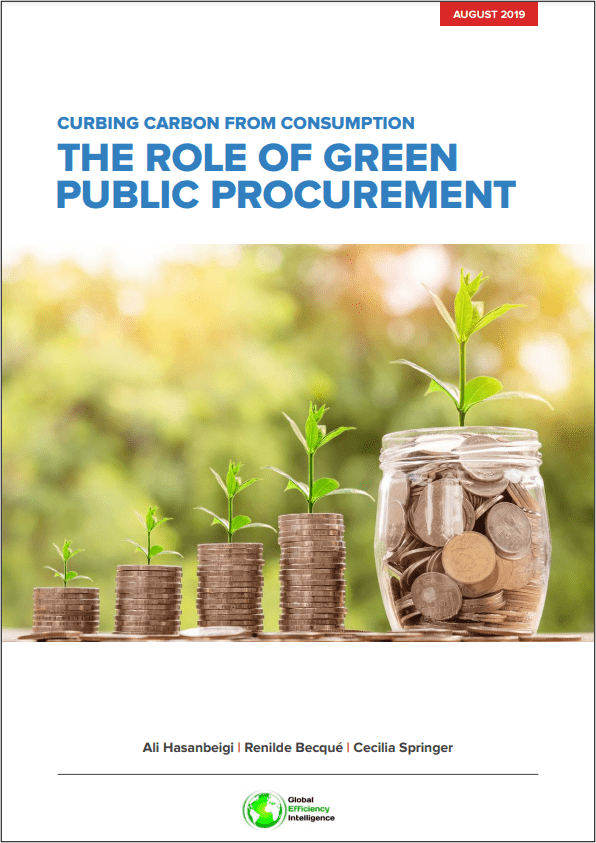
Because public entities exercise large-scale purchasing power in contracts for goods, services, and construction of infrastructure, policies prioritizing environmentally and socially responsible purchasing can drive markets in the direction of sustainability. In fact, public procurement accounts for an average of 12 percent of GDP in OECD countries, and up to 30 percent of GDP in many developing countries.