Photo showing palm trees by alevision.co, via Unsplash

Climate

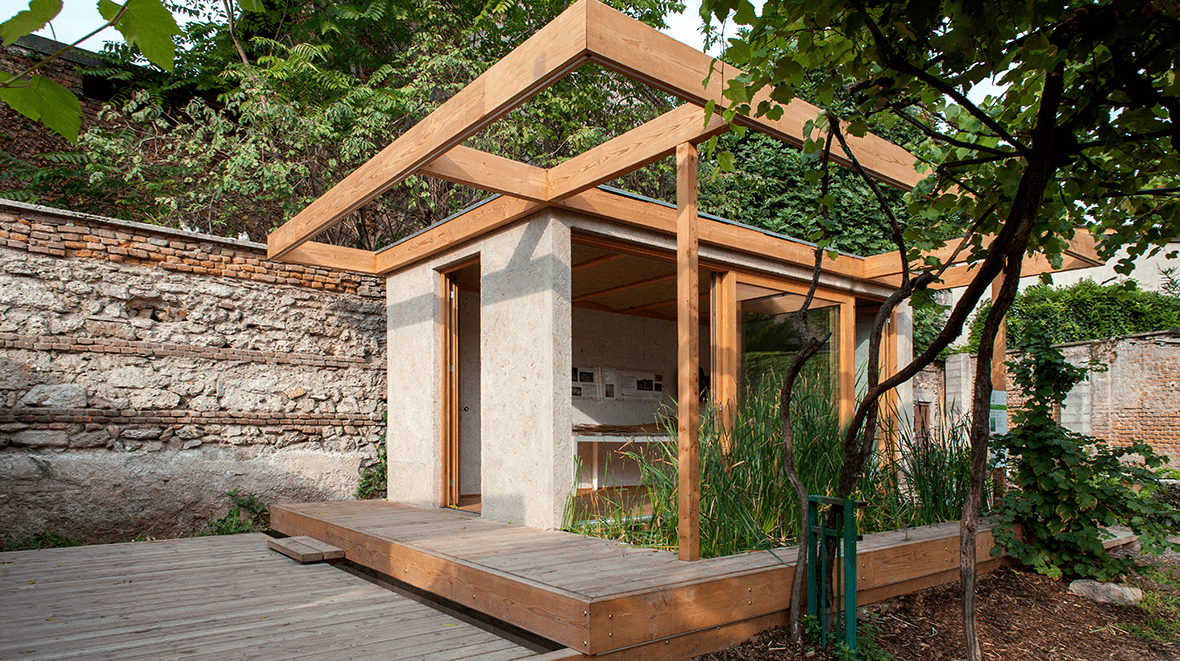
It is vital to ensure that the selection of building materials is appropriate for the climate in which they are used. Material performance can strongly vary, depending on the conditions to which buildings are exposed. For example, some structural materials have more appropriate thermal properties for hot or tropical climates than others, enabling better heat retention or cooling when these properties are needed. Earth based construction is not a new strategy, but one that has fallen out of favour in the last century as preferences for materials such as concrete and steel grew.  Beyond being a more appropriate material choice in some contexts, earth construction can reduce the need for brick firing or production of synthetic binders and additives, reducing fuel and material consumption, as well as reducing health risks from air emissions and chemical use.

However, a material with improved sustainability performance in one region may not provide the same in-use performance in another, and a whole lifecycle thinking approach can help ensure that material choices are optimal. Additionally, sustainability hotspots can vary between regions. For example, there may be increased impacts from extraction in one region that are not experienced elsewhere, and from increased transportation distances. The expertise of installers with a material, ability of the local supply chain to meet demand and ensure quality, and the availability of infrastructure for end-of-life processing all bear consideration when determining if a material is appropriate for a particular climate.

6
Source: United Nations Environment Programme (2023). Building Materials and the Climate: Constructing a New Future. Nairobi

However, in some cases, learnings from material selection and market development can be transferred from one region to another where there are similarities in the climate. The Hub uses the Köppen-Geiger classification, which categorises regions as Tropical, Dry, and Temperate, according to the map below. Resources that apply to a particular climate are organised accordingly.

Map of Köppen-Geiger climate classification

map


Note: Tropical (A - regions Af, Am, Aw), Dry, (B - regions BWh, BWk, BSh, BSk) and Temperate (C - regions Csa, CSb) are used in the Sustainable Building Materials Hub to categorise resources where climate considerations apply.
Source: Beck, H.E., Zimmermann, N. E., McVicar, T. R., Vergopolan, N., Berg, A., & Wood, E. F., CC BY-SA 4.0 <https://creativecommons.org/licenses/by-sa/4.0>, via Wikimedia Commons
Filters +
View results
2021-01-01

Study examining the basic criteria for the selection of green building materials in the construction industry in Nigeria, Africa, with a view to recommending the basis for wise selection of building materials that have optimal sustainability. The study was conducted through a descriptive survey method where 90 well-structured questionnaires were distributed to professionals in Architecture, Building and Quantity Surveying.

2020-10-11

A collection of insights on the circular economy in Africa. The goal of this collection is to explore the potential of the circular economy in a selection of key economic sectors in African countries and highlight examples of the circular economy in action.

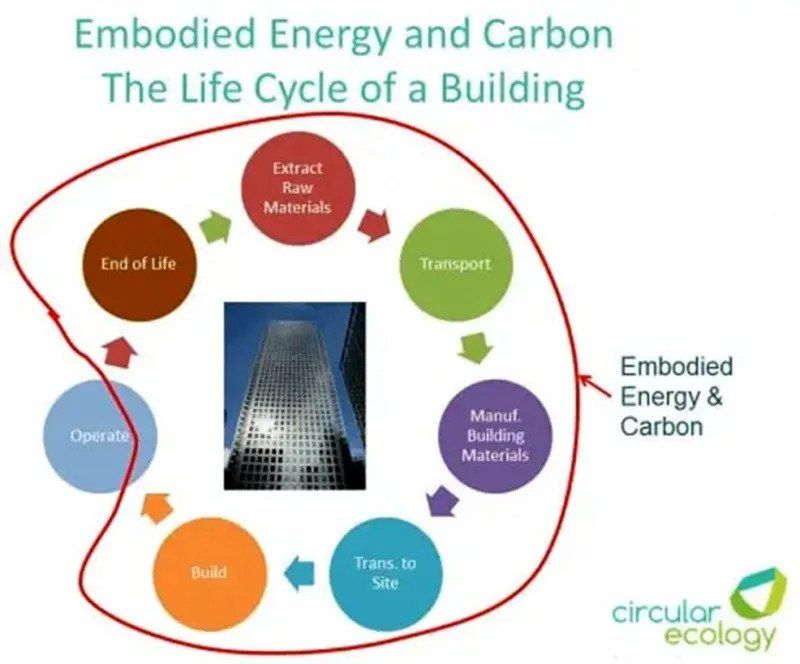
For the built environment, the collection considers aspects such as local materials, traditional building techniques, reusing and reclaiming materials, repurposing buildings, designing for deconstruction, modularity, flexibility, bioclimatic and passive design, and closing the loop.

2020-04-26


Circle City Scan Tool enables local governments to discover and prioritise circular opportunities for their city or region, based on proprietary and publicly available socioeconomic and material flow data, relevant circular case studies, and users’ input as to which sectors, materials, and impact areas are a priority in local agendas. The Circle City Scan Tool covers topics such as circular economy action plans and material flows.

2019-11-10

The Inventory of Carbon and Energy (also know as the ICE database) is an embodied carbon database for building materials which is available for free on this page. It contains data for over 200 materials, broken down into over 30 main material categories. The first version was released in 2005 and it has been updated at periodic intervals. 

2019-09-01

The second edition of the EMIRI Technology Roadmap is a reference for policy-makers in Europe and its Member States, the industry as well as the research world. The report sets out research, innovation and competitiveness across the advanced materials industry for the benefit of Clean and Sustainable Energy and Mobility.


2019-01-01

The Construction Material Pyramid from CINARK at the Royal Danish Academy makes it possible to compare, for example, CO2 footprints between different categories of materials or between material types within the same category. It also makes it possible to view different kinds of environmental impacts across the different materials. It thus offers a tangible, interactive calculation tool and at the same time opens up a dialogue about more detailed studies of the materials’ position in the pyramid and later their place in the project design.

2018-03-13

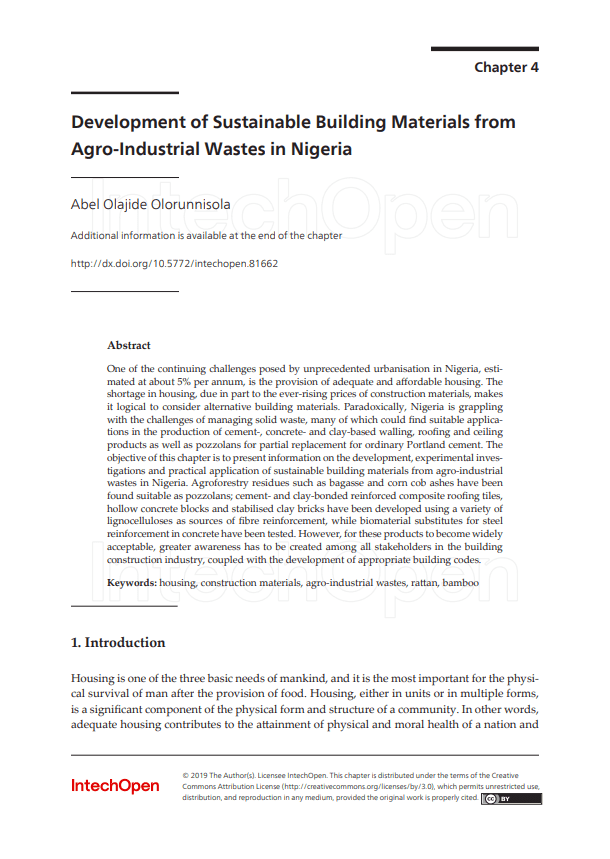
Policy brief presenting information on the development, experimental investigations and practical application of sustainable building materials from agro-industrial wastes in Nigeria, Africa.

2017-03-01

Research paper that aims to identify, examine and assess the factors that are hindering green building developments in Africa based on the project professionals' perceptions. A qualitative review of literature is used to identify the various factors that hinder the adoption of green measures and practices within Nigeria's built environment.

2015-01-01

TYPHABOARD is made from typha (cattail), a plant that grows quickly and easily in all kinds of marshes throughout the world.The material provides both structural and insulation properties. It can be used in timber frame structures, or 100% typha strutures. It can also be used as insulation materials when retrofitting existing buildings.

2013-06-26

Overview of the current situation of Life cycle assessment (LCA) in the construction industry, both of regulatory developments and academic case studies.