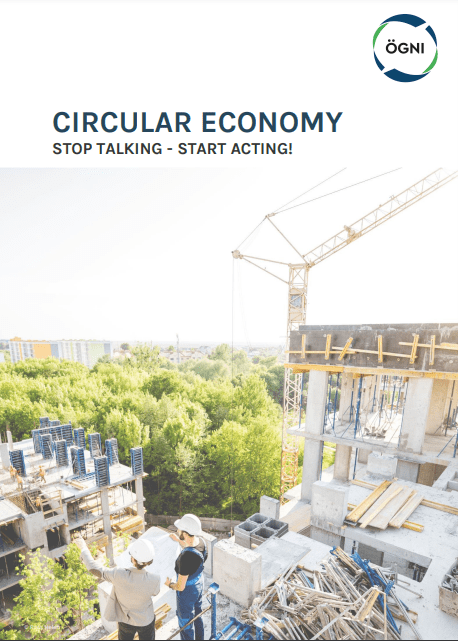
Photo showing construction cranes. By Ej Yao via Unsplash

Life cycle stage

Life cycle thinking is a crucial part of planning, decision making, and actions to improve the sustainability of construction and building and construction materials. ​​A whole life cycle approach requires consideration of the environmental impact of material choices before the materials are even extracted, and then at each phase of the building lifecycle, from extraction to processing, installation, use and demolition. This means thinking about how the choice of materials affects everything from the functioning of regional ecosystems, to the amount of heating or cooling needed, and how, at the end of their use, these materials can provide a bank of resources to then be re-used. 

This approach is core to tackling the challenges of reducing whole life carbon emissions of buildings, improving material efficiency and the circularity of processes, making building materials chemically safer, and addressing social hotspots in the material life cycle. Failing to consider the whole life cycle in decision making can lead to unintended trade-offs between environmental, social or economic issues that inhibits progress towards sustainable development.

Policymakers play a crucial role to support stakeholders in decarbonizing materials throughout their entire life cycle, from extraction and processing to installation and demolition. Although there are various recommendations for individual stakeholders like manufacturers, architects, owners, and builders to improve the carbon footprints of buildings, these efforts often face challenges due to interdependencies, which means they cannot achieve significant impacts on their own. Instead, stakeholders need simultaneous support to take complementary actions.

5
Source: United Nations Environment Programme (2023). Building Materials and the Climate: Constructing a New Future. Nairobi

For instance, designers, owners, and communities may want to use more recycled materials, but they are hindered by the gap between supply and demand. Closing this gap requires cities to introduce and enforce building codes that promote the use of 'circular' material components, enabling the re-use of materials at the end-of-life. Even incremental improvements across different life cycle phases can synergistically contribute to reducing emissions more effectively than focusing on isolated changes.

Yet, to scale up and have a meaningful impact, all these shifts and improvements require coordinated efforts across producers, designers, builders, and communities, considering the entire life cycle of buildings.

The Hub features a range of research papers, guidance on methodology and case studies that demonstrate taking a whole life cycle approach to improving the sustainability of building materials. Additionally, some resources focus more on a particular life cycle stage, such as recommendations for end-of-life actions to improve circularity. These can be accessed by selecting a particular life cycle stage from the menu.

The Hub also supports the approach of the UNEP Life Cycle Initiative. This is a public-private, multi-stakeholder partnership enabling the global use of credible life cycle knowledge by private and public stakeholders, with building materials being a key focus area for promoting best practice in life cycle thinking.

Filters +
View results
2022-12-07

With the built environment responsible for almost 40% of energy-related carbon emissions globally, we must find new ways to design and construct our cities.  

Reuse of materials is a key principle within a circular economy, ensuring material value is maintained for as long as possible. Use of reclaimed materials in construction has the potential to reduce the embodied carbon of construction, minimising the need for virgin material extraction and production as well as reducing volumes of waste generated and other negative externalities.

2022-12-06

The Aluminium Stewardship Initiative (ASI) is a global non-profit standards setting and certification organisation. ASI works together with producers, users and stakeholders in the aluminium value chain to collaboratively foster responsible production, sourcing and stewardship of aluminium.


2022-12-06

In Senegal, the construction sector is booming. Today, concrete is used widely in construction sites but although it is produced locally and inexpensively, it is highly polluting. However, architects such as Worofila Architecture want to build differently, inspired by the raw earth houses of yesteryear and bringing local know-how back to life. These methods can greatly reduce the impacts of concrete building, whilst producing attractive buildings with excellent thermal performance.

2022-12-06

ResponsibleSteel™ is the steel industry’s first global multi-stakeholder standard and certification initiative. As a not-forprofit multi-stakeholder organisation, it has been founded to bring together business, civil society and downstream users of steel, to provide a global standard and certification initiative for steel. Standard development seeks to build consensus on what sustainability looks like for steel – including the impacts of mining, steel production, the scrap metal supply chain, greenhouse gas emissions, water use, workers’ rights, communities and biodiversity.

2022-12-06

Cement is responsible for 7% of global greenhouse gas emissions, and is predicted to grow with increasing development. The majority is used in concrete, globally the most common material in buildings. Reducing emissions from the use of cement and concrete in buildings is therefore critical in order to limit global warming. However there remain multiple gaps in knowledge about the extent of these emissions.

2022-12-01

The database contains information about 17 jurisdictions of the Organization for Economic Co-operation and Development (OECD) using and promoting life cycle approaches in their public policies. The database results from a political science research project on the environmental state and life cycle analysis.

2022-11-30

mindful MATERIALS (mM) is a non-profit leading the global definition of what is a sustainable building product-aggregating centralised data around the Common Materials Framework through an ecosystem of technology tools and systems. 

In the mindful MATERIALS Portal, you can search for over 300,000+ building products by 5 impact categories.

2022-11-30

The Saudi Green Building Council is part of SGBF, a professional civil society establishment and Non Government Organization in Special Consultative Status with Economic and Social Council at United Nations. SGBF is accredited by UNDGC, UNEP, & UNFCCC.

2022-11-30

Finland is aiming at carbon neutrality by 2035, and developing a set of policies, including legislation for low-carbon construction. These new Finnish standards and assessments aimed at reducing carbon footprints of buildings can inform wider policy development in Europe and internationally.

2022-11-30

A significant improvement in the ecological situation could be achieved by moving from a linear to a circular economy. The transformation of the economy and society is unavoidable in order to keep climate change and all its associated consequences within an economically, socially and ecologically acceptable framework.