Photo showing construction cranes. By Ej Yao via Unsplash

Life cycle stage

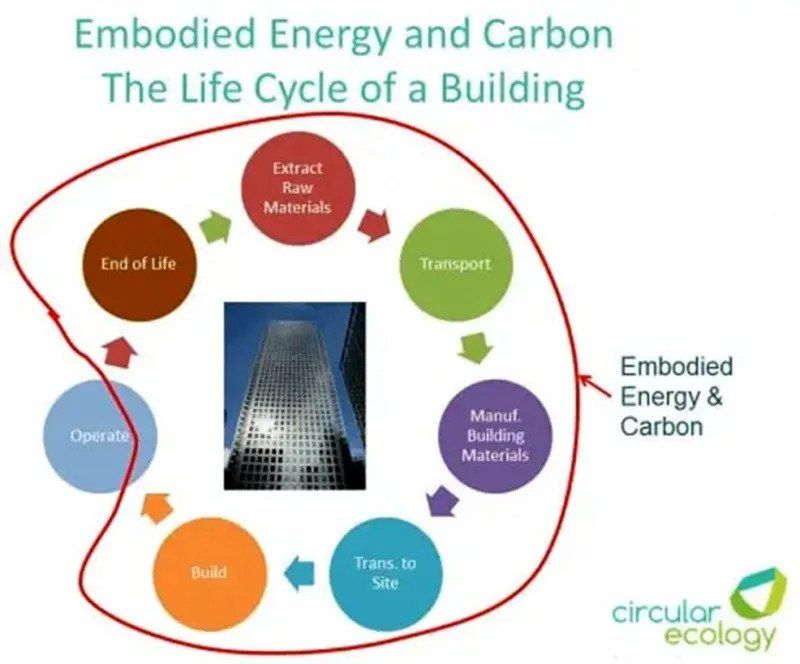
Life cycle thinking is a crucial part of planning, decision making, and actions to improve the sustainability of construction and building and construction materials. ​​A whole life cycle approach requires consideration of the environmental impact of material choices before the materials are even extracted, and then at each phase of the building lifecycle, from extraction to processing, installation, use and demolition. This means thinking about how the choice of materials affects everything from the functioning of regional ecosystems, to the amount of heating or cooling needed, and how, at the end of their use, these materials can provide a bank of resources to then be re-used. 

This approach is core to tackling the challenges of reducing whole life carbon emissions of buildings, improving material efficiency and the circularity of processes, making building materials chemically safer, and addressing social hotspots in the material life cycle. Failing to consider the whole life cycle in decision making can lead to unintended trade-offs between environmental, social or economic issues that inhibits progress towards sustainable development.

Policymakers play a crucial role to support stakeholders in decarbonizing materials throughout their entire life cycle, from extraction and processing to installation and demolition. Although there are various recommendations for individual stakeholders like manufacturers, architects, owners, and builders to improve the carbon footprints of buildings, these efforts often face challenges due to interdependencies, which means they cannot achieve significant impacts on their own. Instead, stakeholders need simultaneous support to take complementary actions.

5
Source: United Nations Environment Programme (2023). Building Materials and the Climate: Constructing a New Future. Nairobi

For instance, designers, owners, and communities may want to use more recycled materials, but they are hindered by the gap between supply and demand. Closing this gap requires cities to introduce and enforce building codes that promote the use of 'circular' material components, enabling the re-use of materials at the end-of-life. Even incremental improvements across different life cycle phases can synergistically contribute to reducing emissions more effectively than focusing on isolated changes.

Yet, to scale up and have a meaningful impact, all these shifts and improvements require coordinated efforts across producers, designers, builders, and communities, considering the entire life cycle of buildings.

The Hub features a range of research papers, guidance on methodology and case studies that demonstrate taking a whole life cycle approach to improving the sustainability of building materials. Additionally, some resources focus more on a particular life cycle stage, such as recommendations for end-of-life actions to improve circularity. These can be accessed by selecting a particular life cycle stage from the menu.

The Hub also supports the approach of the UNEP Life Cycle Initiative. This is a public-private, multi-stakeholder partnership enabling the global use of credible life cycle knowledge by private and public stakeholders, with building materials being a key focus area for promoting best practice in life cycle thinking.

Filters +
View results
2021-01-01

Study examining the basic criteria for the selection of green building materials in the construction industry in Nigeria, Africa, with a view to recommending the basis for wise selection of building materials that have optimal sustainability. The study was conducted through a descriptive survey method where 90 well-structured questionnaires were distributed to professionals in Architecture, Building and Quantity Surveying.

2020-10-11

A collection of insights on the circular economy in Africa. The goal of this collection is to explore the potential of the circular economy in a selection of key economic sectors in African countries and highlight examples of the circular economy in action.

For the built environment, the collection considers aspects such as local materials, traditional building techniques, reusing and reclaiming materials, repurposing buildings, designing for deconstruction, modularity, flexibility, bioclimatic and passive design, and closing the loop.

2020-04-26


Circle City Scan Tool enables local governments to discover and prioritise circular opportunities for their city or region, based on proprietary and publicly available socioeconomic and material flow data, relevant circular case studies, and users’ input as to which sectors, materials, and impact areas are a priority in local agendas. The Circle City Scan Tool covers topics such as circular economy action plans and material flows.

2019-11-10

The Inventory of Carbon and Energy (also know as the ICE database) is an embodied carbon database for building materials which is available for free on this page. It contains data for over 200 materials, broken down into over 30 main material categories. The first version was released in 2005 and it has been updated at periodic intervals. 

2019-09-01

The second edition of the EMIRI Technology Roadmap is a reference for policy-makers in Europe and its Member States, the industry as well as the research world. The report sets out research, innovation and competitiveness across the advanced materials industry for the benefit of Clean and Sustainable Energy and Mobility.


2019-01-01

The Construction Material Pyramid from CINARK at the Royal Danish Academy makes it possible to compare, for example, CO2 footprints between different categories of materials or between material types within the same category. It also makes it possible to view different kinds of environmental impacts across the different materials. It thus offers a tangible, interactive calculation tool and at the same time opens up a dialogue about more detailed studies of the materials’ position in the pyramid and later their place in the project design.

2018-03-13

Policy brief presenting information on the development, experimental investigations and practical application of sustainable building materials from agro-industrial wastes in Nigeria, Africa.

2017-03-01

Research paper that aims to identify, examine and assess the factors that are hindering green building developments in Africa based on the project professionals' perceptions. A qualitative review of literature is used to identify the various factors that hinder the adoption of green measures and practices within Nigeria's built environment.

2015-01-01

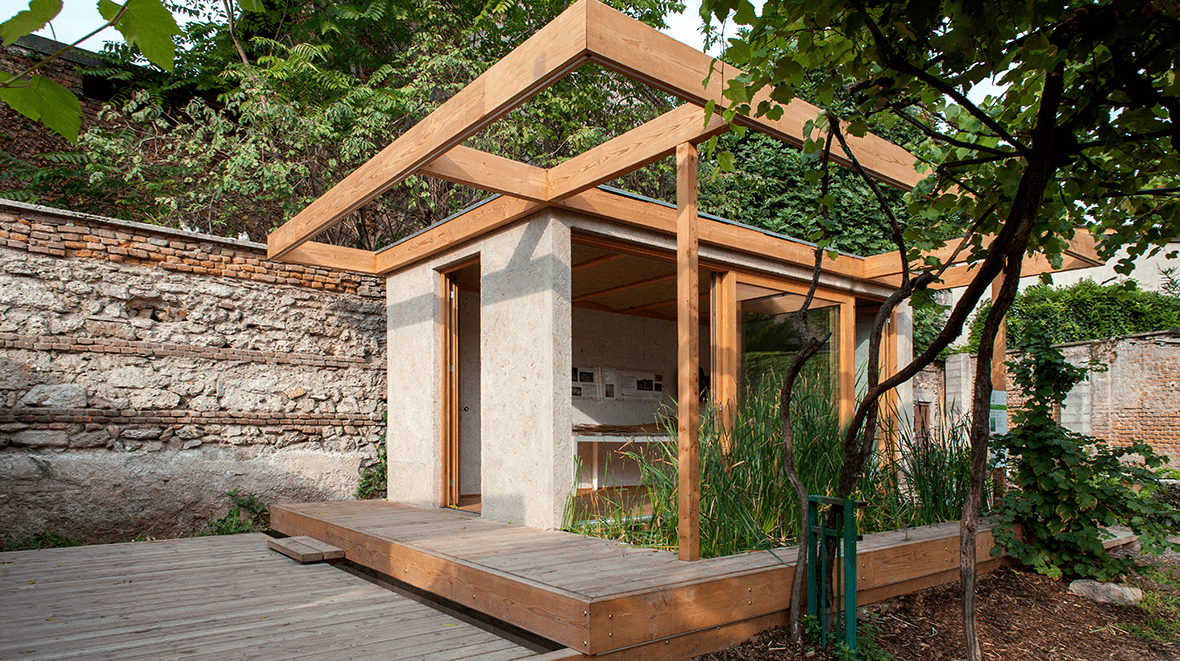
TYPHABOARD is made from typha (cattail), a plant that grows quickly and easily in all kinds of marshes throughout the world.The material provides both structural and insulation properties. It can be used in timber frame structures, or 100% typha strutures. It can also be used as insulation materials when retrofitting existing buildings.

2013-06-26

Overview of the current situation of Life cycle assessment (LCA) in the construction industry, both of regulatory developments and academic case studies.